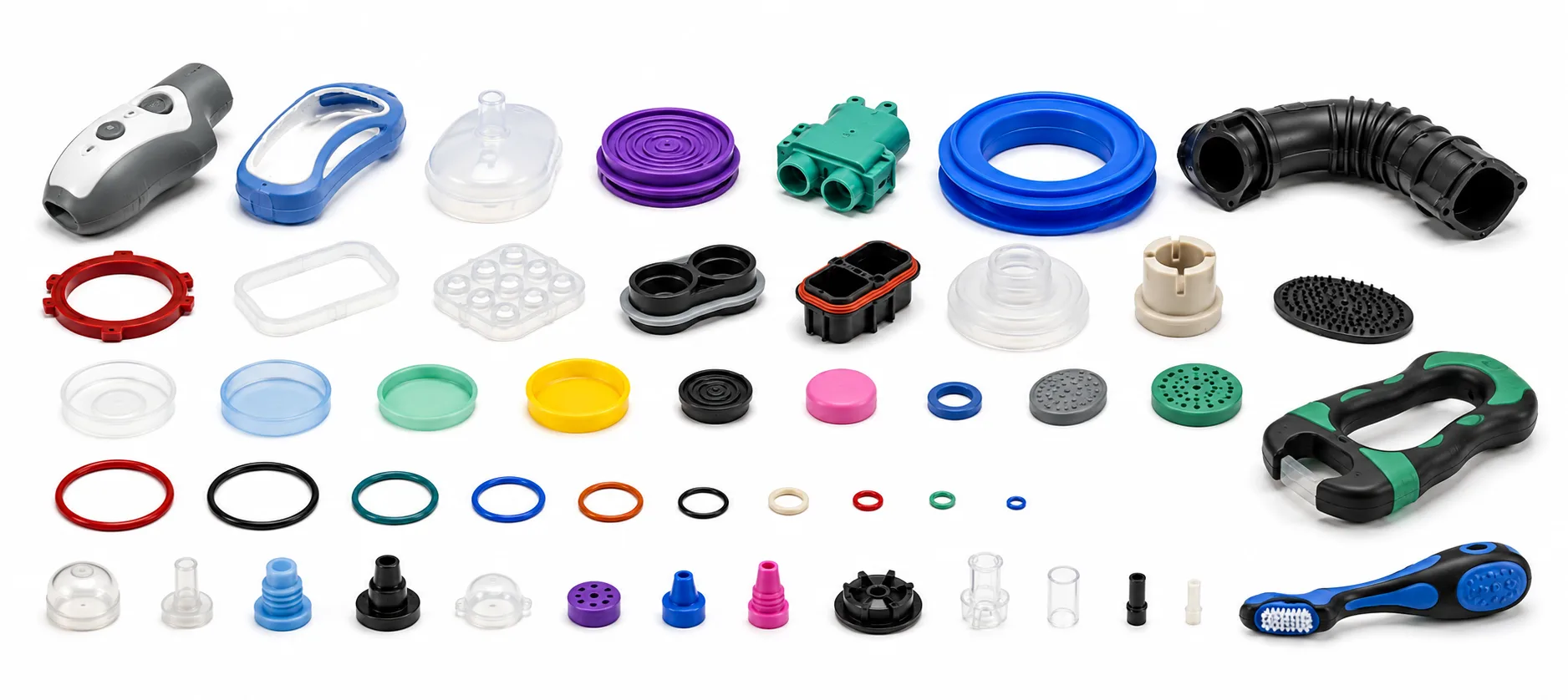
Hi-Rel Plastics & Molding Corp. provides custom Liquid Silicone Rubber (LSR) injection molding, liquid injection molding, LSR mold manufacturing, silicone overmolding, engineering, assembly, and secondary manufacturing services for demanding applications throughout Los Angeles, Southern California, Northern California, and across the USA.
As an ISO 13485:2016, ISO 9001:2015 and AS9100 Rev D certified manufacturer, Hi-Rel Plastics & Molding combines precision manufacturing, engineering support, custom mold manufacturing, clean room manufacturing, assembly, and secondary operations to provide customers with a comprehensive manufacturing solution from concept through production.
Our LSR injection molding capabilities support medical, pharmaceutical, aerospace, electronics, consumer products, food and beverage, packaging, industrial, automotive and other applications requiring flexible, durable, temperature-resistant and precision-molded silicone components.
For medical and contamination-sensitive applications, Hi-Rel Plastics & Molding offers Class 10,000 / ISO Class 7 cleanroom environments and Class 100,000 / ISO Class 8 cleanroom environments for controlled manufacturing and clean room assembly.
Whether your project requires a new LSR mold, transfer of an existing tool, prototype development, low-volume silicone molding or scalable production, our team can help evaluate the application, part design, material requirements, tooling strategy and manufacturing process.
Liquid Silicone Rubber injection molding—commonly called LSR injection molding, silicone injection molding or liquid injection molding (LIM)—is a manufacturing process used to produce flexible and highly repeatable silicone components.
Unlike conventional thermoplastic injection molding, LSR generally begins as two liquid components that are precisely metered and mixed before being injected into a heated mold. Heat causes the silicone to cure into the geometry of the mold cavity.
The process is particularly suitable for producing complex components requiring repeatability, flexibility, durability, fine features and consistent material properties.
LSR injection molding can also be highly automated, making the process suitable for both precision components and scalable production.
Customers requiring conventional plastic components can also explore our Plastic Injection Molding Services.
Silicone materials provide long-lasting flexibility and resistance to wear.
Performs reliably in extreme heat and demanding operating conditions.
Advanced molding ensures tight tolerances and repeatable part quality.
Resistant to moisture, chemicals, and harsh environmental exposure.
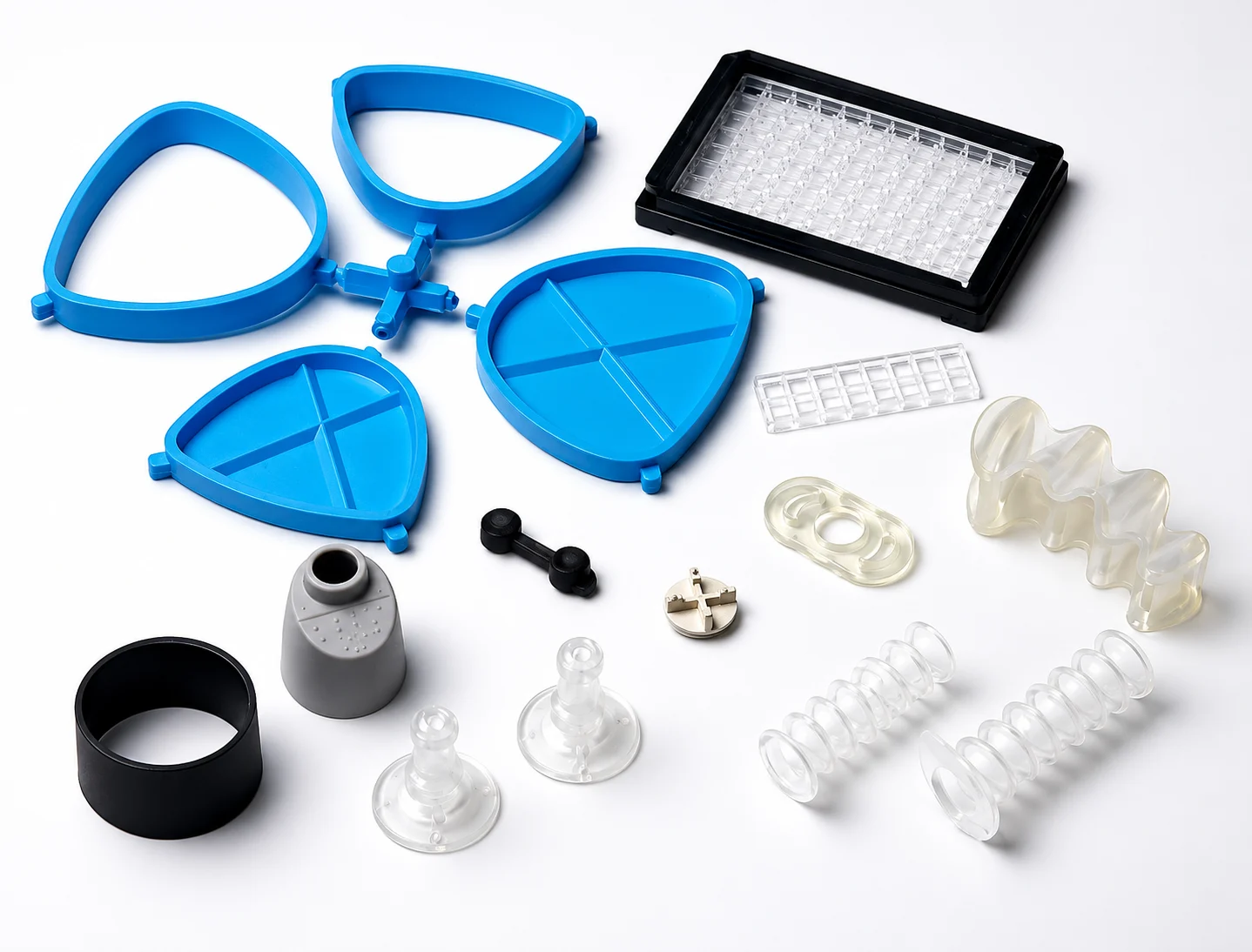
Hi-Rel Plastics & Molding provides engineering and manufacturing support for custom liquid silicone rubber components from initial part evaluation through production.
Our capabilities include:
By combining molding, tooling, engineering and secondary services, Hi-Rel Plastics & Molding helps OEMs consolidate multiple manufacturing steps with a single manufacturing partner.
Successful LSR injection mold manufacturing requires an understanding of silicone flow, curing, venting, gating, parting-line design, flash control and demolding.
Hi-Rel Plastics & Molding provides custom LSR mold manufacturing and tooling support for customers developing new silicone components or transferring existing production.
LSR molds may require different engineering considerations than conventional thermoplastic injection molds because uncured liquid silicone can flow into extremely small clearances. Proper mold design is therefore critical for controlling flash and maintaining consistent part geometry.
Important LSR mold design considerations can include:
Our engineering team can evaluate customer CAD models, drawings, specifications and production requirements to develop a manufacturing strategy appropriate for the application.
Learn more about our mold and tool manufacturing capabilities through our Mold / Tool Making Services.
Good LSR component design begins before the mold is manufactured.
Hi-Rel Plastics & Molding works with customers to review part geometry and manufacturing requirements through Design for Manufacturability (DFM).
LSR DFM reviews can consider wall thickness, parting lines, gate locations, undercuts, shutoffs, sealing features, dimensional requirements, surface finish, flash-sensitive areas and demolding.
Identifying potential manufacturing issues during the design stage can help reduce tooling modifications, improve process stability and shorten the path from prototype to production.
Our team evaluates the customer’s 3D CAD model, drawing, application, dimensional requirements, production quantities and material requirements.
The component is reviewed for manufacturability and the LSR injection mold is designed around the required geometry, production volume and quality requirements.
The two primary liquid silicone components are accurately metered and mixed. Pigments or other approved additives may also be introduced depending upon the specified material system.
The mixed LSR is delivered into the injection unit and injected into the heated mold cavity. 5. Curing
Heat in the mold initiates the curing reaction, converting the liquid silicone into a solid elastomeric component.
After curing, the mold opens and the finished silicone component is removed manually or through automation depending upon the application and production requirements.
Components can undergo dimensional inspection, visual inspection, trimming, assembly, packaging or other required secondary operations.
LSR offers a combination of material properties that makes it useful for demanding applications.
Depending on the specific silicone formulation, potential benefits include:
Wide Temperature Performance
Silicone materials can maintain flexibility and functional properties over broad temperature ranges.
Excellent Flexibility & Elasticity
LSR is particularly suitable for seals, gaskets, valves, diaphragms, flexible components and soft-touch applications.
Complex Geometry
The flow characteristics of uncured LSR can enable the molding of small features and complex component geometries.
Electrical Insulation
Certain silicone formulations provide excellent dielectric properties for electrical and electronic applications.
Weather & Environmental Resistance
Silicone materials can provide resistance to UV exposure, ozone and environmental aging.
Chemical & Moisture Resistance
Depending upon the grade and application, LSR can provide useful resistance to water and various chemicals.
High Repeatability
Automated material metering and injection molding can provide highly repeatable production.
Biocompatible Material Options
Appropriate medical-grade silicone formulations may be available for medical and healthcare applications where specified material requirements must be met.
Liquid silicone rubber is widely used for medical and healthcare components because selected medical-grade silicone formulations can provide flexibility, temperature resistance and biocompatibility appropriate for specific applications.
Hi-Rel Plastics & Molding is ISO 13485:2016 certified and supports medical manufacturing programs requiring controlled processes, documented quality systems and contamination-controlled manufacturing environments.
Our facilities support both:
These capabilities allow customers to combine medical LSR injection molding, cleanroom manufacturing and clean room assembly with additional plastic manufacturing operations through one supplier.
Learn more about our Medical Device Injection Molding capabilities.
LSR can also be incorporated into multi-material components through overmolding and insert molding.
Depending upon material compatibility, component geometry and product requirements, silicone can be molded around or onto selected plastic or metal substrates.
Potential applications include:
Integrating silicone features into a molded assembly can potentially reduce separate components, secondary assembly operations and overall part count.
Material compatibility, adhesion requirements and component geometry should be evaluated during DFM.
Medical & Healthcare
LSR molding can support seals, gaskets, valve components, diaphragms, flexible connectors, device components, diagnostic equipment components, fluid-management components and other medical silicone parts.
Our ISO 13485 certification and Class 7/Class 8 cleanroom environments make Hi-Rel Plastics & Molding particularly well positioned for customers searching for a medical LSR injection molding company in California or the USA.
Pharmaceutical
Potential applications include seals, dispensing components, fluid-control components, closures, diaphragms and flexible components used with pharmaceutical manufacturing or packaging systems.
Aerospace & Defense
Silicone’s temperature stability and environmental resistance can make appropriate grades suitable for aerospace seals, gaskets, vibration-damping components, electrical protection components and other demanding applications.
Electronics & Electrical
LSR can be used for connector seals, cable seals, insulating components, protective covers, keypads, sensor seals and flexible electronic components.
Consumer Products
Potential applications include soft-touch components, appliance seals, kitchen products, flexible consumer components and durable silicone parts.
Food & Beverage
Suitable silicone grades can be considered for seals, valves, dispensing components, gaskets and flexible components used in food-processing or beverage-related applications, subject to the applicable material and regulatory requirements.
Packaging
Silicone components may be used in dispensing systems, closures, valves, sealing systems and specialized packaging assemblies.
Industrial Equipment
Industrial LSR applications include gaskets, diaphragms, seals, flexible valve components, vibration dampers, protective components and fluid-control components.
For contamination-sensitive products, molding is only part of the manufacturing requirement.
Hi-Rel Plastics & Molding offers controlled manufacturing and clean room assembly capabilities to support customers requiring additional manufacturing operations after molding.
Our ISO Class 7 and ISO Class 8 cleanroom environments can support appropriate medical, pharmaceutical and other cleanliness-sensitive manufacturing programs.
This provides customers with the ability to consolidate molding and assembly operations rather than transporting components between multiple suppliers.
Hi-Rel Plastics & Molding supports projects throughout the product-development cycle.
Early-stage programs may require prototype components and design validation before committing to production tooling. Established products may require production mold manufacturing, tool transfer, process development or higher-volume manufacturing.
Our manufacturing approach can support:
Prototype & Development – Evaluate component geometry, material and design concepts.
Tooling – Develop production-ready LSR molds based on anticipated production requirements.
Sampling & Validation – Produce molded samples for dimensional, functional and application testing.
Production – Establish repeatable LSR injection molding processes for ongoing manufacturing.
Assembly & Secondary Operations – Complete additional manufacturing operations before shipment.
One significant advantage of working with Hi-Rel Plastics & Molding is access to manufacturing processes beyond LSR.
Depending upon the product, customers can combine LSR components with thermoplastic, hollow plastic, formed plastic or machined components.
Our manufacturing capabilities include:
This broad manufacturing platform can help OEMs simplify their supply chain by sourcing multiple processes and components from one manufacturing partner.
Quality is particularly important for silicone components used as seals, valves, diaphragms and other functional parts.
Hi-Rel Plastics & Molding operates certified quality management systems including:
Production and inspection requirements can be established based upon customer drawings, specifications and application requirements.
Our quality-focused approach supports medical, aerospace, defense, industrial and other applications requiring consistent manufacturing processes and documented quality controls.
Customers searching for an LSR injection molding company, silicone injection molding manufacturer or LSR mold manufacturer need more than a molding press.
Successful programs require coordination among part design, material selection, mold engineering, manufacturing, quality control and secondary operations.
Hi-Rel Plastics & Molding provides customers with:
Hi-Rel Plastics & Molding Corp. is located in Riverside, California, providing LSR injection molding and LSR mold manufacturing services in Southern California with manufacturing support for customers throughout California and across the United States.
We support companies searching for LSR injection molding and silicone manufacturing partners in:
Our California location provides OEMs with access to engineering, tooling, production, quality and secondary manufacturing support for both new and established LSR programs.
What is LSR injection molding?
LSR injection molding is a manufacturing process in which two-component liquid silicone rubber is metered, mixed and injected into a heated mold where it cures into a flexible silicone component.
Is LSR the same as thermoplastic injection molding?
No. Conventional thermoplastic injection molding melts plastic resin and allows it to solidify as it cools. LSR uses a liquid silicone system that is injected into a heated mold and cured.
Does Hi-Rel Plastics & Molding manufacture LSR molds?
Yes. Hi-Rel Plastics & Molding supports custom mold and tooling manufacturing for LSR injection molding programs, including engineering, new tooling, production molds, mold transfer and tooling support.
Does Hi-Rel Plastics & Molding provide medical LSR injection molding?
Yes. Hi-Rel Plastics & Molding is ISO 13485:2016 certified and supports medical manufacturing programs requiring precision molding and controlled manufacturing processes.
Do you provide cleanroom LSR injection molding?
Hi-Rel Plastics & Molding offers ISO Class 7 / Class 10,000 and ISO Class 8 / Class 100,000 cleanroom environments for appropriate contamination-sensitive manufacturing and assembly programs.
Can LSR be overmolded onto plastic or metal?
Depending upon substrate compatibility, material selection and product design, LSR may be molded over selected plastic or metal components. The application should be evaluated during DFM to determine the appropriate process.
What industries use liquid silicone rubber components?
LSR components are widely used in medical, pharmaceutical, aerospace, electronics, automotive, consumer, food and beverage, packaging and industrial applications.
Can Hi-Rel Plastics & Molding support both the mold and production?
Yes. Customers can work with Hi-Rel Plastics & Molding for part evaluation, DFM, mold manufacturing, sampling, production molding, inspection, assembly and secondary operations.
Can you take over an existing LSR mold?
Existing tooling can be evaluated for mold transfer, repair, maintenance, refurbishment and production requirements.
What information is needed for an LSR injection molding quote?
Providing a 3D CAD model, 2D drawing, material or durometer requirements, annual production quantity, initial order quantity, application information, quality requirements and any applicable cleanroom or assembly requirements will help our team evaluate the project.
Whether you are developing a new silicone component, transferring an existing LSR mold or searching for a long-term manufacturing partner, Hi-Rel Plastics & Molding Corp. can support your project from engineering and tooling through production, inspection and assembly.
Contact us to discuss your Liquid Silicone Rubber injection molding, LSR mold manufacturing, medical silicone molding, cleanroom LSR molding, silicone overmolding or custom silicone component requirements.
Contact Hi-Rel Plastics & Molding Corp. to request a quote or discuss your next LSR injection molding project.
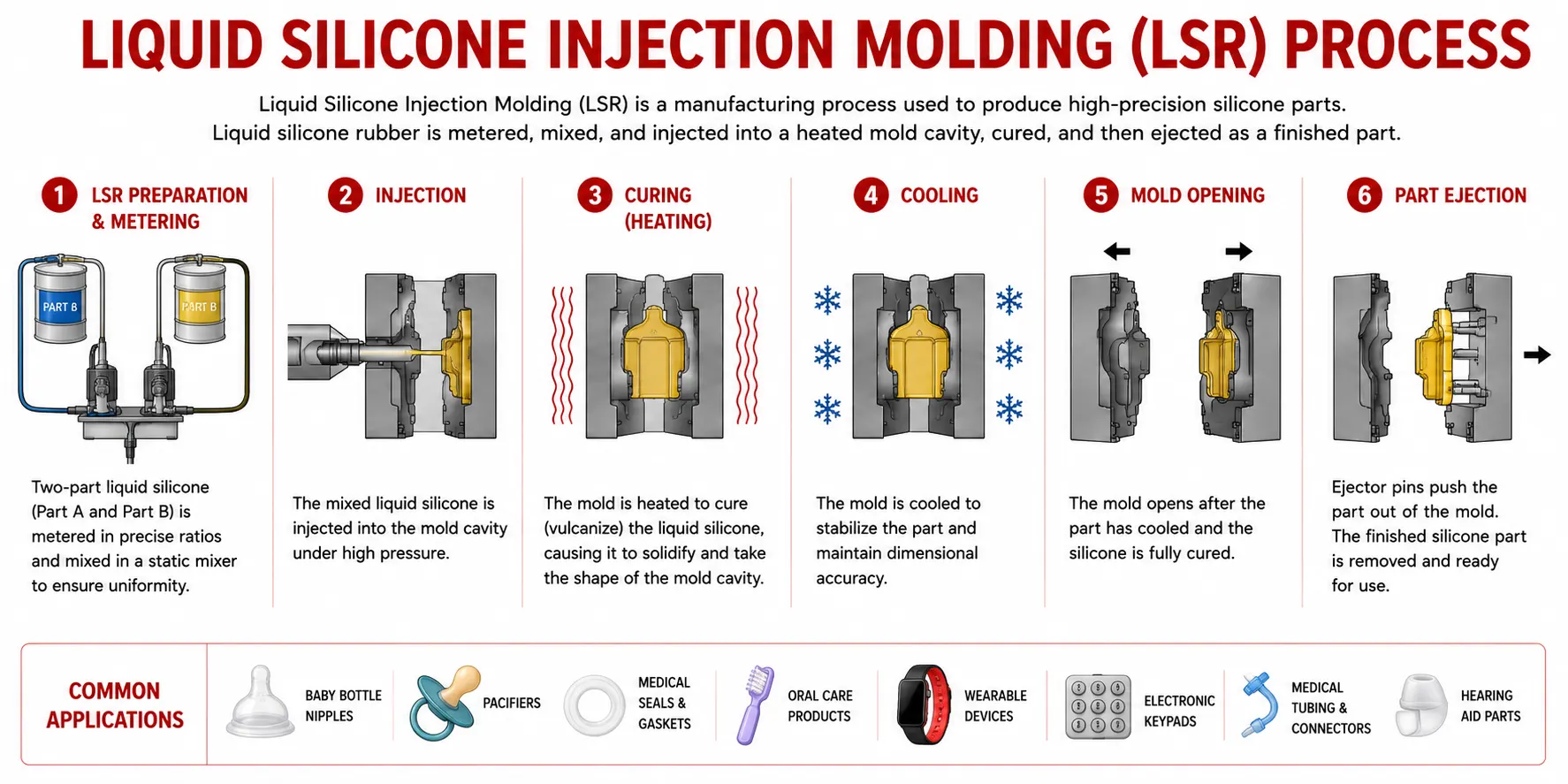
Liquid Silicone Rubber (LSR) molding is a precision injection molding process used to produce flexible, high-performance elastomeric components with excellent durability, biocompatibility, and environmental resistance. In this process, two liquid silicone components are precisely metered, mixed, and injected into a heated mold, where the material cures into a solid rubber part that retains the exact shape of the cavity. The process is highly automated and repeatable, enabling consistent production of complex, tight-tolerance parts with superior surface quality and long-term performance.
Silicone materials provide long-lasting flexibility and resistance to wear.
Performs reliably in extreme heat and demanding operating conditions.
Advanced molding ensures tight tolerances and repeatable part quality.
Resistant to moisture, chemicals, and harsh environmental exposure.