
Hi-Rel Plastics & Molding Corp. provides precision heat insertion and heat staking services for thermoplastic components and custom plastic assemblies throughout California and across the United States.
Our capabilities support the installation of threaded metal inserts into plastic components as well as the permanent assembly of plastic-to-plastic, plastic-to-metal, and multi component products using controlled thermal processes.
As an ISO 9001, AS9100 and ISO 13485 certified contract manufacturer, Hi-Rel Plastics & Molding can integrate heat insertion and heat staking with plastic injection molding, medical clean room injection molding, mold manufacturing, CNC machining, mechanical assembly, ultrasonic welding, adhesive bonding, inspection, packaging, and other secondary manufacturing operations.
This integrated approach helps OEMs reduce the number of suppliers involved in their program while maintaining greater control over molded components and downstream assembly operations.
Heat insertion is a controlled thermal assembly process used to install threaded metal inserts into thermoplastic components.
During installation, controlled heat allows the plastic surrounding the insert location to soften so that the insert can be positioned within the molded component. As the thermoplastic cools around the insert geometry, it creates mechanical retention that helps provide a durable threaded attachment point.
Threaded inserts can provide significant advantages over threads molded directly into plastic when products require repeated assembly and disassembly or increased resistance to thread wear.
Heat insertion can support products containing:
The appropriate insert geometry, plastic material, hole design, installation conditions, and assembly requirements should be evaluated together to achieve consistent results.
Heat application ensures secure bonding and long-term stability.
Minimizes stress and deformation during insertion or staking.
Processes designed for accurate alignment and consistent results.
Seamlessly incorporated into manufacturing for repeatable, high-volume output.
Hi-Rel Plastics & Molding can combine threaded insert installation directly with our plastic injection molding services.
This provides customers with a convenient manufacturing approach in which the plastic component is molded, inspected, receives threaded inserts or other approved secondary operations, and moves directly into assembly or packaging.
Potential advantages of installing threaded inserts into injection molded components include:
The molded boss and insert location should ideally be designed with the insertion process in mind.
Our engineering team can review component geometry, wall thickness, boss dimensions, insert location, material selection, and assembly requirements during the product development process.
Heat staking is a thermal assembly process that uses controlled heat and pressure to reform a molded thermoplastic stud, boss, post, or similar feature so that it mechanically captures another component.
Instead of adding a separate screw, rivet, or adhesive, a molded plastic feature becomes part of the fastening system.
Heat staking can potentially be used to retain:
After the thermoplastic feature is heated and formed, it cools into a mechanically retained shape that holds the mating component in position.
Heat staking is particularly useful for products that combine molded plastic components with other materials or assemblies.
Modern products frequently incorporate multiple materials.
Hi-Rel Plastics & Molding can use heat staking for qualifying plastic-to-plastic and plastic-to-metal assemblies, providing OEMs with an alternative to conventional screws, rivets, or adhesives.
Potential applications can include:
Product geometry, materials, joint requirements, thermal sensitivity, cosmetic surfaces, and production quantities determine whether heat staking is an appropriate assembly process.
Successful heat staking begins with the design of the molded plastic feature.
A plastic boss or staking post must provide enough material to create the required formed head while maintaining proper component alignment and surrounding part integrity.
Important design considerations may include:
Because Hi-Rel Plastics & Molding also provides injection molding and mold manufacturing, these considerations can be evaluated before production tooling is finalized.
This is an important advantage over outsourcing heat staking only after components have already been designed and molded elsewhere.
Although the processes are related, heat insertion and heat staking serve different purposes.
Heat insertion typically installs a separate metal insert into a thermoplastic component.
The result is commonly a durable threaded fastening point suitable for screws or other mating hardware.
Heat staking reforms an existing molded plastic stud or boss so that it captures another component and creates a permanent mechanical assembly.
Both processes use controlled thermal energy, but the final joint and product requirements are different.
Hi-Rel Plastics & Molding can review the complete component and assembly to determine which available process is better suited to the application.
Heat staking and ultrasonic welding are also different plastic assembly methods.
Heat staking mechanically reforms a molded plastic feature to retain another component. This can make it particularly useful when assembling plastic to metal or securing components such as brackets or electronic components inside a plastic housing.
Ultrasonic welding uses high-frequency mechanical vibration to create localized heat at the interface between compatible plastic components.
Ultrasonic welding may be appropriate when the objective is to join compatible thermoplastic components together, while heat staking may be preferable when one molded plastic feature needs to mechanically retain another component.
The correct process depends on:
Hi-Rel Plastics & Molding offers multiple plastic joining and assembly processes, allowing our team to evaluate the application rather than forcing every project into a single joining technology.
Threaded inserts can potentially be installed using different methods depending on the application.
Heat insertion transfers controlled thermal energy to the insert and surrounding thermoplastic, allowing the insert to enter the prepared feature before the material solidifies around it.
Ultrasonic insertion uses high-frequency vibration to generate localized heat at the insert/plastic interface.
Each process has advantages depending on plastic resin, insert design, part geometry, production requirements, cosmetic considerations, and desired assembly performance.
Because Hi-Rel Plastics & Molding offers both thermal secondary operations and ultrasonic insertion and ultrasonic welding, we can review the application and determine the available process that best matches the product requirements.
One of Hi-Rel Plastics & Molding’s strongest advantages is the ability to combine custom injection molding and heat staking within a coordinated manufacturing program.
Our injection molding services support prototype, low-volume, bridge, medium-volume, and high-volume production using commodity, engineering, and high-performance thermoplastics.
After molding, components can move into applicable secondary operations including:
This reduces the need to ship molded parts to multiple secondary suppliers.
Parts intended for heat staking should ideally be designed for the joining process before the mold is manufactured.
Hi-Rel Plastics & Molding provides mold and tooling manufacturing together with engineering and Design for Manufacturability support.
Our team can evaluate manufacturing factors such as:
Designing molded features with downstream assembly in mind can help avoid expensive modifications after tooling is complete.
New product development often requires testing mechanical connections before production tooling is released.
Hi-Rel Plastics & Molding provides engineering support along with 3D printing and rapid prototyping that can help customers evaluate product geometry, insert locations, assembly interfaces, hardware, and overall product configuration.
Prototype components can help identify potential design or assembly issues before production investment.
After design approval, customers can transition through tooling, injection molding, secondary processing, and production assembly with the same manufacturing partner.
Heat staking frequently represents only one operation within a larger product assembly.
Our assembly services can combine heat staking with additional operations such as:
This enables Hi-Rel Plastics & Molding to deliver subassemblies or more complete manufactured products instead of individual molded components.
Plastic products often require metal hardware to provide structural, fastening, electrical, or mechanical functionality.
Heat insertion can be combined with our plastic manufacturing and plastic and metal CNC machining services to support more complex multi-material programs.
Potential assemblies may combine:
This allows OEM customers to consolidate molded and machined components with secondary operations and final assembly.
Hi-Rel Plastics & Molding is ISO 13485 certified and supports medical-device, healthcare, diagnostic, laboratory, pharmaceutical-related, and life-science manufacturing programs.
Our capabilities include both Class 10,000 / ISO Class 7 and Class 100,000 / ISO Class 8 cleanroom environments for qualifying manufacturing and assembly programs.
Customers can combine heat insertion or appropriate secondary assembly operations with our cleanroom medical injection molding capabilities.
Potential medical applications may include:
Cleanroom requirements depend on the product and manufacturing sequence. Hi-Rel Plastics & Molding evaluates individual projects to determine which operations require controlled-environment manufacturing.
Hi-Rel Plastics & Molding is AS9100 certified and supports aerospace and defense manufacturers requiring quality-focused plastic component manufacturing and assembly.
Our aerospace and defense manufacturing capabilities can support precision molded and machined plastic components, brackets, housings, enclosures, cable-management components, and other assemblies.
Heat insertion may provide reusable metal threads within lightweight thermoplastic components, while heat staking can support qualifying assemblies containing plastic and metal components.
These operations can be incorporated with injection molding, machining, mechanical assembly, inspection, and other approved secondary operations.
Heat insertion and heat staking are particularly relevant to the electronics and electrical industry because many products combine molded plastic housings with PCBs, brackets, connectors, hardware, and other components.
Potential applications include:
Threaded inserts can provide durable fastening points for covers and hardware, while heat staking can mechanically retain internal components without requiring additional fasteners in every location.
Automotive and electric-vehicle products frequently combine molded thermoplastics with metal brackets, electronics, sensors, switches, and other components.
Potential applications can include:
Hi-Rel Plastics & Molding can combine injection molding with heat insertion, heat staking, ultrasonic welding, assembly, and other secondary operations for qualifying automotive and EV programs.
Industrial equipment often requires durable molded housings and components containing metal inserts or mechanically retained assemblies.
Potential applications include:
Heat insertion can create durable fastening locations for repeated maintenance or assembly, while heat staking can permanently retain components when removable hardware is not required.
Consumer products and appliances frequently incorporate plastic housings with internal components, metal hardware, decorative pieces, electronics, or covers.
Heat staking can provide an efficient method of retaining qualifying components without separate fasteners, while heat insertion can create reusable threaded mounting points.
Potential applications include:
Heat insertion and heat staking are generally associated with thermoplastic materials because thermoplastics can soften when heated and solidify again when cooled.
Potential materials may include commonly molded thermoplastics such as:
Actual process suitability depends on the specific resin grade, reinforcement, insert design, boss geometry, finished-part requirements, and operating environment.
Material and process compatibility should therefore be reviewed for each application rather than assumed based solely on resin family.
Heat insertion can provide several potential benefits for thermoplastic assemblies: Durable Threaded Connections
Metal inserts provide a more durable fastening interface than repeated engagement directly into many plastic threads.
Repeated Assembly
Threaded inserts can be useful for products that need to be assembled and disassembled multiple times during service or maintenance.
Plastic-to-Metal Integration
Heat insertion allows metal fastening features to be incorporated into lightweight molded plastic components.
Production Integration
Insert installation can occur immediately after molding or before final assembly as part of a coordinated production process.
Design Flexibility
Different insert sizes and component configurations can support a wide variety of product designs.
Heat staking can also provide several manufacturing advantages for suitable applications:
Reduced Fastener Requirements
The molded plastic component itself provides the staking feature.
Multi-Material Assembly
Heat staking can retain metal, plastic, electronic, and other compatible components.
Permanent Mechanical Retention
The reformed plastic feature creates a mechanically retained assembly. Efficient Secondary Assembly
Heat staking can be integrated into post-molding production and assembly operations. Reduced Part Count
In suitable designs, separate screws or rivets may not be required at every assembly location.
Hi-Rel Plastics & Molding operates under quality management systems supporting demanding OEM manufacturing programs.
Our certifications include:
Heat insertion and heat staking processes can be incorporated into customer-specific work instructions, inspection requirements, process controls, documentation, and assembly specifications as required by the project.
Important process variables can include:
Controlling the appropriate process variables helps support repeatable assembly results.
Hi-Rel Plastics & Molding provides more than a stand-alone thermal assembly operation.
Our manufacturing capabilities include:
Customers can therefore source a program that moves from engineering and tooling through molding, threaded insert installation, heat staking, assembly, inspection, and final packaging through one manufacturing partner.
Hi-Rel Plastics & Molding is located in Riverside, California and serves OEMs throughout Riverside, San Bernardino, the Inland Empire, Los Angeles, Orange County, San Diego, Southern California, Northern California, and across the United States.
Whether your project requires heat insertion, threaded insert installation, heat staking, plastic-to-metal assembly, thermoplastic assembly, injection molding with threaded inserts, ultrasonic welding, or complete contract manufacturing, our team can evaluate your requirements.
Need a manufacturing partner capable of producing your plastic component and completing threaded insert installation, heat staking, and final assembly?
Contact Hi-Rel Plastics & Molding to discuss your project.
For the most accurate quotation, provide available CAD files or drawings, plastic material, insert specifications, insert locations, mating components, required quantities, annual usage, assembly drawings, retention requirements, dimensional requirements, and any applicable quality specifications.
Our team can review the complete product and determine how Hi-Rel Plastics & Molding’s molding and secondary manufacturing capabilities can support your production requirements.
asdf
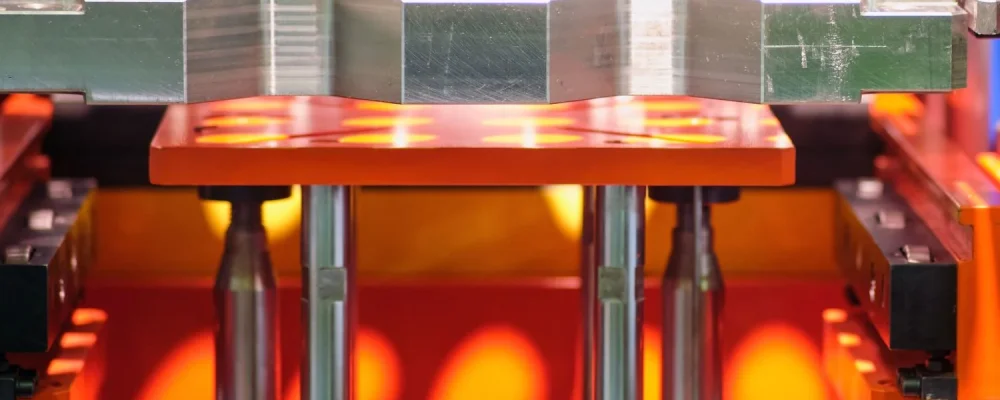
Hi-Rel Plastics provides heat insertion and heat staking services for securely joining plastic components and integrating metal hardware into thermoplastic parts. These processes support durable, repeatable assembly solutions for industrial, consumer, electronic, and specialty applications.
Heat insertion is a process used to permanently embed metal inserts, such as threaded fasteners, into thermoplastic components using controlled heat, pressure, and timing. As the insert reaches the material’s melt temperature, it is pressed into the plastic to create a strong mechanical bond with excellent pull-out and torque resistance.
Heat staking uses controlled heat and pressure to reform plastic studs or protrusions over a mating component, mechanically locking parts together without additional fasteners or adhesives. This process is commonly used for attaching plastic-to-plastic or plastic-to-metal assemblies, including electronic components, brackets, housings, and other precision assemblies.
Hi-Rel Plastics utilizes controlled processing methods to help ensure strong assembly performance, repeatability, and clean finished results across a wide range of product applications.
Hi-Rel Plastics offers heat insertion and heat staking services to securely install inserts or join plastic components using controlled heat and pressure. This process provides strong, reliable bonds while maintaining the integrity of the surrounding material.
Heat insertion and heat staking are effective methods for embedding inserts or forming permanent joints in plastic parts. Hi-Rel Plastics utilizes precise temperature and pressure control to ensure accurate placement, strong retention, and consistent results.
With experience across a variety of materials and component designs, we help manufacturers produce durable, assembly-ready parts.
Heat application ensures secure bonding and long-term stability.
Minimizes stress and deformation during insertion or staking.
Processes designed for accurate alignment and consistent results.
Seamlessly incorporated into manufacturing for repeatable, high-volume output.
Heat application ensures secure bonding and long-term stability.
Minimizes stress and deformation during insertion or staking.
Processes designed for accurate alignment and consistent results.
Seamlessly incorporated into manufacturing for repeatable, high-volume output.