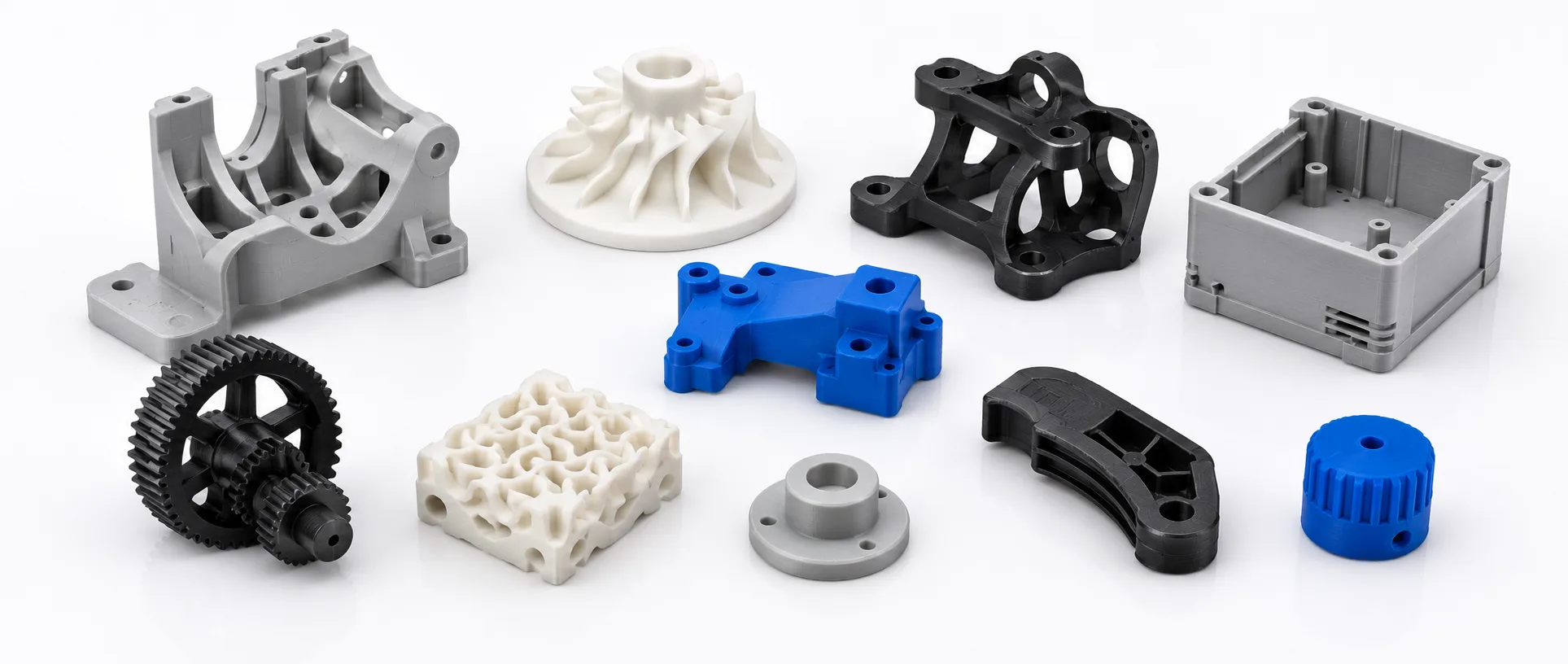
Hi-Rel Plastics & Molding Corp. provides 3D printing and rapid prototyping services to help engineers, product developers, OEMs and manufacturers turn new product concepts and CAD designs into physical prototype parts for evaluation, testing and product development.
From early-stage concept models and design-validation prototypes to functional prototype parts and pre-production components, our rapid prototyping capabilities help customers identify potential design issues, evaluate fit and function, improve manufacturability and accelerate product development before committing to production tooling.
Located in Riverside, California, Hi-Rel Plastics & Molding serves customers throughout Los Angeles, Southern California, Northern California and across the USA. More importantly, customers can transition successful prototypes into mold and tool manufacturing, plastic injection molding, blow molding and other production manufacturing processes through one manufacturing partner.
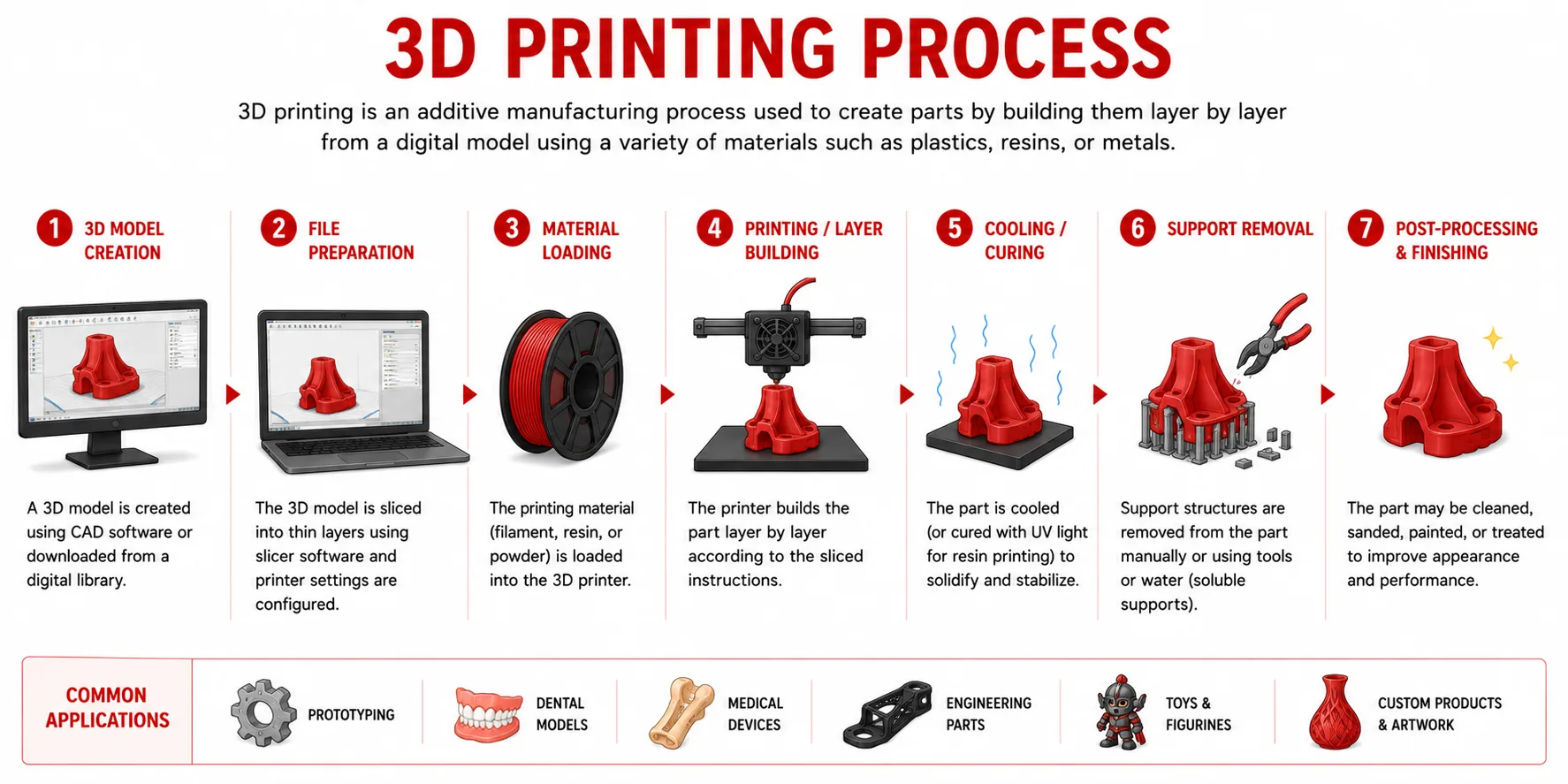
3D printing, also known as additive manufacturing, creates three-dimensional components directly from digital CAD data by building material layer by layer. Unlike conventional manufacturing methods that may require production tooling before parts can be manufactured, 3D printing can provide a fast and cost-effective method for producing prototype components during the product-development process.
Quick production of prototype parts to keep projects moving forward.
Evaluate form, fit, and function before moving into full production.
Reduce tooling costs by identifying design improvements early.
Prototypes developed with production in mind for smoother manufacturing.
Hi-Rel Plastics & Molding works with customers to use custom 3D printing and rapid prototyping for applications such as:
Our objective is not simply to manufacture a 3D printed part. We help customers evaluate how the design can ultimately transition into an efficient and repeatable manufacturing process.
Rapid prototyping allows engineers and product designers to physically evaluate a component before investing in production tooling.
A digital CAD model may look correct on a computer screen but still reveal issues when converted into a physical component. Prototype manufacturing provides an opportunity to evaluate dimensions, interfaces, ergonomics, assembly relationships, geometry and overall functionality before moving forward.
The typical product-development path can include:
Concept → CAD Design → 3D Printed Prototype → Design Evaluation → Design Revision → Functional Prototype → DFM Review → Production Tooling → Manufacturing → Secondary Operations → Assembly
This prototype-to-production approach distinguishes Hi-Rel Plastics & Molding from companies that specialize only in 3D printing.
When the prototype is approved, our manufacturing team can help evaluate the appropriate production process, including plastic injection molding, clean room medical injection molding, blow molding, liquid silicone rubber molding, thermoforming, vacuum forming or rotational molding.
Using 3D printing for rapid prototype manufacturing can provide significant advantages during new product development.
Faster Product Development
Prototype parts can help engineering teams evaluate designs earlier in the development cycle and make changes before production tooling is manufactured.
Design Validation
Physical prototypes allow designers and engineers to evaluate how the actual geometry looks, fits and interacts with mating components.
Form, Fit & Function Testing
Functional prototypes can help determine whether critical features, interfaces, clearances and assembly relationships operate as intended.
Reduced Tooling Risk
Discovering a design problem after manufacturing production tooling can result in expensive mold modifications and project delays. Rapid prototyping helps identify potential problems earlier.
Multiple Design Iterations
Digital manufacturing makes it practical to evaluate multiple design revisions during development before finalizing a production design.
Complex Geometries
Additive manufacturing can create certain complex geometries, internal features and design configurations that may be difficult or expensive to manufacture using traditional prototype methods.
Bridge to Production
Once the prototype has been validated, Hi-Rel Plastics & Molding can help customers transition into production through our comprehensive plastic and metal manufacturing capabilities.
One of the most important advantages of working with Hi-Rel Plastics & Molding is our ability to support projects beyond the prototype stage.
Many 3D printing companies specialize primarily in additive manufacturing. Hi-Rel Plastics & Molding provides customers with access to a much broader manufacturing infrastructure.
Our capabilities include:
This enables customers to work with a single-source manufacturing partner from prototype through production rather than transferring the project between unrelated prototype, tooling, molding and assembly suppliers.
Rapid prototyping becomes especially valuable when combined with Design for Manufacturability (DFM).
A prototype design that works successfully does not automatically mean that the same geometry is optimized for injection molding or another high-volume manufacturing process.
Before transitioning a component from 3D printing to injection molding, our engineering and tooling teams can review important manufacturing considerations including:
Early DFM collaboration can help reduce tooling modifications, manufacturing problems, scrap and unnecessary development costs while improving the transition from prototype to production.
For products eventually intended for plastic injection molding, rapid prototyping can provide an important development step before investing in an injection mold.
A 3D printed prototype may be used to evaluate the general geometry and assembly of a proposed injection molded component. Once the design has been validated, Hi-Rel Plastics & Molding can support custom injection mold manufacturing and injection molding for low-, medium- and high-volume production requirements.
This integrated workflow helps customers maintain greater continuity from engineering development through tooling and production.
Rapid prototyping can be particularly valuable during medical device product development, where multiple design iterations may be required before production.
Hi-Rel Plastics & Molding Corp. is ISO 13485 certified and supports medical and healthcare customers with prototype-to-production manufacturing solutions.
After prototype and design validation, customers can transition qualifying production programs into our medical device injection molding operations.
Hi-Rel Plastics & Molding offers both Class 10,000 / ISO Class 7 cleanroom environments and Class 100,000 / ISO Class 8 cleanroom environments for qualifying manufacturing and assembly requirements.
Our medical manufacturing capabilities can support projects requiring:
This provides medical-device companies with a development pathway from prototype manufacturing to ISO 13485 production manufacturing.
Rapid prototyping also allows aerospace engineering teams to evaluate complex components before committing to production manufacturing.
Prototype applications can include housings, covers, brackets, fixtures, assembly aids, ducting concepts, electronic enclosures and other development components.
Once designs have been validated, Hi-Rel Plastics & Molding can evaluate suitable manufacturing processes for production quantities, including injection molding, blow molding, thermoforming, vacuum forming, rotational molding, tooling and custom component manufacturing.
3D printing provides consumer-product designers with a fast way to transform digital concepts into physical objects.
Applications can include:
Physical prototypes allow marketing, engineering and manufacturing teams to evaluate the design before investing in production tooling.
3D printing is not limited to product prototypes.
Custom 3D printed jigs, fixtures, gauges, holders and assembly aids can also support manufacturing operations by simplifying repetitive tasks, positioning components, assisting assembly operations and supporting inspection or production processes.
Potential applications include assembly fixtures, drilling guides, part holders, inspection fixtures, manufacturing aids, protective fixtures and custom tooling concepts.
For certain applications, additive manufacturing can also provide an effective solution for low-volume plastic parts and bridge production where the economics of dedicated production tooling may not yet be justified.
As demand increases, Hi-Rel Plastics & Molding can help evaluate whether the project should remain with additive manufacturing or transition into a production process such as injection molding, blow molding, thermoforming, vacuum forming or rotational molding.
The appropriate manufacturing method depends on factors such as:
Hi-Rel Plastics & Molding provides 3D printing, rapid prototyping and custom manufacturing services for OEMs, engineering teams and product manufacturers across major industries, including:
Customers developing products in these industries can benefit from having prototype development, tooling, molding, secondary operations and assembly coordinated through one manufacturing resource.
Hi-Rel Plastics & Molding Corp. is located in Riverside, California, providing convenient manufacturing support for customers throughout the Los Angeles metropolitan area and Southern California.
We support customers throughout Riverside, Los Angeles, Orange County, San Bernardino, San Diego, Ventura, Santa Barbara and surrounding Southern California manufacturing markets.
Companies searching for a 3D printing company in Southern California, rapid prototyping company in Los Angeles, plastic prototype manufacturer in California or prototype-to-production manufacturing company can work with Hi-Rel Plastics & Molding from initial development through production.
Hi-Rel Plastics & Molding also supports manufacturers, engineering companies and OEMs throughout Northern California, including San Francisco, San Jose, Silicon Valley, Oakland, Sacramento and surrounding markets.
Our California manufacturing location provides Northern California companies with access to rapid prototyping combined with comprehensive tooling, molding, secondary manufacturing and assembly capabilities.
In addition to California, Hi-Rel Plastics & Molding serves customers throughout the United States.
Digital CAD data enables product-development teams to collaborate efficiently with our manufacturing team regardless of location. Once prototype designs have been approved, customers can continue working with the same manufacturing organization for tooling, molding, assembly and production.
Customers have many choices when searching for a 3D printing company or rapid prototyping manufacturer. Hi-Rel Plastics & Molding provides a different value proposition: the ability to support the complete product lifecycle.
Customers choose Hi-Rel Plastics & Molding for:
Instead of finding one supplier for prototyping, another for tooling and another for production, customers can consolidate more of the product-development and manufacturing process with Hi-Rel Plastics & Molding.
Whether you need a single prototype, multiple design iterations, functional prototype components, low-volume parts or support transitioning a prototype into production, Hi-Rel Plastics & Molding can help determine an efficient manufacturing strategy.
For the fastest project review, provide available:
Our team can evaluate your project and help determine the appropriate path from prototype development through production manufacturing.
Printing & Rapid Prototyping What is rapid prototyping?
Rapid prototyping is the process of quickly manufacturing physical models or functional components from digital design data so engineers and product developers can evaluate a design before committing to production manufacturing.
What is 3D printing?
3D printing, also called additive manufacturing, produces physical components from digital CAD data by building material layer by layer.
Why use 3D printing before injection molding?
3D printing can help verify form, fit, assembly and overall design before investing in an injection mold. Identifying design changes before tooling is manufactured can potentially reduce development costs and delays.
Can Hi-Rel Plastics & Molding take my prototype into production?
Yes. This is one of the major advantages of working with Hi-Rel Plastics & Molding. After prototype validation, our team can evaluate production processes including plastic injection molding, blow molding, clean room medical molding, LSR molding, thermoforming, vacuum forming and rotational molding.
Do you provide rapid prototyping for medical products?
Hi-Rel Plastics & Molding supports medical product development and is ISO 13485 certified. Qualifying production programs can also be supported with Class 10,000 / ISO Class 7 and Class 100,000 / ISO Class 8 cleanroom manufacturing environments.
Can rapid prototyping be used for aerospace products?
Yes. Rapid prototyping can help aerospace engineering teams evaluate prototype geometry, assemblies, fixtures, housings and other development components before transitioning appropriate designs into production.
Do you serve customers outside Southern California?
Yes. Hi-Rel Plastics & Molding serves customers throughout Southern California, Los Angeles, Northern California and across the United States.
Accelerate your product-development process with a manufacturing partner capable of supporting your project from concept and prototype through tooling, production and assembly.
Whether you are developing a medical device, aerospace component, consumer product, packaging application, industrial component or other custom product, Hi-Rel Plastics & Molding Corp. can help move your project toward production.
Contact Hi-Rel Plastics & Molding Corp. to discuss your 3D printing, rapid prototyping, prototype manufacturing, tooling and production requirements.