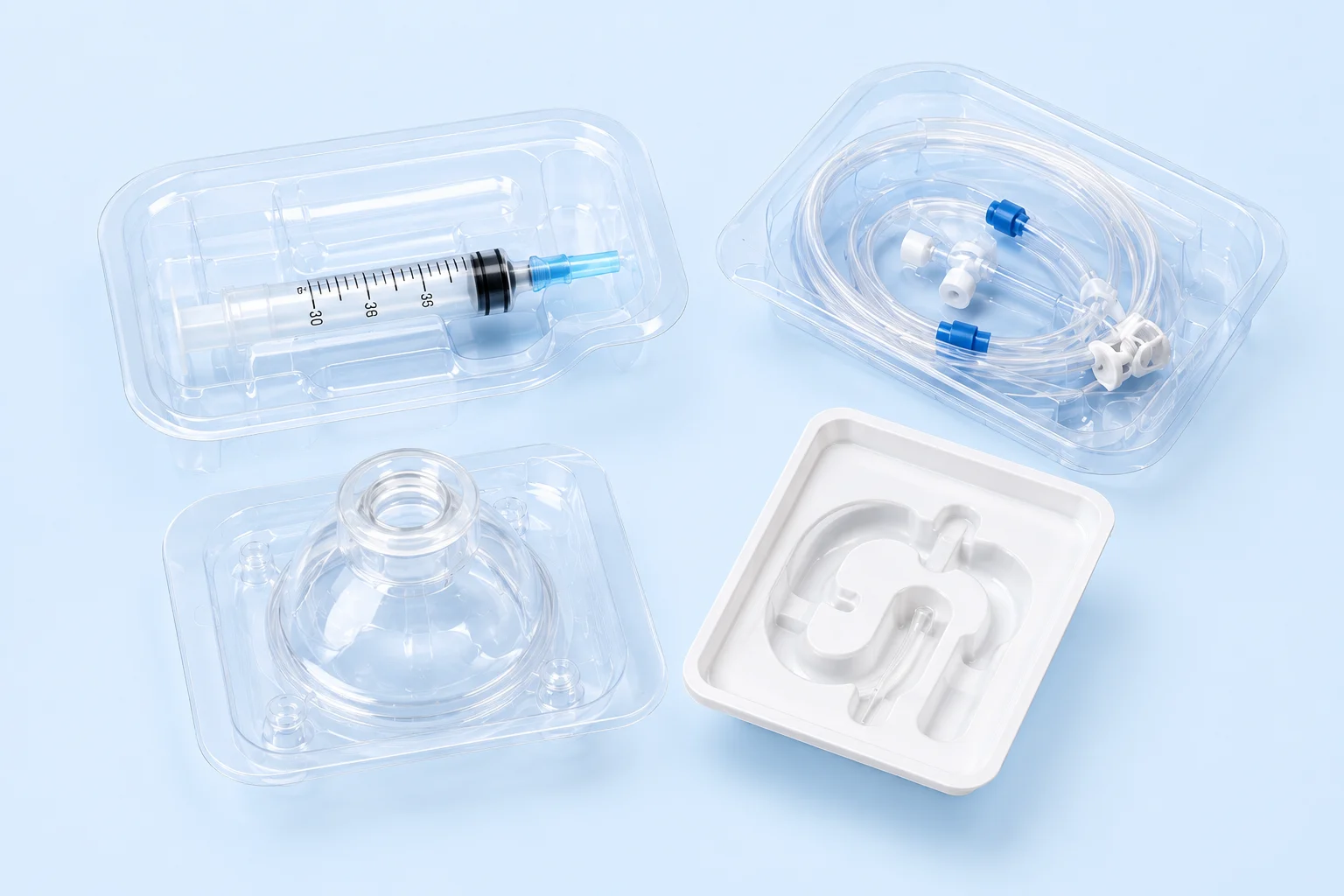
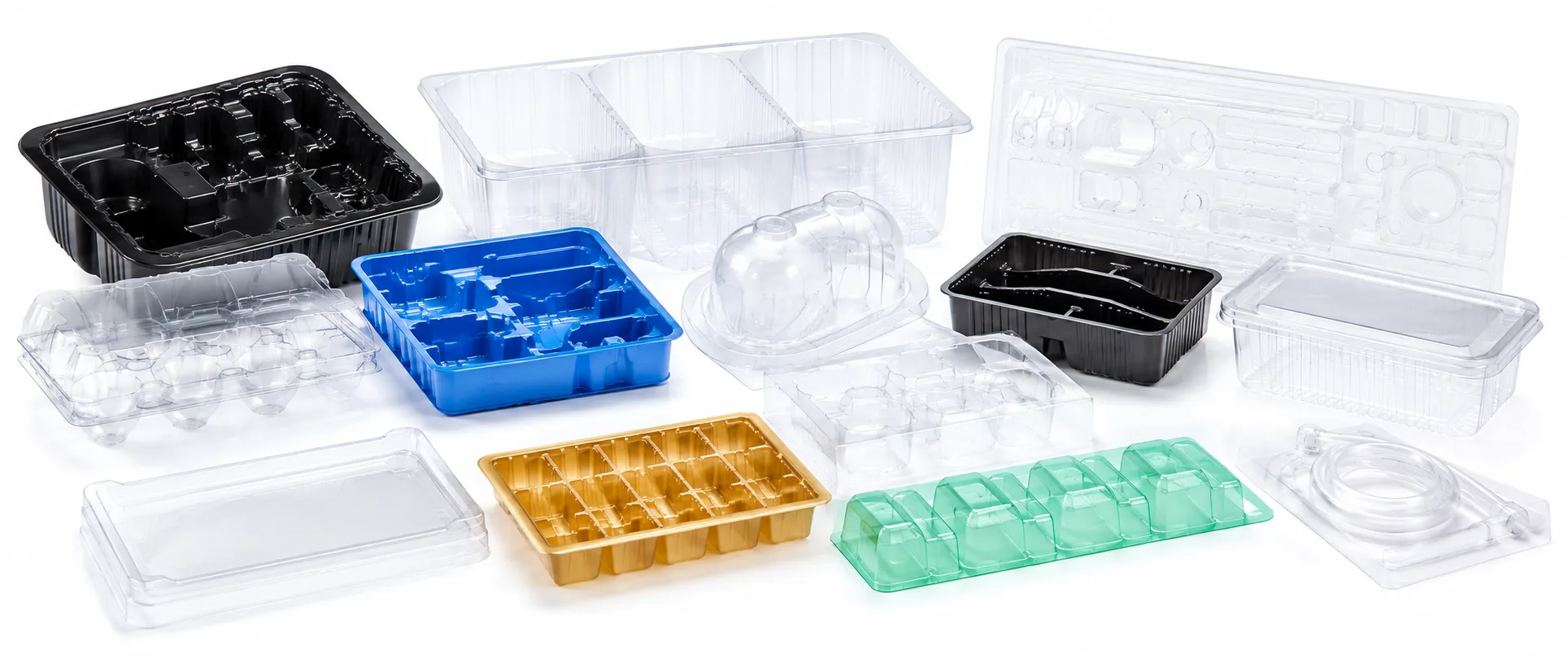
Hi-Rel Plastics & Molding Corp. provides custom plastic thermoforming and vacuum forming services for OEMs and product manufacturers requiring durable, lightweight, cost-effective and precisely formed plastic components. From concept development and prototyping through tooling, thermoforming, trimming, machining, assembly and secondary operations, Hi-Rel Plastics & Molding provides a comprehensive manufacturing solution for customers throughout Los Angeles, Southern California, Northern California and across the USA.
With more than 40 years of plastics manufacturing experience, Hi-Rel Plastics & Molding supports prototype, low-volume, medium-volume and production requirements for applications ranging from medical and pharmaceutical trays to aerospace components, equipment housings, packaging, consumer products, industrial covers and custom plastic enclosures.
Customers requiring additional manufacturing processes can also utilize our plastic injection molding services, plastic blow molding services, rotational molding, LSR liquid silicone rubber molding, mold and tool manufacturing, rapid prototyping, custom plastic and metal manufacturing, assembly and value-added secondary operations.
Plastic thermoforming is a manufacturing process in which a thermoplastic sheet is heated until it reaches a formable temperature and is then shaped over or into a custom mold. Vacuum, pressure and/or mechanical assistance can be used to draw the heated sheet against the tooling and reproduce the required geometry.
After the formed sheet cools and becomes dimensionally stable, the component is removed and trimmed to its final dimensions. Additional operations such as CNC trimming, drilling, routing, machining, assembly, bonding, printing, labeling or other finishing processes can then be performed.
Thermoforming can provide an economical alternative to injection molding for certain large plastic components, lower-to-medium production volumes, shallow or deep draw parts, protective covers, trays, housings and enclosures, particularly when lower tooling investment and faster development are important project considerations.
Lower tooling costs compared to other molding methods for large parts.
Ideal for producing durable parts with reduced material weight.
Efficiently form oversized components with consistent quality.
Supports a wide range of thermoplastic materials for diverse applications.
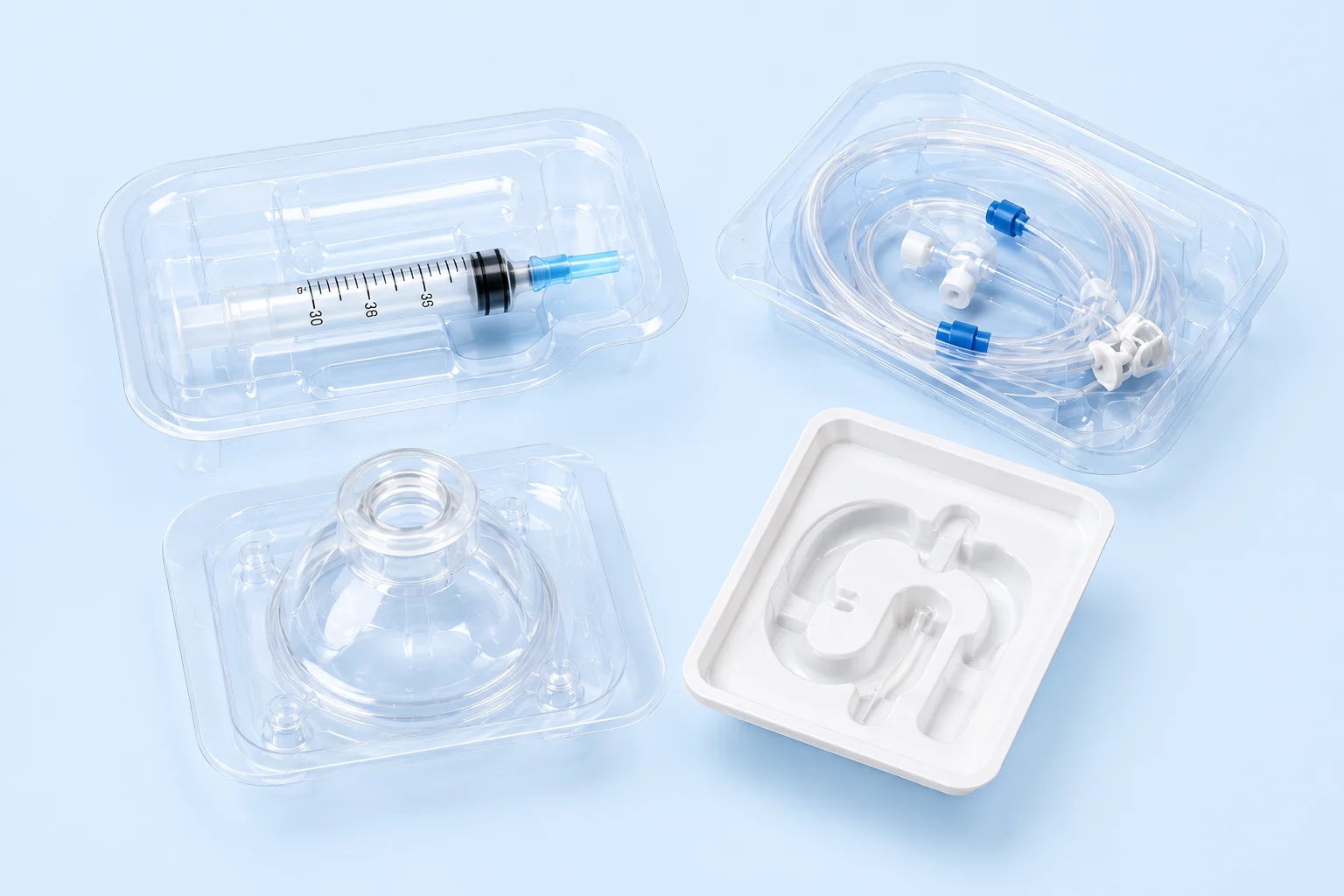
Vacuum forming is one of the most widely used thermoforming processes. A thermoplastic sheet is heated until pliable and positioned against a mold. Vacuum
removes the air between the sheet and mold surface, drawing the plastic tightly against the tooling and reproducing the mold geometry.
After cooling, the formed component is removed and trimmed to the specified final configuration.
Custom vacuum forming can be suitable for:
Hi-Rel Plastics & Molding supports custom thermoforming solutions based on the size, geometry, material, cosmetic requirements and intended application of each component.
Heavy-gauge thermoforming, sometimes referred to as thick-gauge thermoforming, is commonly used for larger, stronger and more durable plastic components.
Typical applications include equipment housings, machine covers, structural panels, interior transportation components, medical equipment housings, aerospace components, industrial enclosures and large consumer products.
Heavy-gauge thermoforming can provide several advantages, including reduced tooling investment compared with some alternative molding processes, large-part capability, relatively fast tooling development and the ability to manufacture durable components with attractive surface finishes.
Thin-gauge thermoforming is frequently used for packaging, trays, inserts and high volume formed products where material efficiency and repeatable production are important.
Common applications include:
Thermoforming is the broader category of manufacturing processes in which heated thermoplastic sheet is formed into a desired shape.
Vacuum forming is a type of thermoforming that uses vacuum pressure to pull the heated sheet against the mold.
Depending on part geometry and product requirements, thermoforming techniques may incorporate vacuum, pressure, plug assists, pre-stretching or other forming methods to improve definition and material distribution.
The appropriate process depends on factors including:
Our engineering and manufacturing team can evaluate your design and help determine an appropriate manufacturing approach.
Thermoforming offers a combination of design flexibility, tooling economics and production efficiency that can make it attractive for many custom plastic components.
Lower Tooling Investment
Thermoforming tooling can often be less expensive than tooling required for comparable large injection molded components, making the process particularly attractive for prototype, bridge and low-to-medium-volume production programs.
Large-Part Manufacturing
Thermoforming is well suited for manufacturing relatively large plastic housings, covers, panels, liners and enclosures without requiring the high clamp forces associated with large injection molded components.
Faster Product Development
Depending on tooling design and project requirements, thermoforming tools can often be manufactured relatively quickly, helping OEMs shorten development schedules and bring new products to market faster.
Lightweight Plastic Components
Thermoformed plastics can replace certain fabricated metal or fiberglass components where reduced weight, corrosion resistance and design flexibility are desirable.
Cosmetic Appearance
Material selection, color, texture and tooling design can provide attractive finished surfaces for visible consumer, medical, transportation and industrial applications.
Material Efficiency
Proper part and tooling design can help optimize sheet utilization and reduce unnecessary material consumption.
Successful custom thermoformed plastic parts begin with proper product and tooling design.
Hi-Rel Plastics & Molding works with customers to evaluate component geometry, material selection, wall thickness, draft, draw ratio, radii, undercuts, trimming requirements and other manufacturability considerations before production.
Engineering support can help identify potential issues early in development and improve:
Prototype development can also help validate fit, function and manufacturability before committing to production tooling.
Tooling plays a major role in thermoformed component quality, repeatability, surface definition and production efficiency.
Hi-Rel Plastics & Molding supports customers from product evaluation through tool and mold development, sampling and production.
Tooling strategy can be selected according to expected production volume, component dimensions, required surface finish, dimensional requirements and program life.
Our broader manufacturing capabilities also allow customers to combine thermoforming programs with custom mold manufacturing, CNC machining, rapid prototyping and other plastic manufacturing processes, reducing the number of suppliers required to manage complex programs.
Material selection directly affects strength, rigidity, impact resistance, chemical resistance, temperature performance, appearance, clarity and cost.
Depending on application and forming requirements, thermoforming materials may include:
ABS provides good impact strength, rigidity, dimensional stability and surface appearance. It is frequently selected for housings, covers, enclosures and consumer or industrial components.
HIPS is a versatile and economical thermoforming material frequently used for trays, packaging, displays and consumer applications.
PET and PETG can provide excellent clarity and are widely used for packaging, trays, displays, medical applications and other products requiring transparency.
APET / RPET
APET and recycled PET options can be considered for packaging and other applications where clarity, recyclability or recycled content are important requirements.
Polycarbonate offers excellent impact resistance and can be considered for demanding protective covers, equipment components and transparent applications.
Polypropylene offers low density and good chemical resistance, making it useful for packaging, medical, laboratory and industrial applications.
HDPE provides excellent chemical resistance, toughness and moisture resistance for industrial, material-handling and protective applications.
Acrylic offers high optical clarity, weatherability and an attractive appearance for transparent covers, displays and cosmetic applications.
PVC can provide chemical resistance, durability and versatile performance for packaging and industrial applications.
TPO can provide impact resistance and durability for transportation, industrial and outdoor components.
Our team can assist customers in evaluating material requirements based on mechanical performance, appearance, environment, regulatory considerations and cost.
Forming the plastic component is only one stage of a complete thermoforming manufacturing program.
After forming, parts may require trimming, drilling, routing or machining to create accurate final edges, holes, slots, openings and assembly features.
Hi-Rel Plastics & Molding can support plastic and metal CNC machining and other secondary operations, helping customers consolidate multiple manufacturing steps with a single supplier.
Hi-Rel Plastics & Molding provides a broad range of value-added secondary services for custom plastic components.
Depending on product requirements, secondary operations may include:
Combining forming and secondary operations can simplify the customer’s supply chain, reduce handling between vendors and provide a more complete finished-component solution.
Hi-Rel Plastics & Molding Corp. is ISO 13485 certified and supports customers requiring controlled manufacturing environments for medical, pharmaceutical and other quality critical applications.
Our clean manufacturing capabilities include both:
These capabilities complement our medical device injection molding and clean room manufacturing services and enable customers to consolidate thermoformed components with injection molded components, LSR parts, clean room assembly and other manufacturing operations through a single manufacturing partner.
Our documented quality systems and inspection procedures support consistent manufacturing and traceability for demanding applications.
Hi-Rel Plastics & Molding provides manufacturing support for medical device and pharmaceutical companies requiring custom plastic components, trays, packaging and assemblies.
Potential thermoforming and vacuum forming applications include:
Customers requiring additional molded medical components can combine thermoforming with medical device injection molding, clean room manufacturing, LSR molding and clean room assembly.
Thermoformed plastics can provide lightweight, corrosion-resistant solutions for aerospace and defense applications where component weight, durability and repeatability are important.
Potential applications include:
Hi-Rel Plastics & Molding’s broad manufacturing capabilities allow customers to combine thermoforming with precision injection molding, machining, tooling and other processes for complex aerospace manufacturing programs.
Thermoforming is extensively used for custom plastic packaging because it can produce lightweight, repeatable and material-efficient trays, inserts and protective components.
Applications include:
Thermoforming can be used to manufacture trays, inserts, containers and other formed plastic components for food and beverage manufacturing and packaging applications.
Material selection is based on the customer’s performance, temperature, chemical, appearance and applicable regulatory requirements.
Potential applications include food trays, beverage packaging components, equipment liners, processing trays, product handling components and protective packaging.
Vacuum forming and thermoforming offer manufacturers significant flexibility for producing consumer products ranging from protective packaging to finished housings.
Applications can include:
Custom thermoformed plastics can provide durable, corrosion-resistant and lightweight alternatives for industrial equipment applications.
Potential products include machine guards, equipment covers, control housings, industrial enclosures, material-handling trays, equipment liners, protective panels, reusable shipping trays and custom fabricated assemblies.
Hi-Rel Plastics & Molding also supports thermoformed and vacuum formed products for agricultural, renewable energy and sustainability-related markets.
Our agricultural and farming equipment manufacturing capabilities can support seedling trays, greenhouse propagation flats, protective housings and equipment covers.
For sustainability and renewable applications, thermoforming can support reusable packaging trays, protective inserts, equipment liners, solar equipment covers, environmental-monitoring housings and reusable transport components.
Both thermoforming and injection molding can produce high-quality custom plastic components, but each process offers different economic and design advantages.
Thermoforming may be preferable when:
Plastic injection molding may be preferable when:
Because Hi-Rel Plastics & Molding offers multiple plastic manufacturing processes, our team can evaluate a project based on the actual application rather than attempting to fit every component into a single manufacturing process.
Blow molding is generally optimized for hollow products such as bottles, containers, reservoirs and ducts.
Thermoforming and vacuum forming generally start with plastic sheet and are well suited for open-shell products such as trays, covers, panels, liners and housings.
Providing both manufacturing technologies gives Hi-Rel Plastics & Molding additional flexibility when evaluating the most appropriate production method for a customer’s component.
One of the major advantages of working with Hi-Rel Plastics & Molding is access to a broad range of manufacturing technologies and secondary operations.
Depending on the program, customers can combine:
This broad manufacturing platform can help OEMs reduce supplier complexity while maintaining greater continuity from product development through production and final assembly.
Located in Riverside, California, Hi-Rel Plastics & Molding supports companies searching for a thermoforming company in Southern California, vacuum forming company in Los Angeles, custom thermoforming manufacturer in California or plastic vacuum forming supplier near Los Angeles.
We serve OEMs throughout:
Our location provides convenient manufacturing support for companies throughout the greater Los Angeles and Southern California manufacturing markets.
Hi-Rel Plastics & Molding also supports manufacturers throughout Northern California, including the San Francisco Bay Area, Silicon Valley, San Jose, Oakland, Sacramento and surrounding manufacturing markets.
Customers searching for a California thermoforming company or California vacuum forming manufacturer can access the same engineering, tooling, forming, secondary operation and quality support regardless of their location.
In addition to serving California manufacturers, Hi-Rel Plastics & Molding works with customers throughout the United States.
Whether your project requires a prototype thermoformed component, custom vacuum formed housing, medical tray, aerospace enclosure, packaging insert or ongoing production program, our manufacturing team can support projects from concept through finished production.
Customers choose Hi-Rel Plastics & Molding for access to a comprehensive plastics manufacturing partner rather than a thermoforming-only supplier.
Key advantages include:
Thermoforming & Vacuum Forming What is the difference between thermoforming and vacuum forming?
Thermoforming is the general process of heating thermoplastic sheet and forming it over a mold. Vacuum forming is a specific thermoforming method that uses vacuum to pull the heated sheet against the tooling.
What types of parts can be vacuum formed?
Vacuum forming is commonly used for trays, equipment housings, covers, liners, panels, packaging inserts, enclosures, displays and other relatively thin-walled shell components.
Is thermoforming suitable for large plastic parts?
Yes. One of thermoforming’s major advantages is its ability to manufacture relatively large plastic components without requiring the high tooling and equipment investment associated with some other molding processes.
What plastic materials can be thermoformed?
Common materials include ABS, HIPS, PET, PETG, APET, RPET, PP, HDPE, polycarbonate, acrylic, PVC and TPO. Final material selection depends on the component design and end use requirements.
Is thermoforming less expensive than injection molding?
For certain large parts and low-to-medium production quantities, thermoforming can offer substantially lower tooling investment. Injection molding may become more economical for high-volume production or components requiring complex molded-in details.
Do you provide tooling for thermoforming projects?
Hi-Rel Plastics & Molding can support customers from part evaluation and prototyping through tooling, sampling, production and secondary operations.
Can you provide secondary operations?
Yes. Hi-Rel Plastics & Molding supports secondary operations including CNC machining and trimming, assembly, ultrasonic welding, heat insertion and staking, adhesive bonding, printing, decorating, labeling, finishing and packaging depending on project requirements.
Do you support medical thermoforming projects?
Hi-Rel Plastics & Molding Corp. is ISO 13485 certified and offers Class 10,000 / ISO Class 7 and Class 100,000 / ISO Class 8 cleanroom environments supporting medical and other quality-critical manufacturing programs.
Do you provide thermoforming services in California?
Yes. Hi-Rel Plastics & Molding is located in Riverside, California and supports customers throughout Los Angeles, Southern California, Northern California and across the United States.
Looking for a custom thermoforming company, vacuum forming manufacturer, plastic thermoforming supplier or complete contract manufacturing partner?
Hi-Rel Plastics & Molding Corp. can evaluate your drawings, CAD files, material requirements, expected production quantities and application requirements to help determine an appropriate manufacturing approach.
From prototype development and tooling through thermoforming, vacuum forming, trimming, machining, assembly and secondary operations, our team provides a complete manufacturing solution for demanding plastic products.
Contact Hi-Rel Plastics & Molding Corp. to discuss your custom thermoforming and vacuum forming project.
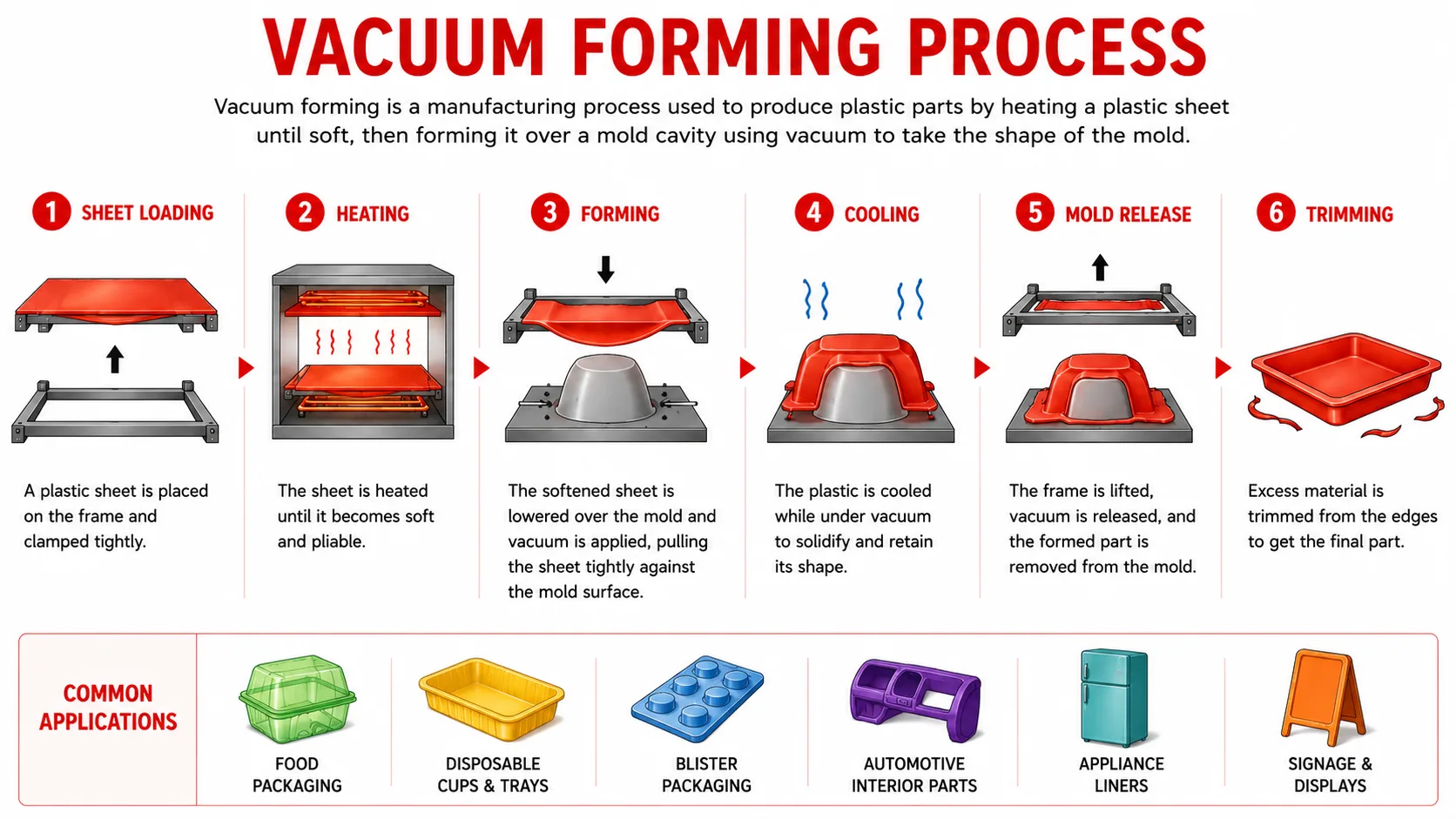
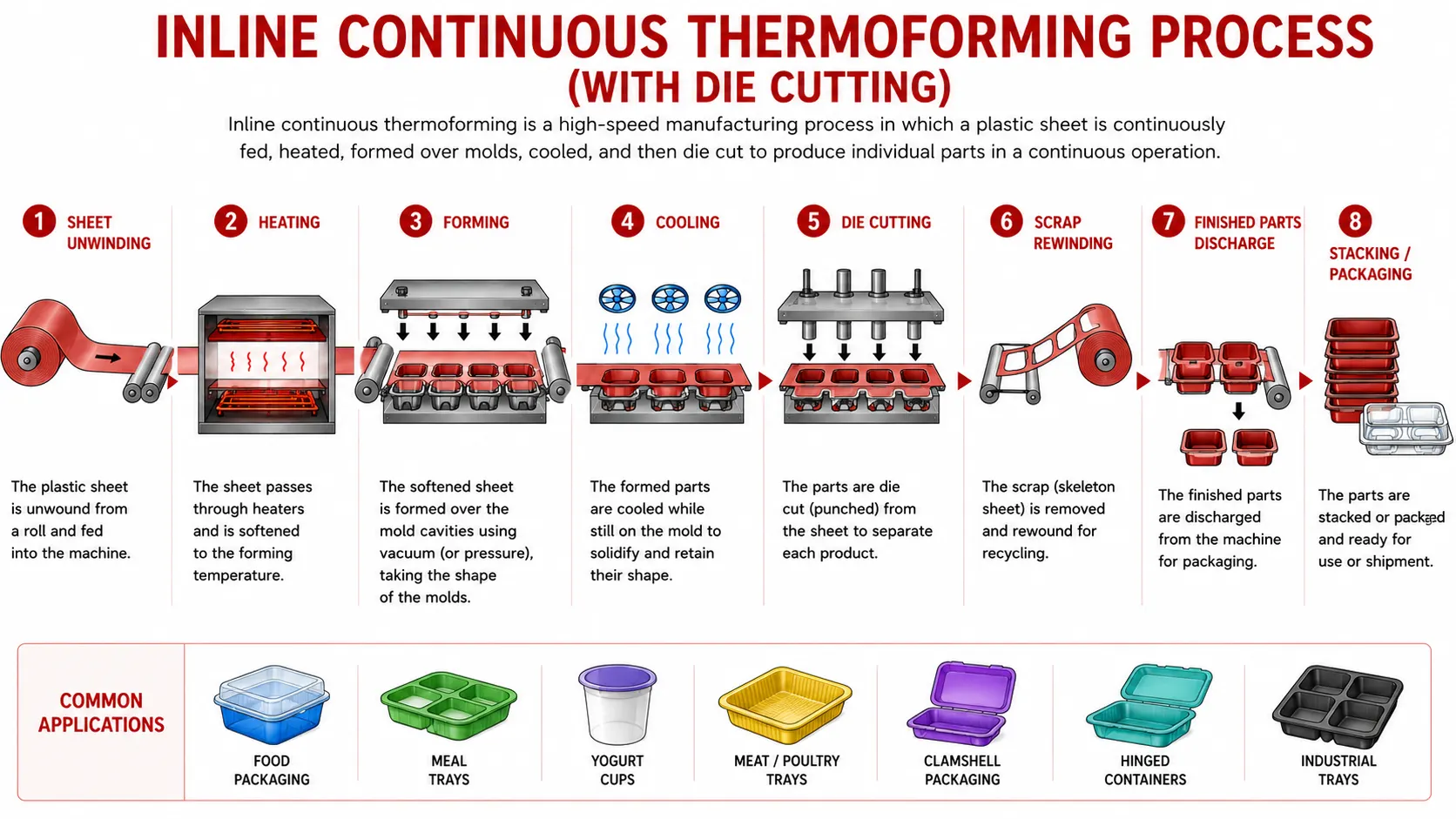
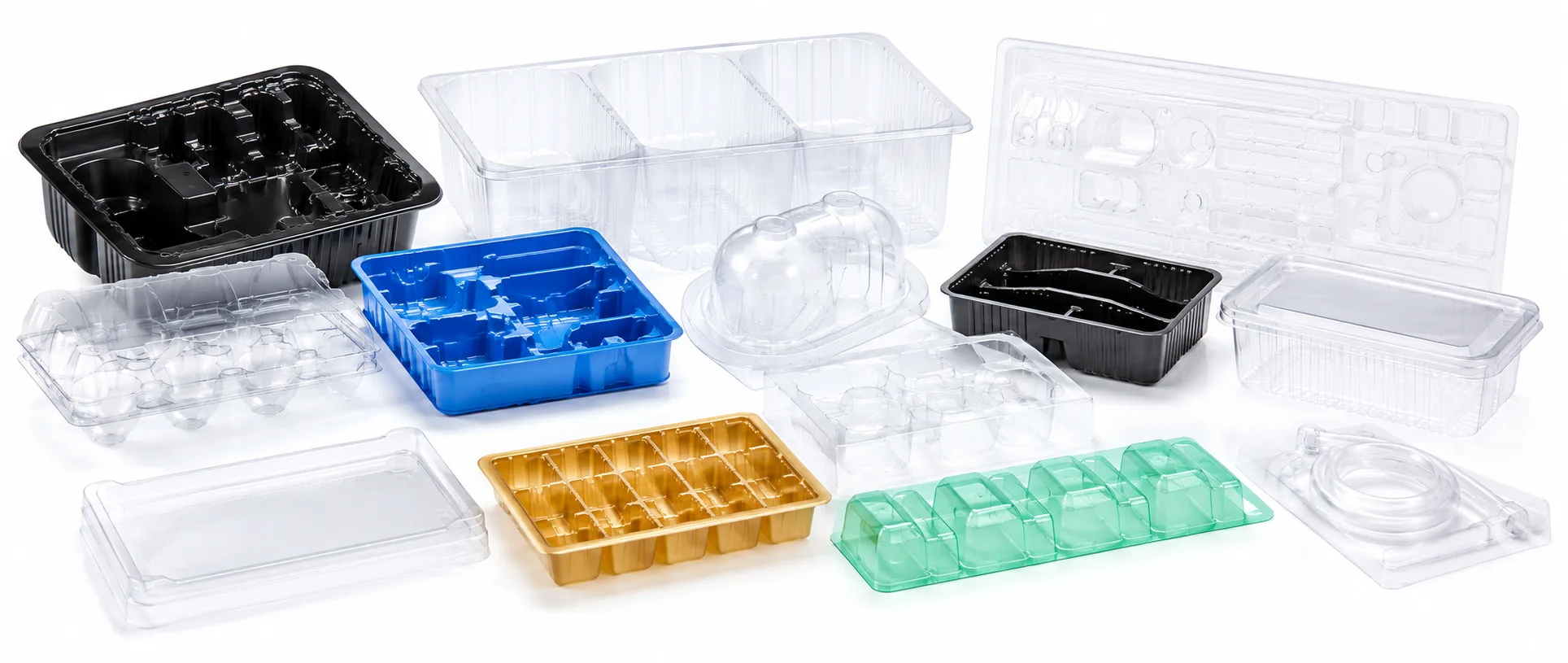
Thermoforming and vacuum forming are manufacturing processes used to produce plastic parts by heating a thermoplastic sheet until it becomes pliable, then forming it over a mold using vacuum pressure, mechanical force, or a combination of both. Once formed, the part is cooled and trimmed into its final shape. These processes are well-suited for producing lightweight and cost-effective components with faster tooling.
Lower tooling costs compared to other molding methods for large parts.
Ideal for producing durable parts with reduced material weight.
Efficiently form oversized components with consistent quality.
Supports a wide range of thermoplastic materials for diverse applications.