Medical device injection molding is a specialized manufacturing process used to produce precision plastic components for healthcare products, diagnostic equipment, surgical instruments, and implantable devices. Unlike general-purpose injection molding, medical-grade production operates under strict regulatory frameworks, material standards, and quality systems that govern every aspect of how parts are designed, tooled, produced, and validated. Understanding the process helps engineers, product developers, and procurement teams make more informed decisions when sourcing plastic components for medical applications.
The medical device industry relies heavily on injection-molded plastic parts because plastics offer a combination of biocompatibility, chemical resistance, sterilization compatibility, and design flexibility that few other materials can match. From single-use disposables to complex multi-component assemblies, injection molding allows manufacturers to produce high-quality parts at both low and high volumes with repeatable accuracy. This article explores the key considerations, materials, processes, and quality requirements that define medical device injection molding.
Medical device injection molding is the process of injecting molten thermoplastic or thermosetting resin into a precision steel or aluminum mold to produce components that meet the dimensional, functional, and regulatory requirements of healthcare applications. The process is fundamentally the same as standard injection molding, but the standards applied to tooling, materials, process control, documentation, and cleanliness are significantly more stringent.
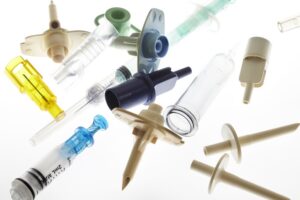
Parts produced through medical injection molding range from catheter components and syringe bodies to enclosures for imaging equipment and housings for diagnostic devices. The process is used across device classifications, including Class I, Class II, and Class III devices, each carrying different levels of regulatory scrutiny. Manufacturers working in this space must maintain robust quality management systems and demonstrate process control through documented validation protocols.
Selecting the right resin is one of the most critical steps in medical device injection molding. Materials must be evaluated for biocompatibility according to ISO 10993, which defines a series of biological evaluations based on the nature and duration of patient contact. Common biocompatible resins include polypropylene, polyethylene, polycarbonate, ABS, nylon, PEEK, and various grades of thermoplastic elastomers. Each material has distinct properties related to tensile strength, chemical resistance, clarity, and sterilization tolerance.
Sterilization compatibility is a key factor in material selection. Parts that will be subjected to ethylene oxide sterilization, gamma irradiation, autoclave steam, or electron beam processing must be made from resins that retain their mechanical and dimensional properties through those methods. Some materials degrade or discolor under radiation, while others absorb moisture under steam sterilization. Understanding the intended sterilization method early in development ensures that material choices support the entire product lifecycle.
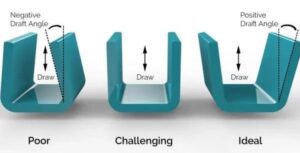
Medical-grade tooling demands tighter tolerances, superior surface finishes, and more durable construction than standard commercial molds. Medical device injection molding molds are typically built from hardened stainless steel or P20 tool steel and are designed to maintain dimensional consistency across hundreds of thousands or millions of cycles. Cavity counts, gate placement, runner design, and venting are all engineered with the final part’s functional requirements in mind.
Mold qualification is a formal process in medical manufacturing. Tool qualification typically involves Installation Qualification, Operational Qualification, and Performance Qualification — commonly referred to as IQ, OQ, and PQ. These protocols confirm that the mold installs correctly, operates within specified parameters, and produces parts that consistently meet drawing requirements. Documentation generated during mold qualification becomes part of the device’s design history file and is subject to regulatory review.
Many medical device injection molding applications require production in a controlled environment. Cleanrooms are classified according to ISO standards that define the maximum allowable concentration of airborne particles at various sizes. ISO Class 7 and ISO Class 8 cleanrooms are common in medical plastics manufacturing, with Class 7 environments used for more sensitive applications where contamination risk must be tightly controlled. Cleanroom molding is essential for components that will contact sterile fluids, implantable sites, or compromised tissues.
Cleanroom injection molding integrates HEPA-filtered air handling, gowning protocols, material handling procedures, and equipment decontamination routines into the production workflow. Workers operating in cleanroom environments follow strict procedural guidelines to minimize particulate and microbial contamination. Parts are often packaged within the cleanroom to preserve their cleanliness through shipping and downstream assembly operations.
Process validation is a regulatory requirement for most medical device components and involves formally establishing that the injection molding process consistently produces parts within specifications. Validation in medical injection molding typically follows FDA guidance documents and industry standards such as ASTM E2500 or the GHTF process validation guidance. Validated processes define process parameters — including melt temperature, injection pressure, cooling time, and cycle time — within proven acceptable ranges.
A fully validated medical injection molding process includes documented evidence that the process remains stable under normal variation. This includes design of experiments to establish parameter sensitivity, process capability studies to confirm dimensional control, and ongoing monitoring to detect drift. Validation documentation supports regulatory submissions including 510(k) applications, PMA filings, and CE marking processes in international markets.
Medical device injection molding suppliers are expected to operate under a quality management system compliant with ISO 13485, the international standard for medical device manufacturers. ISO 13485 defines requirements for documentation, change control, supplier management, corrective and preventive action, and management review. Many customers also require compliance with FDA 21 CFR Part 820, the Quality System Regulation applicable to medical devices sold in the United States.
In practice, compliance means that every aspect of the injection molding operation is documented — from incoming material inspection to in-process monitoring to final inspection and shipment. Non-conformances are tracked and resolved through formal corrective action processes. Design changes, material substitutions, and process modifications require controlled review before implementation. This level of rigor protects the integrity of the device and supports the manufacturer’s ability to demonstrate compliance during audits and inspections.
Medical injection molded parts frequently require secondary operations before they are ready for assembly or shipment. Common secondary processes include ultrasonic welding, insert molding, overmolding, laser marking, pad printing, assembly, and packaging. These operations must be performed under conditions that maintain the cleanliness, dimensional integrity, and traceability of the part. Suppliers who can perform secondary operations in-house provide a significant advantage by reducing handling and transfer risk.
Traceability is a core requirement in medical device manufacturing. Each lot of parts must be traceable back to the specific resin lot, tool cavity, process date, and operator. Lot traceability allows for rapid recall or quarantine of affected parts if a quality issue is identified downstream. Medical injection molding suppliers implement traceability systems that meet the documentation requirements of their customers’ quality management systems and applicable regulatory frameworks.
Medical device injection molding routinely requires tighter tolerances than industrial applications. Dimensional requirements for medical components may be expressed in thousandths of an inch or tenths of a millimeter, particularly for features that interface with mating parts, sealing surfaces, or assembly fixtures. Achieving and maintaining these tolerances requires precise tooling, controlled process parameters, stable raw materials, and rigorous inspection protocols.
Inspection methods in medical molding include coordinate measuring machines, optical comparators, vision systems, and functional gauging. First article inspection reports document all critical dimensions against drawing requirements and are typically required at the start of production and following any tooling or process modification. Statistical process control is used to monitor key characteristics over time, providing early warning of process drift before it produces out-of-specification parts.
One of the advantages of injection molding as a manufacturing method is its scalability. Medical device injection molding can be performed at very low volumes for early-stage product development, clinical trials, or limited-release devices, and can also support high-volume commercial production. The economics of injection molding improve with volume because tooling costs are amortized over a larger number of parts, but the process is viable across a wide range of annual quantities.
Low-volume medical injection molding is particularly valuable during device development and regulatory submission phases when design iterations may still be occurring. Bridge tooling and prototype tooling allow manufacturers to produce functional parts for testing and validation before committing to full production tooling. This flexibility supports faster development timelines and reduces the financial risk of early design changes.
Choosing the right manufacturing partner for medical device injection molding involves evaluating quality systems, certifications, cleanroom capabilities, validation experience, material expertise, and secondary service offerings. Suppliers with established ISO 13485 certification and a track record of working with regulated medical products bring institutional knowledge that reduces risk and accelerates development timelines. References from existing medical device customers and facility audits provide additional confidence in a supplier’s capabilities.
Communication and transparency are also important factors. Medical device development involves regulatory complexity, iterative design changes, and precise documentation requirements. A supplier who understands the regulatory environment, engages proactively with quality issues, and maintains thorough documentation is a more reliable partner than one focused purely on production throughput. The relationship between a medical device company and its injection molding supplier is often long-term and benefits from early and open technical collaboration.
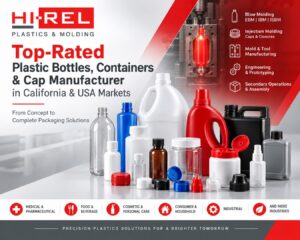
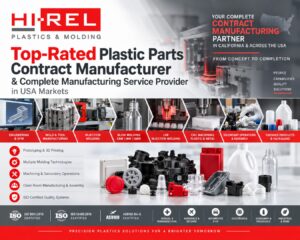
Hi-Rel Plastics & Molding has built its operations around the requirements of technically demanding markets, including medical device manufacturing. The company maintains quality systems, cleanroom capabilities, and the process discipline required to support regulated medical applications. From mold design and material selection through production and secondary services, Hi-Rel’s team brings practical experience in medical device injection molding across multiple product categories and device classifications.
Hi-Rel’s facility supports both low-volume development programs and higher-volume commercial production, making it a flexible partner across the product lifecycle. The company’s commitment to documentation, traceability, and process control aligns with the expectations of medical device OEMs and the regulatory frameworks that govern this market. Engineers and procurement professionals looking for a reliable medical injection molding source are encouraged to engage Hi-Rel early in the development process.
Medical device injection molding requires a manufacturing partner with the right capabilities, certifications, and quality systems to support regulatory compliance and production reliability. Whether you are in early-stage development, preparing for clinical builds, or transitioning to commercial production, the right supplier relationship makes a significant difference. Hi-Rel Plastics & Molding welcomes conversations with engineers, product developers, and procurement teams working on medical applications.
Reach out to Hi-Rel Plastics & Molding through the contact page at hirelplasticsm.com to discuss your project requirements, volume needs, and timeline. The team is available to review drawings, recommend materials, and provide guidance on the path from concept through validated production.