Cleanroom molding Los Angeles refers to the practice of injection molding plastic components inside environmentally controlled manufacturing spaces that limit airborne particulate contamination. Southern California hosts a significant concentration of medical device, aerospace, pharmaceutical, and electronics manufacturers who require cleanroom-molded plastic components as part of their supply chains. For these industries, standard production environments introduce contamination risks that are unacceptable for regulated products. Cleanroom molding addresses those risks through facility design, operational protocols, and rigorous quality systems.
Los Angeles and the surrounding Inland Empire region have become an important hub for precision plastics manufacturing, drawing on a deep industrial base and proximity to a large concentration of high-technology manufacturers. Companies sourcing cleanroom molding in Los Angeles benefit from shorter logistics chains, easier on-site collaboration with suppliers, and access to a skilled manufacturing workforce with experience in regulated industries. Understanding how cleanroom molding works and what to look for in a supplier helps procurement and engineering teams make informed decisions.
Cleanroom molding is injection molding performed inside a controlled environment where temperature, humidity, air pressure, and airborne particle counts are maintained within defined limits. The cleanroom classification system — defined by ISO 14644-1 — specifies the maximum allowable particle concentrations per cubic meter of air at various particle sizes. ISO Class 7 and ISO Class 8 cleanrooms are the most common environments used for medical and pharmaceutical plastic components, though Class 6 environments are used for more sensitive applications.
The physical environment of a cleanroom molding facility includes HEPA filtration systems, positive air pressure relative to surrounding spaces, specialized flooring and wall systems that resist particle accumulation, and airlocks or gowning rooms at entry points. Personnel working in cleanroom molding environments follow gowning procedures that may include coveralls, gloves, face masks, and shoe covers. Every element of the facility is designed to prevent external contamination from reaching the production area.
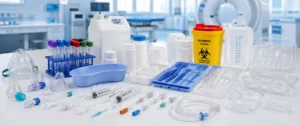
The demand for cleanroom molding in Los Angeles is driven primarily by the medical device, pharmaceutical packaging, aerospace, and semiconductor industries. Medical device manufacturers producing components that contact sterile fluids, implantable sites, or open wounds require cleanroom-molded parts to comply with FDA and ISO regulatory frameworks. Southern California’s strong medical device sector, which includes companies developing diagnostic equipment, orthopedic implants, and drug delivery systems, generates consistent demand for cleanroom plastic components.
Aerospace and defense manufacturers in the Los Angeles region also use cleanroom-molded components for applications where particulate contamination could compromise optical clarity, fluid system performance, or electronic component integrity. Pharmaceutical packaging — including bottles, caps, and closures for sterile drug products — similarly requires controlled manufacturing environments. The convergence of these industries in Southern California makes cleanroom molding capacity in the Los Angeles market both strategically important and increasingly competitive.
ISO 14644-1 defines cleanroom classifications from ISO Class 1 (most stringent) to ISO Class 9 (least stringent). For most medical plastics applications, ISO Class 7 and ISO Class 8 are the relevant standards. ISO Class 7 permits no more than 352,000 particles per cubic meter at 0.5 microns, while ISO Class 8 allows up to 3,520,000 particles at the same size threshold. The appropriate classification for a given application depends on the contamination sensitivity of the device or component and the requirements of the governing regulatory framework.
Choosing the right cleanroom classification involves understanding the intended use of the part, the nature of patient or product contact, and the sterilization or cleaning processes applied downstream. Specifying a more stringent cleanroom classification than necessary adds cost without benefit, while under-specifying creates regulatory and product risk. Suppliers with experience in cleanroom molding Los Angeles should be able to help customers determine the appropriate environment based on the device classification and applicable standards.
Cleanroom molding uses the same thermoplastic and thermosetting materials as conventional injection molding, but material selection is guided by biocompatibility, chemical resistance, sterilization compatibility, and low outgassing characteristics. Common resins include polypropylene, polycarbonate, PEEK, ABS, polyethylene, and various medical-grade thermoplastic elastomers. Resins intended for use in cleanroom-molded medical components are typically sourced from suppliers with USP Class VI or ISO 10993 documentation.
Low outgassing resins are particularly important in aerospace and semiconductor cleanroom applications, where volatile organic compounds released from plastic components can contaminate sensitive surfaces or electronic circuits. Material certification and lot traceability are standard requirements in cleanroom environments. Suppliers performing cleanroom molding in Los Angeles for regulated industries maintain incoming inspection protocols that verify material identity and lot documentation before resins enter the cleanroom.
Process control in cleanroom injection molding goes beyond standard production monitoring. Environmental parameters — including particle counts, temperature, humidity, and air pressure differentials — are continuously monitored and logged. Particle counting equipment is used to verify that the cleanroom maintains its classification throughout production runs. Deviations from specified environmental conditions trigger defined response procedures that may include pausing production and investigating root causes before resuming.
Injection molding process parameters — including melt temperature, injection pressure, hold pressure, cooling time, and cycle time — are validated and monitored within established ranges. Statistical process control charts are used to detect trends and variation before they result in non-conforming parts. The combination of environmental monitoring and process monitoring provides a comprehensive picture of production stability that is essential for cleanroom molding in regulated industries.
Components produced in cleanroom environments for medical device applications are subject to process validation requirements defined by FDA guidance documents and ISO standards. Validation establishes documented evidence that the molding process consistently produces parts that meet their specifications. Installation Qualification confirms that the cleanroom and equipment are installed correctly. Operational Qualification verifies that process parameters are controlled within defined ranges. Performance Qualification demonstrates that the validated process consistently yields conforming parts.
Cleanroom qualification also includes documentation of the facility’s environmental performance. Room classification testing using particle counting is performed at installation and at regular intervals to verify that the cleanroom maintains its rated classification. Personnel monitoring, surface sampling, and equipment decontamination logs are maintained as part of the quality system. Suppliers offering cleanroom molding Los Angeles services for regulated applications should have documented validation protocols and records available for customer review.
Many cleanroom-molded components require secondary operations such as assembly, packaging, labeling, or additional processes before they are ready for shipment. Performing secondary operations within the cleanroom or in an adjacent controlled environment preserves the cleanliness achieved during molding. Cleanroom-compatible assembly processes include ultrasonic welding, heat staking, adhesive bonding, and manual or automated component assembly using gowned personnel or robotic systems.
Packaging within the cleanroom is common for components destined for sterile applications. Clean packaging prevents re-contamination after molding and supports downstream sterilization processes. Cleanroom molding suppliers in Los Angeles who can offer integrated assembly and packaging capabilities streamline the supply chain for medical device manufacturers and reduce the handling steps that introduce contamination risk.
Cleanroom molding for medical and regulated applications requires suppliers to operate under formal quality management systems. ISO 13485 is the international standard for medical device quality management and is widely required by OEM customers sourcing cleanroom-molded components. FDA 21 CFR Part 820 applies to manufacturers of medical devices sold in the United States. These frameworks mandate documented procedures for process control, non-conformance management, corrective action, internal auditing, and record retention.
Suppliers maintaining ISO 13485 certification demonstrate that their quality systems have been independently audited against the standard’s requirements. Certification records, audit reports, and corrective action histories provide customers with evidence of a supplier’s quality performance over time. For companies sourcing cleanroom molding in Los Angeles, ISO 13485 certification is often a prerequisite for supplier qualification in the medical device market.
The greater Los Angeles region, including the Inland Empire cities of Riverside, San Bernardino, and Ontario, hosts multiple precision plastics manufacturers with cleanroom capabilities. The Inland Empire’s lower real estate costs and proximity to the Port of Los Angeles and major freeways make it a practical location for manufacturing operations serving Southern California’s technology and healthcare industries. Companies sourcing cleanroom molding in Los Angeles frequently draw from suppliers located throughout the broader Southern California region.
Evaluating cleanroom molding suppliers involves reviewing facility certifications, quality system documentation, equipment capabilities, and references from existing medical or regulated industry customers. On-site audits are common in this market and allow customers to verify cleanroom classification, assess process controls, and evaluate the supplier’s culture of quality. Supplier qualification is an investment that pays dividends throughout the product lifecycle in reduced risk and more reliable supply.
Hi-Rel Plastics & Molding operates in Southern California and serves medical device, aerospace, and industrial customers who require cleanroom-molded plastic components. The company’s capabilities include controlled environment production, quality systems aligned with regulated industry requirements, and the secondary service capabilities needed to support complete component delivery. Hi-Rel’s team has practical experience working with engineers and procurement professionals who need reliable cleanroom molding from a supplier with the certifications and process discipline to support regulated products.
Hi-Rel’s location in the Inland Empire positions it to serve the greater Los Angeles and Southern California market efficiently. The company welcomes early-stage engagement with customers developing new products and with organizations looking to qualify a backup or replacement supplier for existing cleanroom-molded components. The combination of technical capability, quality infrastructure, and regional presence makes Hi-Rel a practical choice for cleanroom molding in the Los Angeles area.
If your organization requires cleanroom-molded plastic components for a medical device, aerospace, pharmaceutical, or other regulated application, the selection of a qualified supplier is one of the most important supply chain decisions you will make. Cleanroom molding requires capabilities, certifications, and operational discipline that not all plastics manufacturers possess. Engaging a supplier early in development allows for collaborative input on design, materials, and process planning that supports a smoother path to validated production.
Hi-Rel Plastics & Molding invites engineers, procurement managers, and product development teams to reach out through hirelplasticsm.com to discuss your cleanroom molding requirements, timeline, and quality documentation needs. The Hi-Rel team is available to answer technical questions and provide guidance on the path from prototype through production.