Engineers and procurement teams must understand the liquid injection molding process steps when selecting the right manufacturing method. This process differs significantly from conventional thermoplastic injection molding. Thermoplastics use solid pellets melted into liquid form. Liquid injection molding starts with a two-component liquid system. The system gets pumped, metered, mixed, and injected into a heated mold. It then cures into a solid elastomeric part. The result delivers exceptional flexibility, temperature resistance, biocompatibility, and sealing performance. Thermoplastics cannot match these characteristics.
Medical device manufacturers, infant care producers, automotive sealing specialists, food equipment makers, and consumer electronics firms all rely on this process. The unique properties of liquid silicone rubber combined with injection molding precision make it the preferred choice. Applications demand consistent performance in challenging environments. This guide explains how the process works. We’ll explore where it performs best. Your team will learn what to evaluate when considering it for your program. Explore Hi-Rel’s silicone molding capabilities to see these principles applied in practice.
How the Liquid Injection Molding Process Works Step by Step
The process starts with two liquid components. Engineers call them Part A and Part B. Part A holds the base silicone polymer and pigment. Part B contains the crosslinking agent and catalyst. Separate drums store both components. A metering system dispenses them at a precise 1:1 ratio. The metered materials pass through a static or dynamic mixer. This mixer blends them thoroughly. The combined material then enters a closed, heated mold.
Heat triggers the curing reaction once injection occurs. Thermoplastic molding cools and solidifies parts. LSR parts cure differently. The material undergoes chemical crosslinking. It converts from liquid to solid elastomer. Part geometry, material formulation, and mold temperature affect cure time. After curing, technicians eject the part. Secondary operations may follow. These include deflashing, post-curing, or assembly. The closed-mold process and low material viscosity enable intricate production. Parts emerge flash-free with excellent dimensional consistency. This provides a core advantage over open-mold alternatives.
Liquid Silicone Rubber Material Properties
Liquid silicone rubber maintains exceptional flexibility and elastic recovery. It performs reliably from −60°C to over 200°C. Applications can expose it to extreme temperatures. It resists degradation during use or sterilization. The material is chemically inert. UV degradation doesn’t affect it. It naturally repels water and many chemicals. This contributes to long service life in demanding environments.
Medical device applications favor LSR for its biocompatibility. Medical-grade formulations meet ISO 10993 standards. Manufacturers test for cytotoxicity and sensitization. Many formulations earn USP Class VI certification. Gamma irradiation sterilizes LSR effectively. Ethylene oxide sterilization works well. Autoclave sterilization is compatible. This makes LSR suitable for single-use and reusable medical components. Food-contact grades exist for infant feeding. Food processing applications use certified grades. Beverage equipment also utilizes these formulations.
Applications Across Industries
Medical device manufacturing represents the largest application space. Components include seals and gaskets. Valves, diaphragms, and tubing connectors use LSR. Catheter components benefit from its properties. Respiratory masks and ear protection devices rely on LSR. Implantable components and drug delivery device parts use it. Biocompatibility is essential for medical use. Components contact bodily fluids and tissues. Reliable sealing matters throughout device service life.
Infant bottle nipples and pacifiers use LSR extensively. Feeding accessories demand biocompatibility and safety. Automotive manufacturers use it for engine seals. Grommets, connector boots, and gaskets seal electrical systems. These parts perform reliably across wide temperature ranges. Consumer electronics companies use LSR for overmolded cables. Waterproof seals protect internal components. Flexible housing components often use LSR. Food processing equipment, industrial sealing, and lighting applications round out its broad profile.
Tooling for Liquid Injection Molding
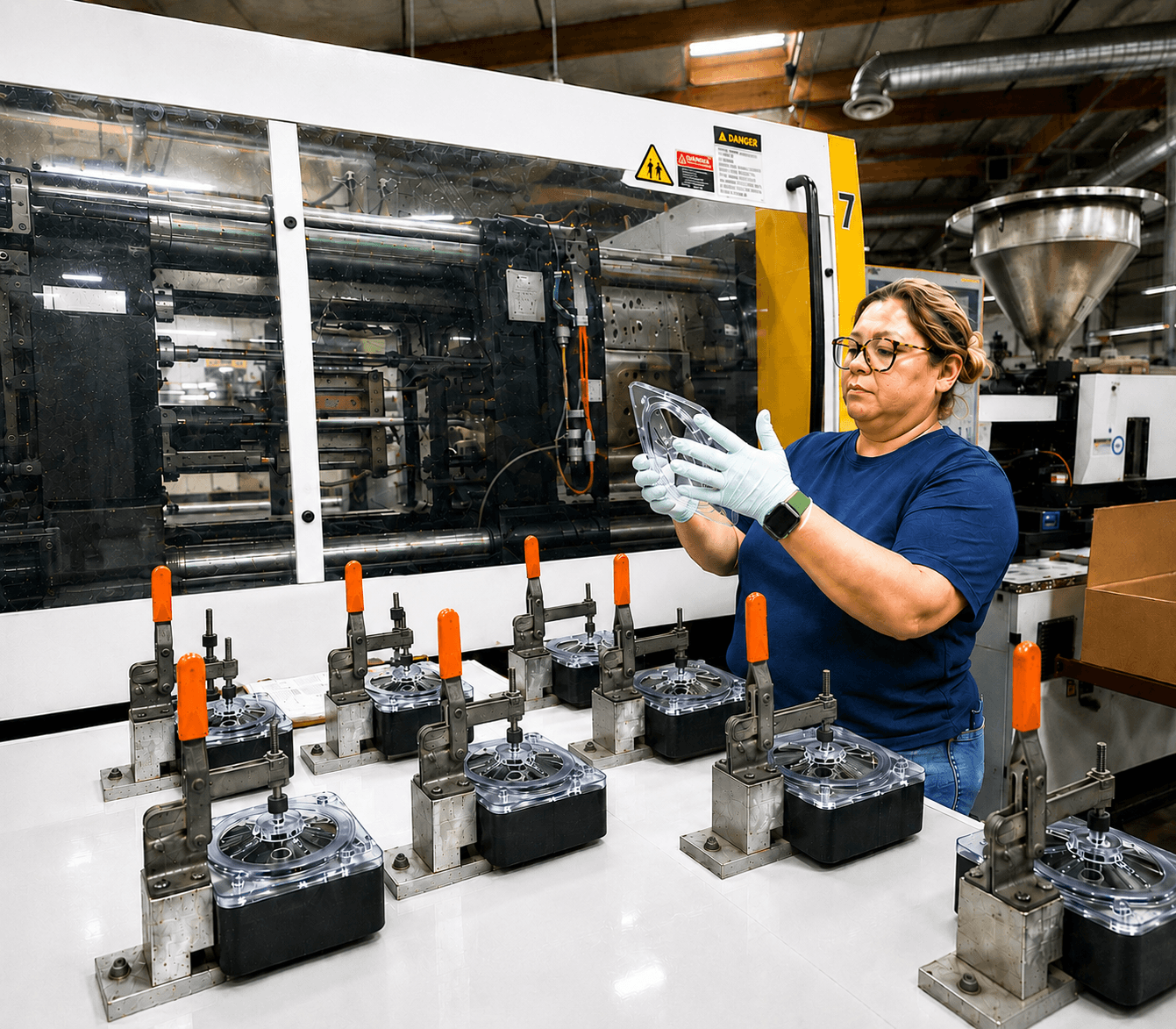
Tooling for this process differs from thermoplastic mold tooling significantly. Liquid silicone has very low viscosity. Molds require precision machining. Parting line tolerances must be extremely tight. Small gaps allow material to escape. This creates thin silicone membranes called flash. Flash requires removal in post-processing. Precise tooling minimizes flash formation. This directly reduces labor cost. Cycle time improves as well.
Molds require heating, not cooling. Heat drives silicone curing. Tool temperature functions as a critical process parameter. It affects cure time directly. Part properties depend on temperature control. Production throughput increases with proper temperature management. Hardened steel or stainless steel constructs the molds. These materials withstand repeated thermal cycling. Multi-cavity tooling maximizes production output. High-volume applications benefit significantly. The investment in precision tooling pays dividends. Material savings, consistency, and throughput advantages offset compression or transfer molding costs.
Process Advantages Compared to Other Silicone Molding Methods
Liquid injection molding beats high-consistency rubber compression molding significantly. Transfer molding also loses this comparison. The liquid material system works with automated injection equipment. Faster cycle times result. Process consistency improves substantially. Labor costs drop compared to manual compression molding. Closed-mold injection prevents material exposure to the environment. Cleanroom applications benefit greatly. Material waste reduces substantially. The metered injection system delivers precise shot volumes. Cold-runner configurations minimize runner waste.
Cold-runner systems keep material uncured between cycles. This eliminates waste entirely. Material costs decrease over the program’s life. Valve-gate cold-runner systems optimize material utilization. They work best for high-volume production. Small, complex parts benefit most. Automated injection, controlled curing, and efficient material delivery combine powerfully. Together they make this the most cost-effective process. High-volume silicone component production benefits enormously.
Cleanroom Liquid Injection Molding
Medical device and pharmaceutical manufacturing often require cleanroom production. LSR’s low viscosity creates challenges. The material attracts particulates readily. Contamination control becomes especially critical. Cleanroom production integrates ISO-classified controlled environment protocols directly. The molding process continues within these protocols. Components must meet dimensional and cleanliness requirements simultaneously.
Facilities typically operate at ISO Class 7 or ISO Class 8. Personnel gowning is mandatory. HEPA-filtered air handling systems maintain control. Material introduction follows controlled protocols throughout. Sterile medical applications require validated sterilization. Cleanroom production followed by sterilization provides required assurance. FDA regulations demand this approach. International regulatory frameworks require it as well. Suppliers serving regulated markets maintain ISO 13485 quality systems. Documented validation protocols are essential.
Design Considerations for Liquid Injection Molded Parts
Part designers must consider several key factors. Wall thickness uniformity promotes even curing. Surface defects decrease significantly. Dimensional variation reduces substantially. Draft angles on vertical walls facilitate clean ejection. Mold opening stress on the part decreases. Gate location affects cavity fill patterns. Knit line formation depends on gate placement. Structural and sealing applications require strategic knit line positioning. Critical geometry areas must avoid knit lines.
Undercuts are more feasible in LSR parts than in rigid thermoplastics. The elastomeric material flexes over mold features. Parts stretch during ejection easily. Extreme undercuts still require careful design consideration. Tearing or distortion during demolding must be avoided. Early design team engagement accelerates development. Molding suppliers provide valuable geometry input. Material selection discussions improve outcomes. Tooling design optimization reduces complexity. Process parameter refinement enhances part consistency. Production benefits from collaborative design approaches.
Why Hi-Rel Plastics Offers Liquid Injection Molding
Hi-Rel Plastics & Molding provides precision silicone component manufacturing capabilities. Medical applications receive expert support. Industrial and specialty applications benefit equally. LSR’s unique performance characteristics drive selection. The company brings extensive experience with liquid silicone materials. Precision tooling expertise sets them apart. Cleanroom manufacturing environments support regulated production. Regulated and technically demanding programs receive dedicated focus. Hi-Rel’s quality systems align with medical device OEM expectations. Robust traceability satisfies regulated-industry customers. Process control meets their stringent demands.
Hi-Rel’s team engages during the design phase. Part geometry input improves outcomes. Material selection guidance ensures optimal performance. Tooling design recommendations reduce costs. Process parameter insights enhance production. Better parts result from this collaboration. More efficient production follows naturally. Development builds receive dedicated attention. High-volume commercial production gets full support. Hi-Rel covers the complete product lifecycle. Prototyping through validated production receives expert oversight.
Ready to Explore This Process for Your Application?
Liquid injection molding solves complex manufacturing challenges effectively. Silicone rubber performance combines with injection molding precision. Dimensional accuracy and repeatability matter for your design. Medical components require this process expertise. Sealing applications demand these capabilities. Food-contact parts benefit significantly. Flexibility becomes critical for many applications. Biocompatibility is non-negotiable for medical use. Temperature resistance matters in extreme environments. The right supplier makes all the difference. Process expertise ensures success. Tooling capability determines quality outcomes. Robust quality systems deliver confidence. Your program needs support from development through production.
Hi-Rel Plastics & Molding welcomes new inquiries. Engineers exploring silicone component manufacturing should reach out. Procurement teams seeking alternative suppliers will find expertise here. Contact the Hi-Rel team to discuss your specific needs. Share your project requirements with them. Discuss material requirements and timeline. The Hi-Rel team is ready to help.