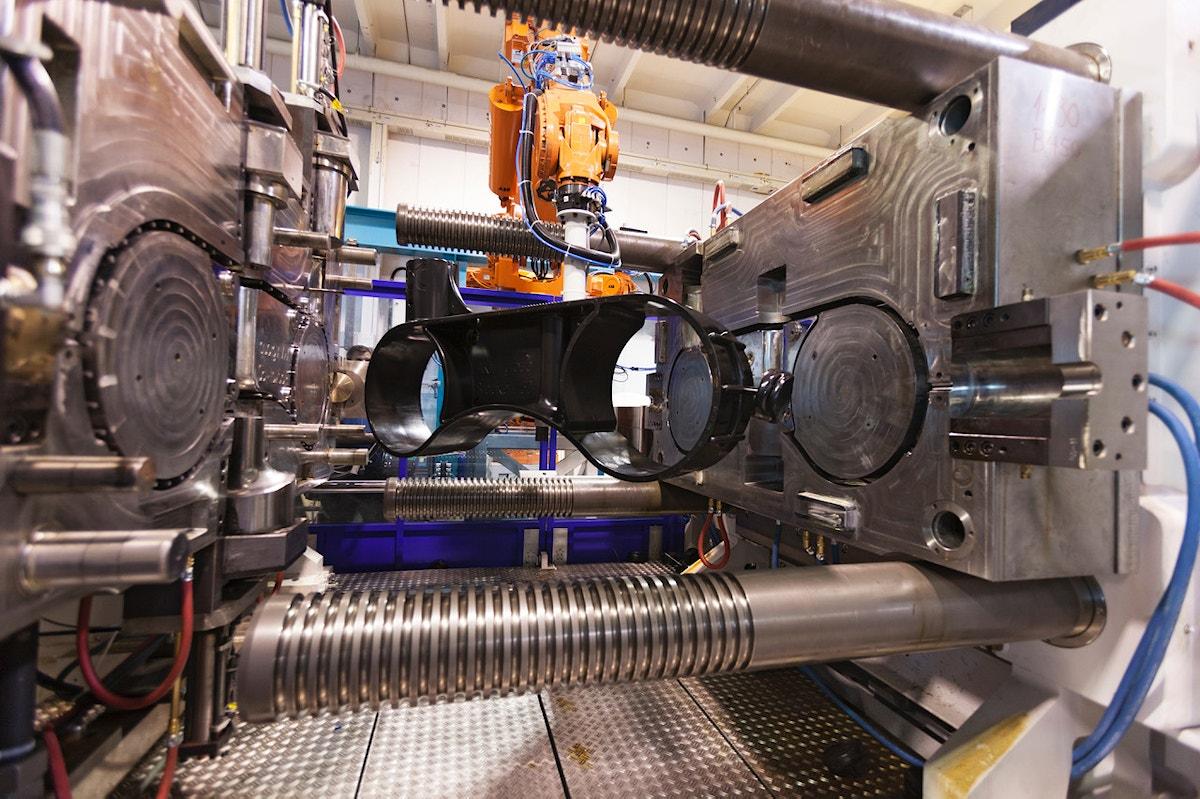
Contract manufacturing is a business arrangement in which a company (the OEM or brand owner) hires a specialized manufacturer to produce products or components on its behalf. Instead of investing in manufacturing equipment, production facilities, tooling, and labor, the OEM partners with an experienced manufacturer that already has the capabilities, quality systems, and production capacity needed to manufacture the product.
In the plastics industry, contract manufacturing often includes services such as custom injection molding, blow molding, mold manufacturing, thermoforming, rotational molding, assembly, packaging, and quality inspection. The OEM retains ownership of the product design, intellectual property, and branding, while the contract manufacturer is responsible for producing parts according to the customer’s specifications.
For OEM purchasing managers, contract manufacturing offers a practical way to reduce costs, shorten lead times, improve quality, and scale production without the significant capital investment required to build and operate an in-house manufacturing facility.
A typical contract manufacturing project follows these steps:
The customer provides CAD models, drawings, material requirements, annual usage estimates, and performance specifications. The manufacturer reviews the design for manufacturability (DFM) and recommends improvements that can reduce production costs while improving quality.
Once the design is approved, molds, fixtures, and production tooling are designed and manufactured. Engineering validation ensures the tooling will consistently produce parts within specification.
Prototype parts or first article samples are produced to verify dimensions, functionality, appearance, and performance before full-scale production begins.
After customer approval, production moves into scheduled manufacturing. Depending on the project, this may involve:
Throughout production, parts are inspected using documented quality procedures to verify they meet customer requirements.
Finished products are packaged, labeled, and shipped according to the customer’s logistics requirements.
Purchasing molding machines, tooling equipment, automation, buildings, and inspection equipment requires substantial investment. Contract manufacturing allows companies to access these capabilities without making those investments themselves.
Experienced manufacturers already have established production processes, engineering teams, and quality systems, helping new products reach production more quickly.
Many contract manufacturers employ engineers, tooling specialists, process technicians, and quality professionals who focus exclusively on manufacturing. Their experience can help improve manufacturability, reduce defects, and optimize production efficiency.
Manufacturing demand often changes over time. Contract manufacturers can frequently support prototype quantities, low-volume production, and high-volume manufacturing using the same quality processes.
Established contract manufacturers typically implement documented inspection procedures, process controls, preventive maintenance programs, and quality management systems to maintain consistent production.
Outsourcing manufacturing allows OEMs to focus on product development, sales, marketing, and customer support while relying on a manufacturing partner for production expertise.
Contract manufacturing is widely used across many industries, including:
| Contract Manufacturing | In-House Manufacturing |
| Lower upfront investment | High capital investment |
| Access to experienced manufacturing teams | Internal hiring required |
| Faster production startup | Longer implementation timeline |
| Flexible production capacity | Fixed equipment capacity |
| Reduced equipment maintenance | Company responsible for maintenance |
| Manufacturing expertise included | Expertise must be developed internally |
A full-service plastic contract manufacturer may provide:
OEM purchasing managers should evaluate potential manufacturing partners based on several important factors.
Look for a manufacturer that offers the production processes your products require today while also supporting future growth.
Engineering involvement early in the project can help reduce tooling costs and improve manufacturability.
Manufacturers with recognized quality certifications demonstrate commitment to documented processes and continual improvement.
Experience producing parts for your industry can help reduce project risk and accelerate product launches.
Verify the manufacturer has sufficient equipment, staffing, and scheduling flexibility to meet production demands.
A responsive manufacturing partner can help resolve engineering changes, scheduling updates, and production questions more efficiently.
For more than 40 years, Hi-Rel Plastics C Molding has provided custom plastic contract manufacturing solutions for OEMs throughout Southern California, Northern California, the Los Angeles metropolitan area, and across the United States.
Our capabilities include:
As an ISO 13485:2016, ISO 9001:2015, and AS9100 Rev D certified manufacturer, we help customers transform product designs into high-quality production components while supporting demanding quality and performance requirements.
Whether you’re launching a new product or transferring an existing manufacturing program, partnering with an experienced contract manufacturer can help reduce costs, improve quality, and streamline your supply chain.
A contract manufacturer is a company that manufactures products or components for another company according to that customer’s designs, specifications, and quality requirements.
Medical, aerospace, automotive, electronics, industrial equipment, consumer products, food packaging, laboratory products, telecommunications, renewable energy, and many other industries rely on contract manufacturing.
No. Startups, small businesses, and large multinational OEMs all use contract manufacturing to reduce capital investment and access specialized manufacturing expertise.
The primary advantages include lower capital costs, faster time to market, access to engineering expertise, flexible production capacity, improved manufacturing efficiency, and reduced operational risk.
Many manufacturers provide engineering support, including Design for Manufacturability (DFM), tooling design, material recommendations, prototype development, and production optimization.