Low volume injection molding applications fill the gap between 3D printed prototypes and full commercial production tooling. This approach produces anywhere from a few dozen to a few thousand parts. It uses processes and tooling scaled to that quantity. For engineers developing a new product, this stage of production often determines whether a design is truly ready for hardened tooling. It also reveals whether another round of revision is needed before committing to a larger investment.
This article covers what low volume injection molding actually involves. It addresses the tooling and material decisions specific to smaller production runs. It also explains how to plan the transition into higher-volume production when a program is ready. The goal is to help engineers and procurement professionals use this production stage effectively. It should not be treated as an afterthought before “real” tooling begins. Explore Hi-Rel’s low volume injection molding capabilities to see how this stage of production is handled in practice.
What Low Volume Injection Molding Applications Mean in Practice
Low volume injection molding applications generally involve production runs ranging from single-digit prototype quantities up to a few thousand parts. They use the same fundamental injection molding process as high-volume production. The tooling and process setups are simply scaled to match the lower quantity. The parts produced are functionally representative of the final production part. They use the actual production resin rather than a 3D printed substitute material.
This distinguishes these applications from rapid prototyping processes like 3D printing or CNC machining. Those processes can produce individual parts quickly. However, they use materials with mechanical properties that may not match the final molded product. Low volume molding gives engineers parts that behave like production parts. That is because they are made through the same process, just at smaller scale.
When Low Volume Production Makes Sense
Low volume injection molding applications are well suited to design validation. Engineers need enough parts in the actual production material to run functional and fit testing. This happens before committing to hardened production tooling. These applications also support market testing, clinical evaluations for medical devices, and limited product launches. These situations arise where demand has not yet been established at commercial scale.
Programs facing a compressed timeline to first revenue also benefit from this approach. It allows a product to reach customers or clinical sites while full production tooling is still being built. Understanding which of these scenarios applies to a given program helps determine the right tooling approach. It also helps identify the right quantity to target.
Tooling Options for Low Volume Programs
Aluminum tooling is the most common choice for low volume injection molding applications. It costs significantly less than hardened steel and can be machined faster. This shortens the time between design finalization and first parts. Aluminum tools wear more quickly than steel, which limits their usable life. That limitation is rarely a concern for a program only producing a few thousand parts.
Some programs use 3D printed tooling inserts for extremely limited runs. This approach has more significant limitations on part complexity, surface finish, and achievable tolerances. Bridge tooling is another path worth considering. It is an intermediate option built to transition more directly into a production-representative process. It is worth evaluating when a program expects to scale soon after the initial low volume run.
Material Considerations for Low Volume Runs
Because low volume injection molding applications use the actual production resin, material selection decisions made at this stage carry forward into full production. Testing the intended production material during a low volume run validates more than just part geometry. It also validates how the material behaves under real molding conditions. This includes shrinkage, warpage, and surface finish characteristics.
Engineers should resist the temptation to substitute a more moldable material during a low volume run purely to simplify the tooling and process setup. Doing so undermines the value of testing with production-representative parts. Any material substitution should be a deliberate decision. It should be documented and revisited before committing to production tooling.
Cost and Lead Time Tradeoffs
Low volume injection molding applications typically cost more per part than high-volume production. Tooling and setup costs are spread across a smaller quantity. However, the total program cost is often lower than committing to full production tooling before a design is validated. Aluminum tooling can frequently be completed in a fraction of the time required for hardened steel tooling. This compresses the overall development timeline significantly.
Procurement teams should evaluate these costs against the risk of committing to expensive steel tooling for an unvalidated design. In most development programs, the cost of a low volume run is small. It is small compared to the cost of reworking or replacing a production tool built around an unvalidated design.
Quality and Documentation Expectations
Even at low volume, injection molding runs intended to validate a design should include basic dimensional inspection and documentation. This is particularly important for programs headed toward regulated industries such as medical devices. First article inspection during a low volume run establishes a baseline. Later production tooling and process validation can be compared against that baseline.
Suppliers experienced in low volume injection molding applications should be able to provide inspection reports and process notes even for smaller runs. This documentation often informs decisions about tooling design changes before the program moves to full production. Skipping this documentation at the low volume stage can make it harder to diagnose issues that appear later at higher volume. FDA guidance on design controls outlines documentation expectations for regulated medical device programs. ISO 13485 defines the quality management framework that governs these requirements.
Transitioning from Low Volume to Production Volume
A well-planned low volume injection molding program considers the eventual transition to production tooling from the start. That transition may be months away, but planning for it early matters. Preserving design intent, gate location, and part geometry between the low volume tool and the eventual production tool reduces the risk of surprises when the process is scaled up.
Suppliers who run both the low volume and production phases of a program can carry forward process knowledge and inspection history. They do not need to start over with a new supplier unfamiliar with the part’s development history. This continuity is one of the more overlooked advantages of choosing a single supplier across both stages. Contact Hi-Rel to discuss how continuity across development stages can benefit your program.
Industries That Rely on Low Volume Injection Molding Applications
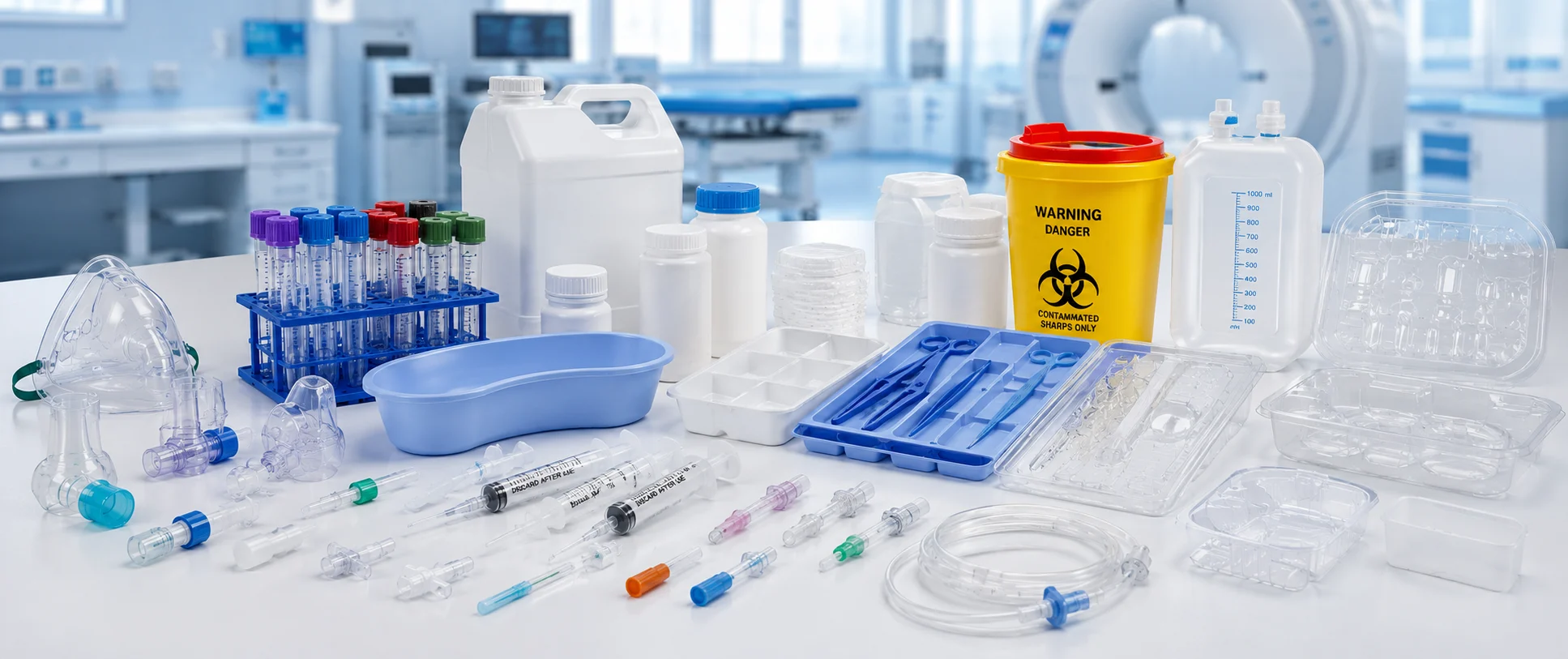
Medical device companies frequently rely on low volume injection molding applications to produce parts for clinical trials and early commercial launches. Full-scale production tooling is not yet justified by confirmed demand at that stage. Consumer electronics and industrial equipment manufacturers use the same approach to test new products in the market. This happens before investing in high-volume tooling.
Startups and companies launching entirely new product categories also rely on this manufacturing approach. It allows them to reach initial customers without the capital investment that hardened production tooling requires. They can validate demand before scaling manufacturing to match it.
Why Hi-Rel Plastics Supports Low Volume Programs
Hi-Rel Plastics & Molding provides low volume injection molding applications support using aluminum and bridge tooling options. Engineering teams receive production-representative parts without the cost and lead time of full hardened tooling. The company works with customers across medical, industrial, and consumer applications. It operates at whatever quantity a program’s current stage requires.
Hi-Rel’s ability to carry a program from low volume production through the transition to full production tooling gives customers continuity across development stages. Process knowledge and design intent are preserved as a program scales. That continuity reduces risk during what is often the most consequential transition in a product’s manufacturing history.
Ready to Start a Low Volume Injection Molding Program?
Choosing the right tooling and process approach for low volume injection molding applications depends on where a design sits in its development cycle. It also depends on how soon production volume is expected to follow. Planning for that eventual transition from the start avoids costly rework later in the program.
Hi-Rel Plastics & Molding welcomes inquiries from engineers and procurement professionals evaluating this approach for an upcoming program. Visit hirelplastics.com to share your part requirements and discuss how Hi-Rel’s capabilities can support your project.