The liquid injection molding process is built around liquid silicone rubber. It does not use the solid thermoplastic pellets found in conventional injection molding. The material arrives as a two-part liquid compound. It gets metered and mixed in precise ratios. It then cures inside a heated mold rather than simply cooling into shape. For engineers evaluating silicone components, understanding how this process differs from standard plastic molding helps clarify when it is the right choice. It also sets expectations for what to expect from a supplier running it.
This article covers the mechanics of the liquid injection molding process. It moves from the material itself through the equipment, tooling, and quality considerations that distinguish it from thermoplastic processing. The goal is to give engineers and procurement professionals a practical understanding of the process. Explore Hi-Rel’s silicone molding capabilities to see how this expertise applies in practice.
What the Liquid Injection Molding Process Is and How It Differs from Standard Molding
Conventional injection molding heats solid thermoplastic pellets until they flow. It then injects the melt into a mold and cools the part until it solidifies. The liquid injection molding process works in the opposite thermal direction. Liquid silicone rubber is injected into a heated mold. Elevated temperature then triggers a chemical cure. This transforms the liquid into a solid, flexible silicone part. The mold itself is the source of heat rather than a place where heat is removed.
This fundamental difference changes nearly every aspect of the process. It affects the metering and mixing equipment required upstream of the mold. It also changes cycle times and venting requirements at the press. Suppliers experienced in this process maintain equipment and expertise specific to this chemistry. They do not simply adapt standard thermoplastic molding equipment to handle silicone.
Liquid Silicone Rubber as the Primary Material
Liquid silicone rubber is the material at the center of the liquid injection molding process. It is supplied as a two-part system. The two parts must be mixed in a precise ratio immediately before injection. They remain unreactive until combined. At that point, the cure reaction begins. It continues once the material reaches the temperature of the heated mold. This working method requires metering equipment capable of accurate, repeatable ratios shot after shot.
Liquid silicone rubber offers properties that many thermoplastics cannot match. These include high temperature resistance and biocompatibility grades suitable for medical applications. Its flexibility also remains stable across a wide temperature range. Selecting the correct durometer and cure system for a given application is a material decision. It should happen well before tooling is designed for production.
The Liquid Injection Molding Process Step by Step
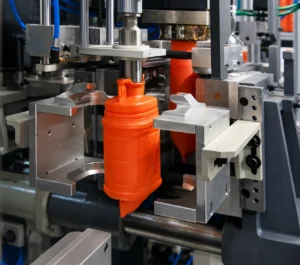
A liquid injection molding process cycle begins with the two-component liquid silicone rubber. It gets pumped from separate containers through a metering and mixing unit. That unit combines the components in the specified ratio. The mixed material then travels through a temperature-controlled feed system to the injection unit. It is then injected into a heated mold cavity under pressure.
Inside the heated mold, the silicone cures into its final shape. This typically takes seconds to a couple of minutes. Part thickness and the specific cure system determine the exact duration. Once cured, the part is ejected and the cycle repeats. Maintaining consistent mold temperature and injection parameters throughout a production run is essential. It ensures dimensionally consistent parts across the entire program.
Tooling Considerations for the Liquid Injection Molding Process
Molds used for the liquid injection molding process require precise venting. This allows air and any reaction byproducts to escape as the low-viscosity liquid fills the cavity. Silicone’s flow characteristics differ substantially from molten thermoplastic. Cavity design must also account for the material’s tendency to flash into extremely fine parting lines. Venting and clamping must be carefully controlled to prevent this.
Tool steel selection and surface finish should account for the cleaning agents the mold will encounter. The temperatures it sees repeatedly over the life of the program also matter. Because the mold provides the heat for curing, temperature uniformity across the cavity surface is a key tooling design consideration. This does not apply in the same way to thermoplastic molds.
Curing and Post-Processing Requirements
Primary cure inside the mold brings the part to a usable state. However, many silicone components benefit from a secondary post-cure process. This is performed in an oven after demolding. Post-curing drives off any remaining volatile byproducts. It can also improve mechanical properties and long-term stability. This is particularly valuable for components headed toward medical or high-temperature applications.
Trimming flash from parting lines is another common post-processing step. Even well-vented liquid injection molding tools typically produce a thin flash line. This must be removed before the part is considered finished. Some suppliers perform this trimming manually. Higher-volume programs may use cryogenic deflashing instead. This removes flash more consistently across large production runs.
Applications Across Industries
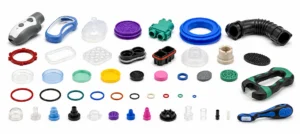
Medical devices represent one of the largest application areas for the liquid injection molding process. Biocompatible silicone grades are used for seals, gaskets, and tubing components. Wearable device components that require both flexibility and biocompatibility also rely on this process. Automotive applications use it for seals and connectors. These must withstand temperature extremes and long service life under the hood.
Consumer electronics and household products use this manufacturing approach for keypads, buttons, and protective components. Silicone’s softness and durability offer advantages over rigid plastic in these cases. Across all of these industries, the common thread is a need for material properties that thermoplastic injection molding cannot deliver.
Advantages Over Compression and Transfer Molding
Before liquid injection molding became widely available, manufacturers primarily produced silicone parts through compression or transfer molding. These processes require more manual handling. They also generally produce more part-to-part variation. The liquid injection molding process automates the metering, mixing, and injection steps. This reduces the operator dependency that affects consistency in older silicone molding methods.
The automated nature of this process also supports higher production volumes with tighter dimensional consistency. It removes much of the human variability inherent in manually loading and closing compression molds. For programs scaling from prototype quantities to commercial volume, this consistency becomes increasingly valuable.
Quality Control and Dimensional Consistency
Dimensional inspection for liquid injection molding process parts follows many of the same principles used for thermoplastic components. However, silicone’s flexibility introduces measurement challenges that rigid plastics do not present. Fixturing and gauging must account for the material’s tendency to deform under measurement pressure. Inspectors also need training specific to silicone parts. This helps avoid introducing false readings.
Process monitoring during production typically tracks shot size, mix ratio consistency, and mold temperature. These are tracked alongside dimensional checks. Drift in any of these parameters can affect cure quality. This is true even when the finished part appears visually acceptable. Suppliers with mature programs document these process parameters as part of their standard production record. ISO 13485 standards govern quality management for medical-grade silicone production. ISO 9001 applies more broadly across industrial programs.
Why Hi-Rel Plastics Delivers Liquid Injection Molding
Hi-Rel Plastics & Molding provides liquid injection molding capability alongside its thermoplastic injection molding services. This gives customers access to both processes under one quality system. The company’s experience with liquid silicone rubber spans medical, automotive, and consumer applications. It is supported by ISO 13485 and ISO 9001 certification for programs that require regulated production.
Hi-Rel’s ability to support tooling design, material selection, and secondary operations gives engineering teams a single point of contact. This covers early development through commercial production. That integration reduces the coordination burden that comes with sourcing thermoplastic and silicone components from separate suppliers. Contact Hi-Rel to discuss your specific program requirements.
Ready to Start Your Liquid Injection Molding Program?
The liquid injection molding process offers material properties and production consistency that make it the right choice for a specific category of components. However, it requires equipment, tooling expertise, and material handling knowledge distinct from standard thermoplastic molding. Confirming that a supplier has genuine hands-on experience with the process is worth verifying before committing to a program. Occasional exposure to it is not the same as mature production capability.
Hi-Rel Plastics & Molding welcomes inquiries from engineers and procurement professionals evaluating this process for an upcoming silicone component. Visit hirelplastics.com to share your part requirements and discuss how Hi-Rel’s capabilities can support your project.