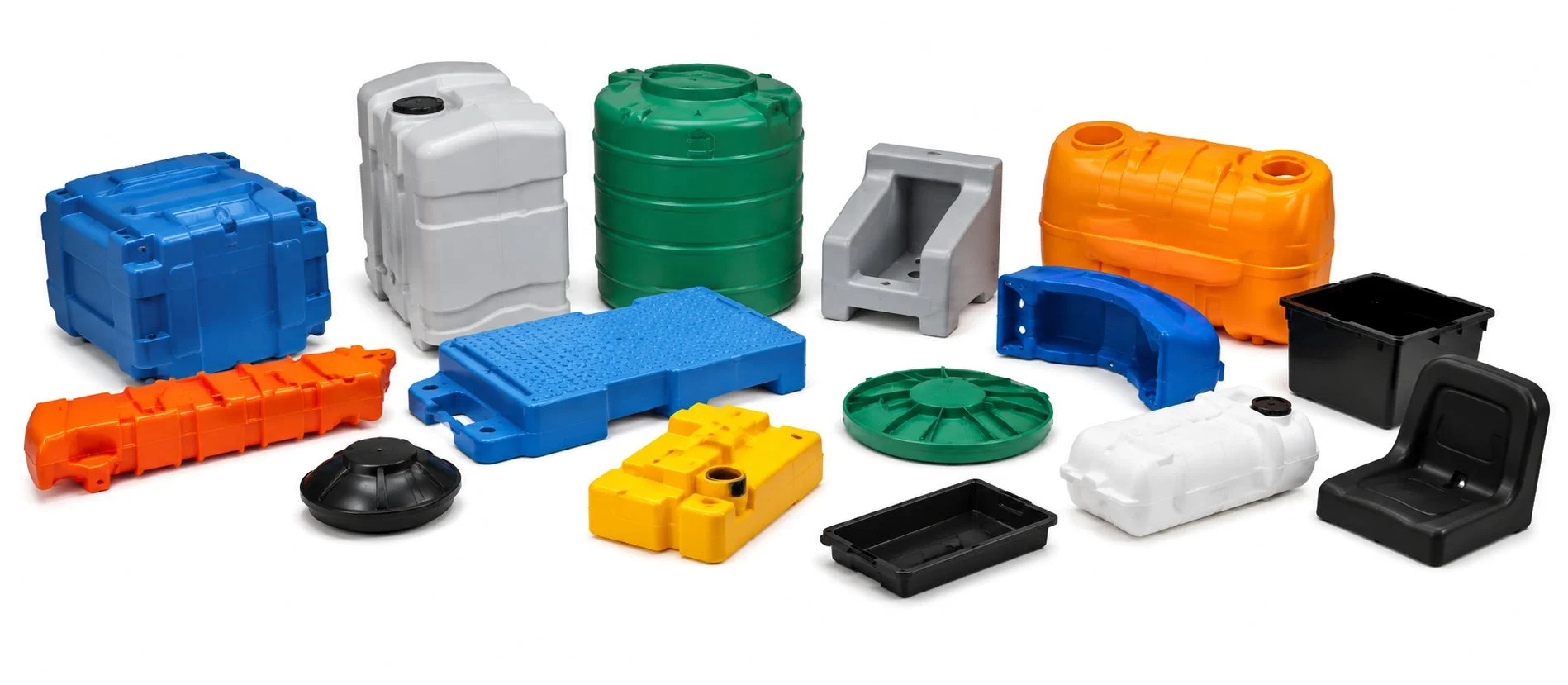
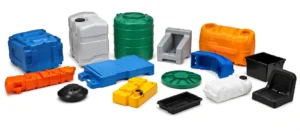
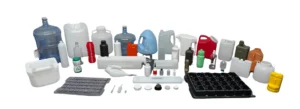
The hollow plastic parts blow molding process produces hollow components by inflating a heated tube or preform of plastic inside a mold. This approach is fundamentally different from injection molding, which fills a solid cavity. Bottles, tanks, ducting, and other hollow components are common outputs. The “custom” aspect refers to parts engineered to a specific geometry and function. These are not standard stock containers pulled from a catalog.
This article covers how the hollow plastic parts blow molding process works. It addresses the process variations available and the material and design considerations engineers should understand before starting a program. The goal is to help engineering and procurement teams evaluate whether blow molding is the right process for a hollow part. It also explains what to expect from a supplier offering custom capability. Explore Hi-Rel’s custom blow molding capabilities to see how this process is handled in practice.
What the Hollow Plastic Parts Blow Molding Process Involves
The hollow plastic parts blow molding process starts with a specific part design. It does not use an existing mold pulled from a supplier’s catalog. The mold itself is built to the customer’s geometry, wall thickness requirements, and functional features. This distinguishes it from standard blow molding. In standard blow molding, a supplier offers a limited set of existing container shapes. Customers select from these without design input.
Because this process requires new tooling for each part design, it involves more upfront engineering than selecting a stock container. This includes mold design, process parameter development, and validation that the finished part meets dimensional and functional requirements. This upfront investment pays off when a stock shape cannot meet the application’s requirements.
Extrusion Blow Molding vs. Injection Blow Molding
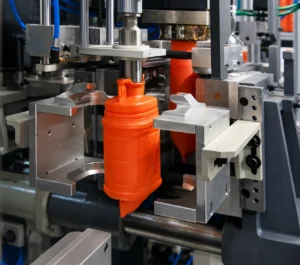
Extrusion blow molding is the most common method used in the hollow plastic parts blow molding process. It forms a continuous tube of molten plastic called a parison. This parison is captured between two mold halves and inflated with air to take the shape of the cavity. This method suits larger parts and parts with more complex or asymmetric geometry.
Injection blow molding starts differently. It begins by injection molding a preform around a core rod. The preform is then transferred to a blow mold and inflated into its final shape. This method produces more precise wall thickness and better neck finish accuracy. It is common for programs involving smaller parts with tight dimensional requirements. Pharmaceutical and cosmetic containers are typical examples.
Materials Commonly Used in This Process
High-density polyethylene is the most widely used material in the hollow plastic parts blow molding process. It is valued for its chemical resistance, impact strength, and processability across a wide range of part sizes. Polypropylene, PET, and PVC are also used depending on the application’s requirements. Clarity, barrier properties, and chemical compatibility with the contents the part will hold all drive these choices.
Material selection must account for how the resin behaves during parison formation and inflation. Materials with different melt strength and stretch characteristics can require different process parameters. They may also need different mold designs to achieve consistent wall thickness throughout the part.
Tooling and Mold Design Considerations
Molds for the hollow plastic parts blow molding process are typically built from aluminum for prototype and lower-volume programs. Aluminum offers faster fabrication and lower cost. Hardened steel tooling supports the wear resistance needed for high-volume production. Mold design must account for pinch-off areas where the parison is sealed. It must also address parting lines and any undercuts or handle features the design requires.
Venting is a critical element of blow molding tooling. Trapped air between the parison and the cavity wall can prevent the material from fully forming to the mold surface. This produces cosmetic defects or incomplete detail reproduction. Mold designers balance venting requirements against the need to maintain structural integrity of the tool itself.
Wall Thickness Control and Part Quality
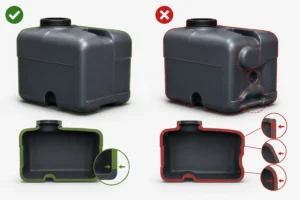
Achieving consistent wall thickness is one of the central engineering challenges in the hollow plastic parts blow molding process. The parison stretches unevenly as it inflates into the mold cavity. This is particularly true around corners and geometry changes. Parison programming varies the wall thickness of the extruded tube before inflation. This helps compensate for stretching and produces more uniform final wall thickness.
Quality control typically includes wall thickness measurement at multiple locations on the part. Visual inspection for surface defects is also standard. Weld line strength at the pinch-off gets verified. Dimensional verification of critical features such as neck finishes or mounting points rounds out the inspection process.
Design Guidelines for Hollow Blow Molded Parts
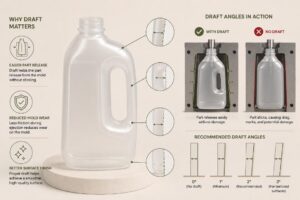
Designing for the hollow plastic parts blow molding process requires accounting for the process’s inherent wall thickness variation. Uniform thickness, as might be expected from injection molding, should not be assumed. Draft angles, parting line placement, and handle or feature design should all be developed with input from the molder. This avoids features that are difficult to inflate consistently.
Engaging a blow molding supplier during the design phase helps identify geometry challenges early. It also allows adjustments before committing to tooling. This collaborative approach reduces the risk of costly design changes after mold construction. Contact Hi-Rel before making tooling decisions to discuss your design requirements.
Applications Across Industries
Industrial and agricultural applications rely on the hollow plastic parts blow molding process for tanks, containers, and ducting. These require specific capacities and mounting configurations not available in stock shapes. Automotive applications use this process for ducting, fluid reservoirs, and other hollow components. These must fit precisely within an engine bay or chassis.
Consumer products and packaging applications use this manufacturing approach when a brand or functional requirement calls for a unique container shape. This differentiates the product from competitors using standard stock bottles. Medical and laboratory applications also use this process for specialized containers and tubing components. Specific volume and dimensional requirements drive these choices.
Choosing a Supplier for a Custom Program
Evaluating a blow molding supplier for a custom program should go beyond press capacity and part size limits. Ask specifically about the supplier’s experience with parison programming. Ask about mold design for the intended process variant. And ask how they validate wall thickness and dimensional accuracy before a program moves into production.
A supplier willing to review a design early and flag geometry that will be difficult to mold reliably is generally a stronger long-term partner. One who accepts any design as drawn without comment is not. This willingness to engage on manufacturability is one of the clearest signals of real process expertise. It distinguishes genuine capability from general molding capacity.
Why Hi-Rel Plastics Delivers Blow Molding Solutions
Hi-Rel Plastics & Molding provides hollow plastic parts blow molding process capabilities alongside its injection molding services. This gives customers a single supplier for programs that require both hollow and solid molded components. The company supports customers through mold design, material selection, and process development specific to each program.
Hi-Rel’s engineering involvement early in the design process helps customers avoid geometry and wall thickness issues. These are expensive to correct after tooling is built. This collaborative approach reflects the same quality discipline the company applies across its broader manufacturing capabilities.
Ready to Start Your Blow Molding Program?
The hollow plastic parts blow molding process offers a path to hollow plastic components engineered to specific requirements. Stock containers cannot meet these requirements. However, it requires design and tooling decisions made with the process’s unique characteristics in mind. Engaging a supplier experienced in this process during the design phase reduces risk. It also shortens the path to a validated production part.
Hi-Rel Plastics & Molding welcomes inquiries from engineers and procurement professionals evaluating blow molding for an upcoming program. Visit hirelplastics.com to share your part requirements and discuss how Hi-Rel’s capabilities can support your project.