Rotational Molded Plastic Part Design Guidelines

Recent Posts

Thermoforming Process and Material Selection: Processes, Materials, and When to Choose Them

Plastic Injection Mold Tooling Design Considerations: Design Decisions That Determine Cost, Quality, and Tool Life

Injection Blow Molding Process: A Closer Look at the Precision Blow Molding Process

Aerospace Plastic Injection Molding Considerations: What Sets These Programs Apart

Good part design can improve material distribution, reduce tooling costs, improve part performance, and support efficient production. Below are some of the most important design considerations when developing parts for rotational molding.

1. Maintain Uniform Wall Thickness

Rotational molding naturally produces hollow parts, but large variations in wall thickness can affect cooling rates, dimensional stability, and overall part quality. Maintaining consistent wall thickness helps improve part performance and manufacturing consistency. Uniform wall sections also help reduce internal stresses and improve long-term durability.

Recommended:

Benefits:
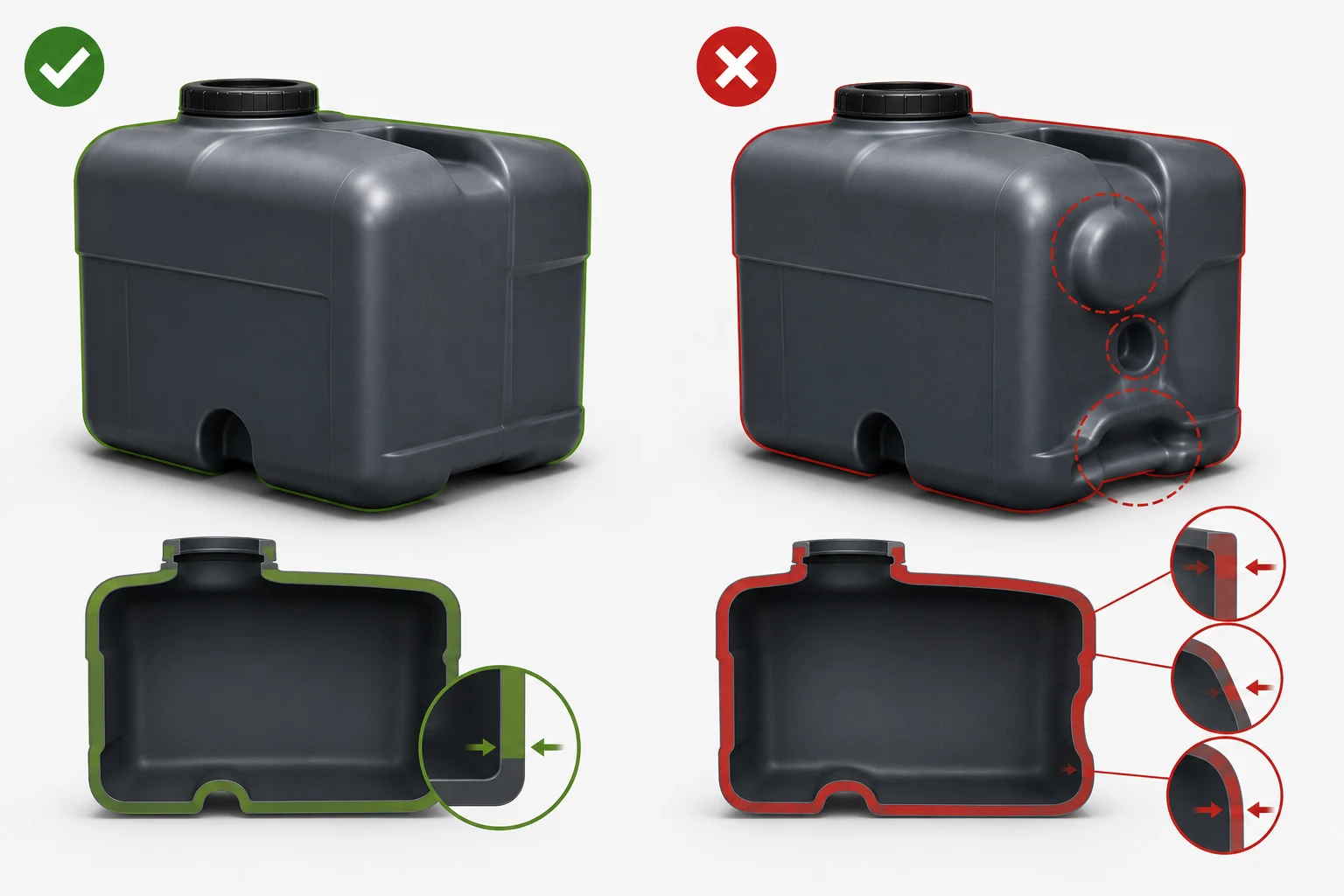
  • Maintain uniform wall thickness throughout the part.
  • Avoid heavy sections when possible.
  • Transition gradually between thickness changes.
  • Improved material distribution.
  • Reduced warpage.
  • More consistent part quality.

2. Use Generous Radii and Rounded Corners

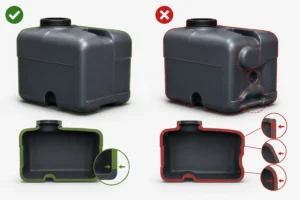
Sharp corners can restrict material flow and create areas with reduced wall thickness. Rounded corners help material distribute more evenly throughout the mold during rotation. They also reduce stress concentrations that can lead to cracking or premature part failure.

Recommended:

Benefits:
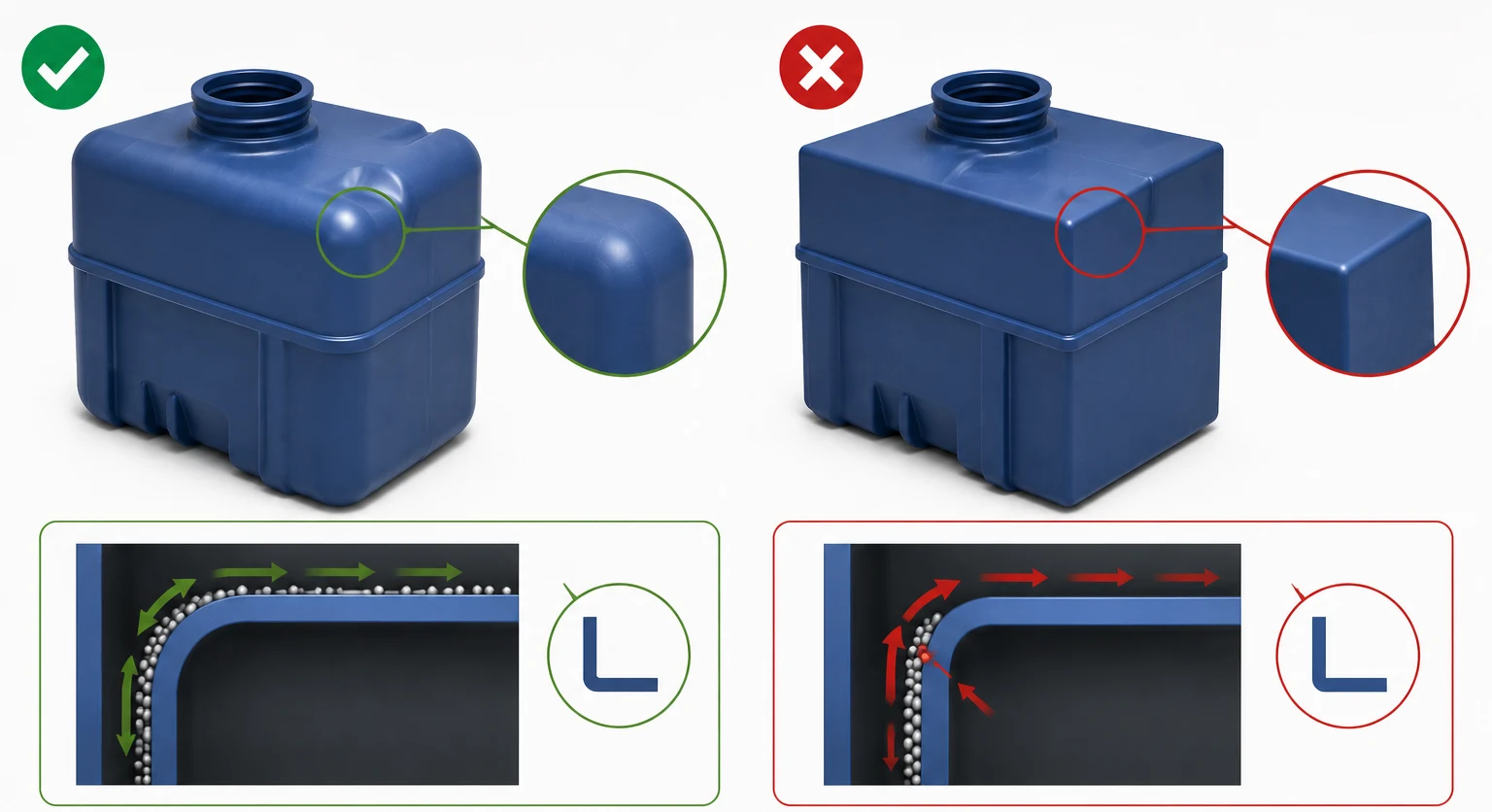
  • Use generous inside and outside radii.
  • Avoid sharp corners.
  • Blend transitions smoothly.
  • Better material flow.
  • Improved strength.
  • More uniform wall thickness.
Rotational molded plastic part design guidelines comparing rounded and sharp corners for consistent material flow

3. Avoid Deep Recesses and Sharp Features

Deep recesses and intricate details can be difficult to fill consistently during rotational molding. Simpler geometry generally produces more reliable results. Designing with smooth, open features can improve both manufacturability and part consistency.

Recommended:

Benefits:
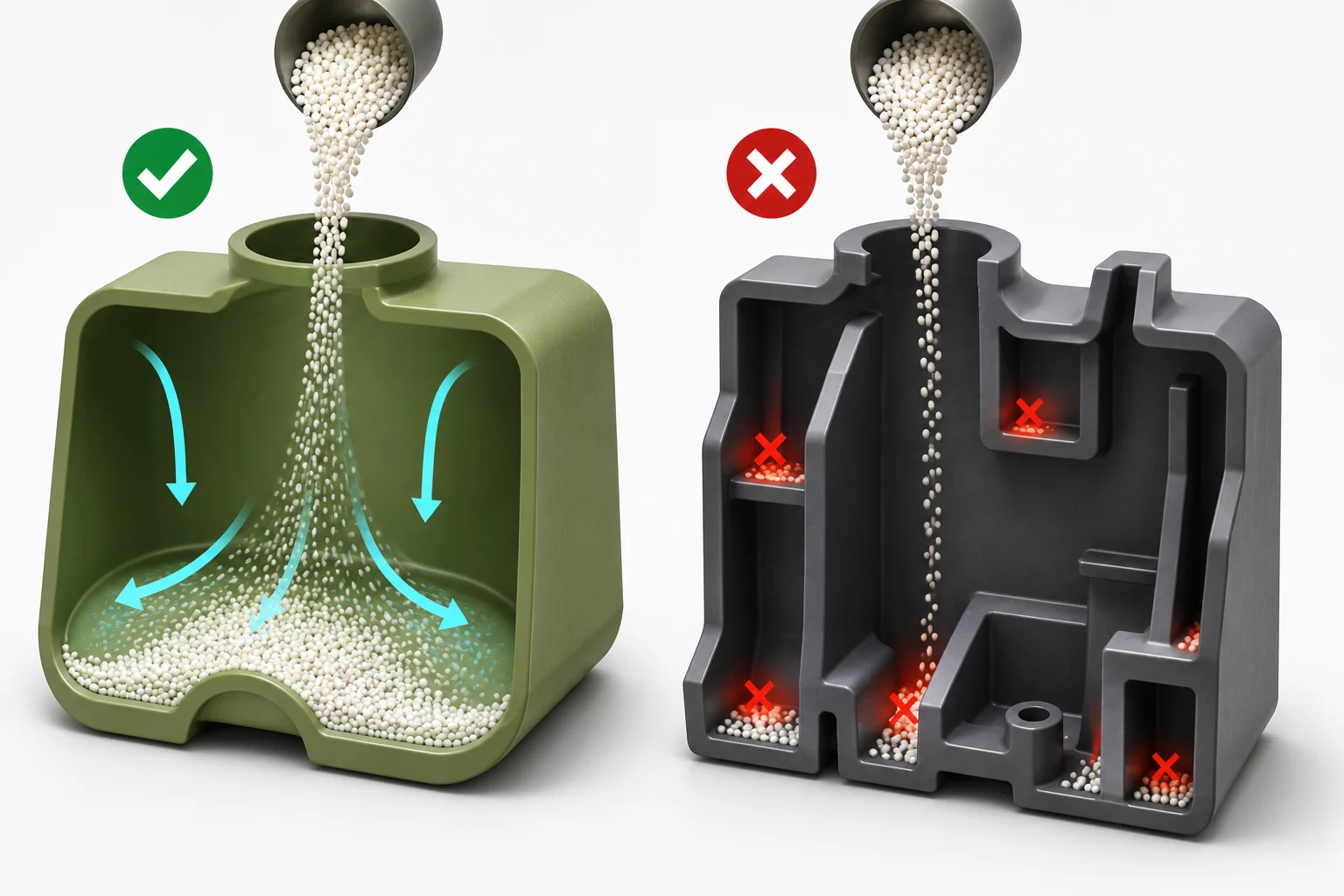
  • Keep features shallow.
  • Use smooth transitions.
  • Minimize highly detailed geometry.
  • Improved moldability.
  • Better material distribution.
  • Reduced manufacturing challenges.
Rotational molded plastic part design guidelines comparing open contours with deep recesses that restrict resin flow

4. Design Proper Inserts and Molded-In Components

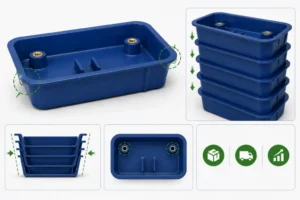
Rotational molding often incorporates threaded inserts, bushings, fittings, and mounting hardware. Proper insert placement helps improve durability and assembly performance. Considering insert locations early in the design phase can help prevent stress concentrations and assembly issues.

Recommended:

Benefits:
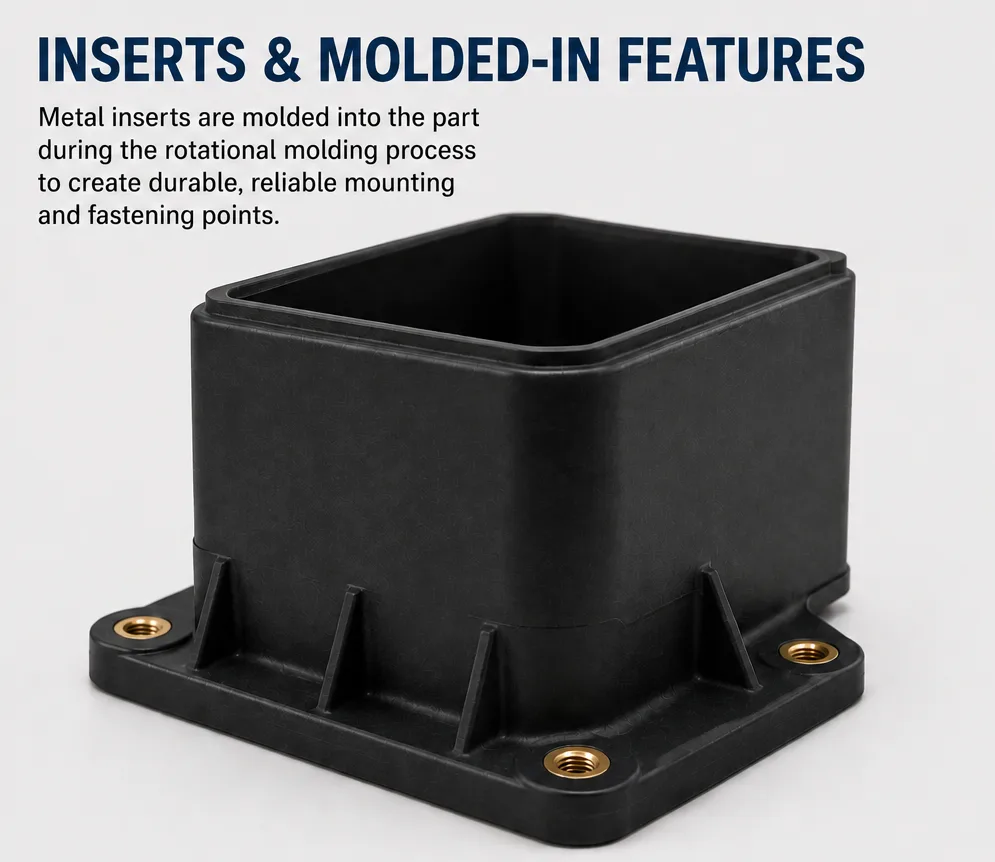
  • Use molded-in inserts when appropriate.
  • Reinforce insert locations.
  • Allow adequate material around inserts.
  • Improved assembly.
  • Better load distribution.
  • Increased durability.
Rotational molded plastic part design guidelines showing molded-in metal inserts on a reinforced enclosure

5. Consider Parting Line Location

The parting line is where the mold halves separate and can affect appearance and functionality. Proper placement can simplify manufacturing and improve aesthetics. Early evaluation of parting line location can help minimize cosmetic concerns and secondary finishing requirements.

Recommended:

Benefits:
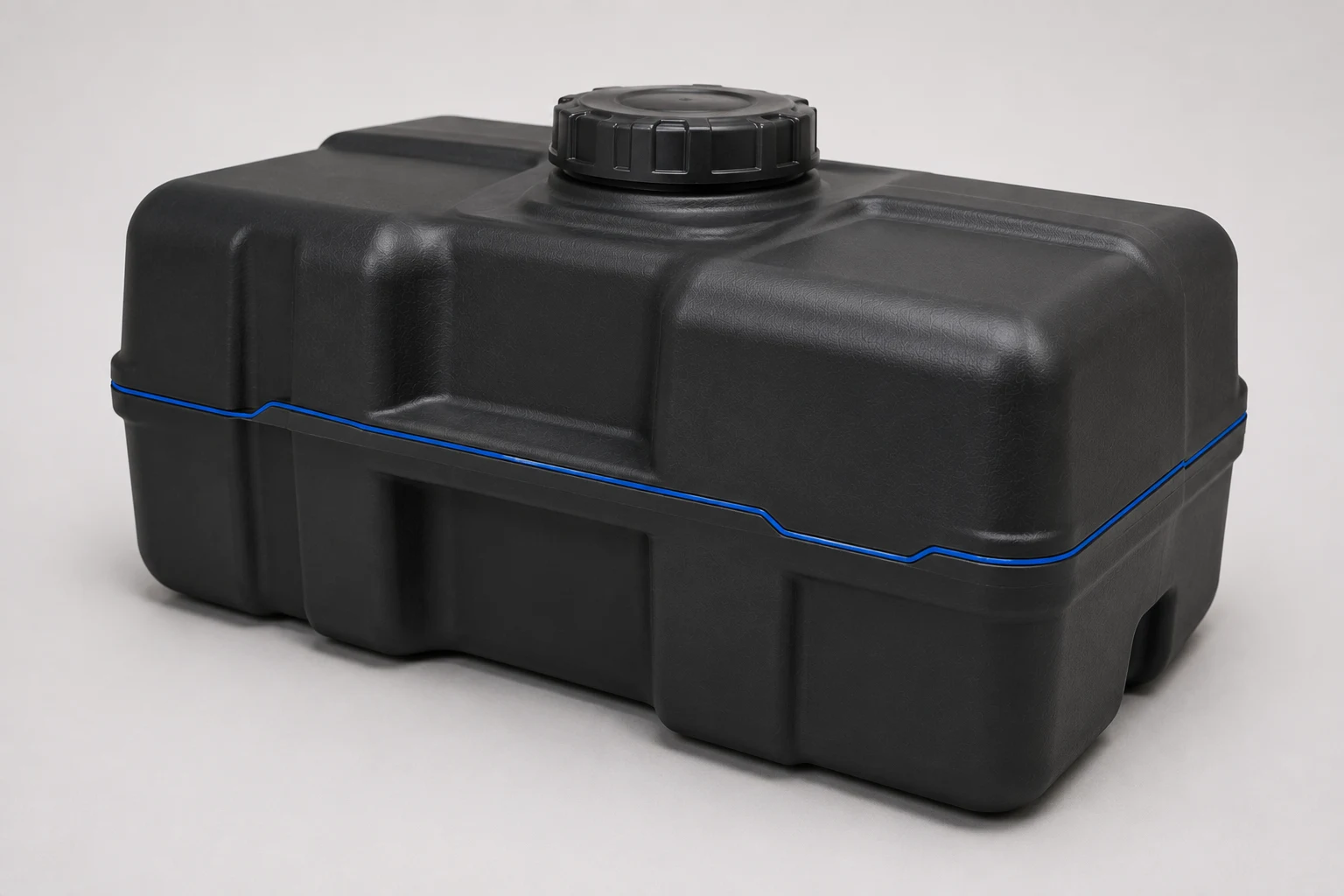
  • Place parting lines in less visible areas.
  • Avoid sealing surfaces.
  • Consider moldability early.
  • Improved appearance.
  • Easier mold maintenance.
  • Better functionality.
Rotational molded plastic part design guidelines showing proper parting line placement on a plastic tank

6. Design for Venting

Rotational molds require proper venting to allow air movement during heating and cooling. Poor venting can affect part quality and dimensional consistency. Effective vent placement helps ensure complete forming and more consistent production results.

Recommended:

Benefits:
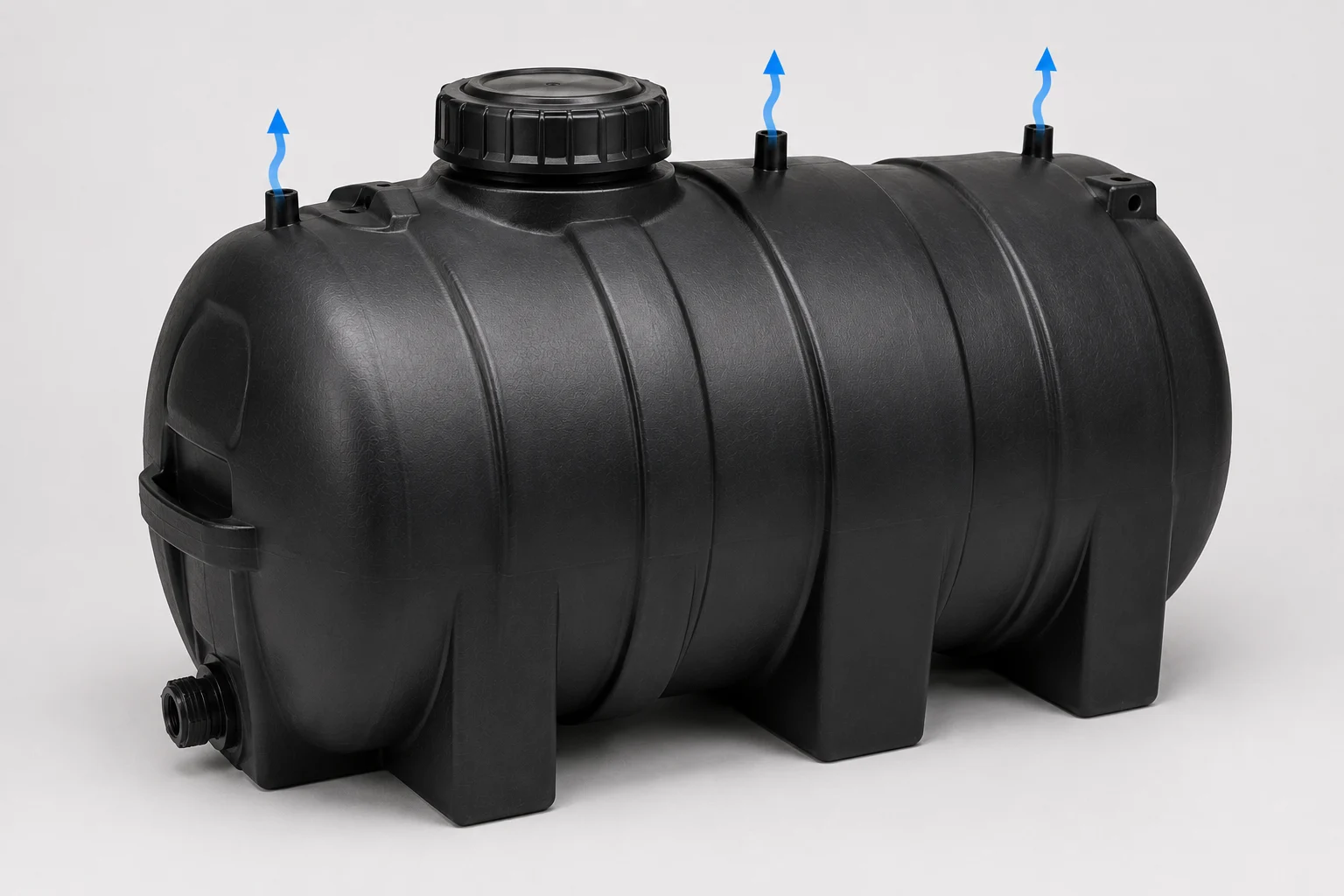
  • Include adequate vent locations.
  • Protect vents from material blockage.
  • Review venting during mold design.
  • Improved part quality.
  • Better material distribution.
  • More consistent production.
Rotational molded plastic part design guidelines showing vent locations on a hollow plastic tank

7. Design for Mold Release

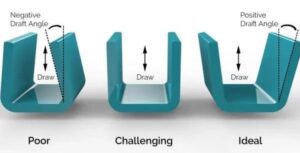
Although rotational molding generally releases easily, certain geometries can complicate demolding. Designing for mold release can simplify production and reduce cycle times. Avoiding features that trap the part inside the mold can improve efficiency and reduce tooling complexity.

Recommended:

Benefits:

  • Avoid unnecessary undercuts.
  • Simplify geometry where possible.
  • Consider mold opening direction.
  • Easier demolding.
  • Faster production cycles.
  • Reduced tooling complexity.

8. Consider Product Handling and Stiffness

Large rotationally molded products often require additional stiffness to maintain shape and performance. Features such as ribs, contours, and structural geometry can improve rigidity without significantly increasing weight. Proper structural design can also help the product withstand transportation, handling, and long-term use.

Recommended:

Benefits:
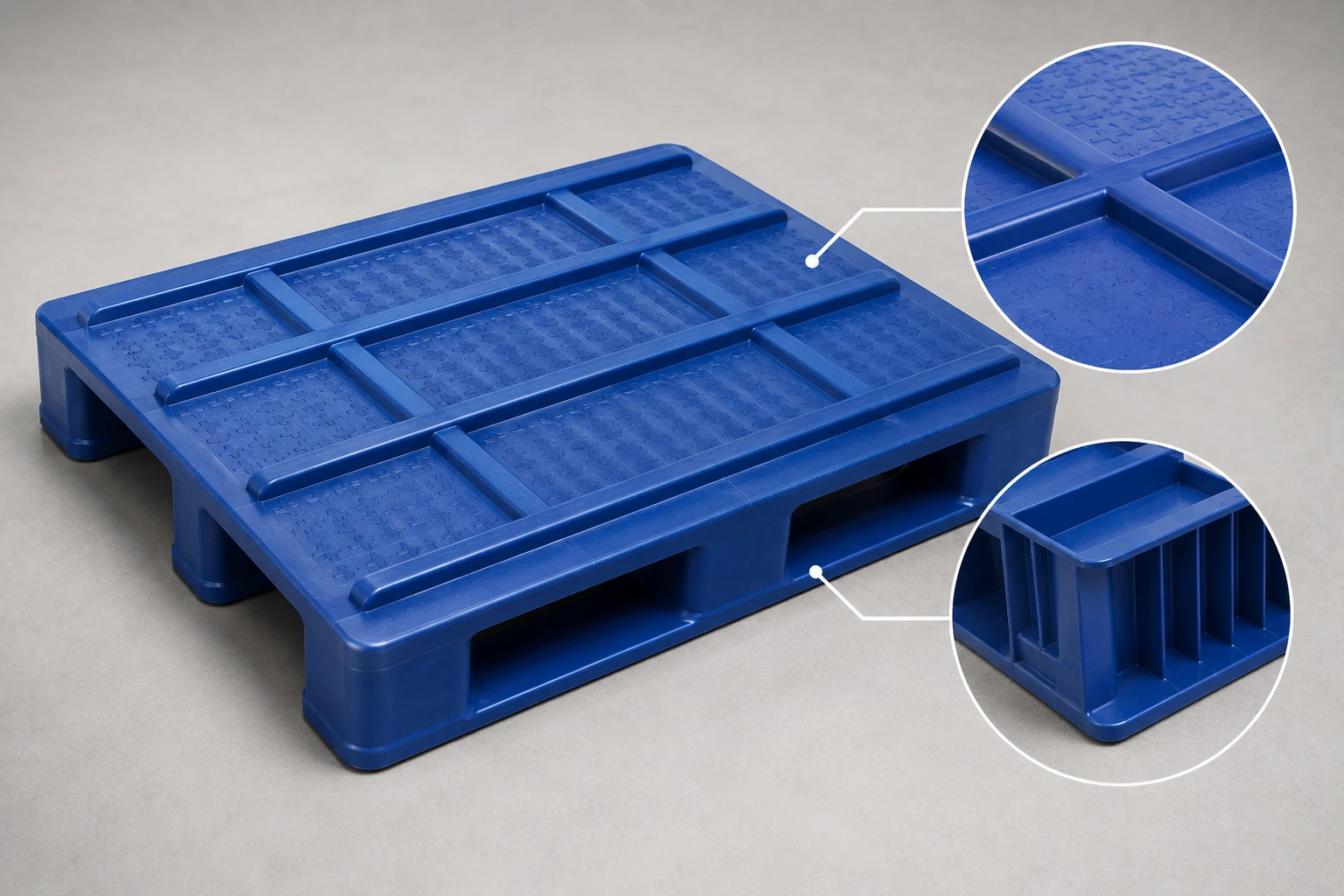
  • Use molded contours and reinforcing features.
  • Consider load requirements.
  • Design for intended handling conditions.
  • Improved structural performance.
  • Reduced deformation.
  • Better long-term durability.
Rotational molded plastic part design guidelines showing reinforcing ribs that improve plastic pallet stiffness

Get started

Start Your Next project with Hi-REL Plastics & Molding