Thermoforming Process and Material Selection shapes heated plastic sheet over or into a mold to produce parts ranging from thin packaging trays to large, rigid equipment housings. The process is often overlooked in favor of injection molding, but it offers real advantages in tooling cost, lead time, and part size that make it the better choice for many programs. Understanding what thermoforming includes helps engineers decide when this process fits a project.
This article covers the main thermoforming services, the materials commonly used, how tooling and secondary operations work, and how to decide between thermoforming and injection molding. The goal is to give engineers and procurement professionals a practical framework for evaluating a thermoforming supplier.
What Thermoforming Process and Material Selection Includes
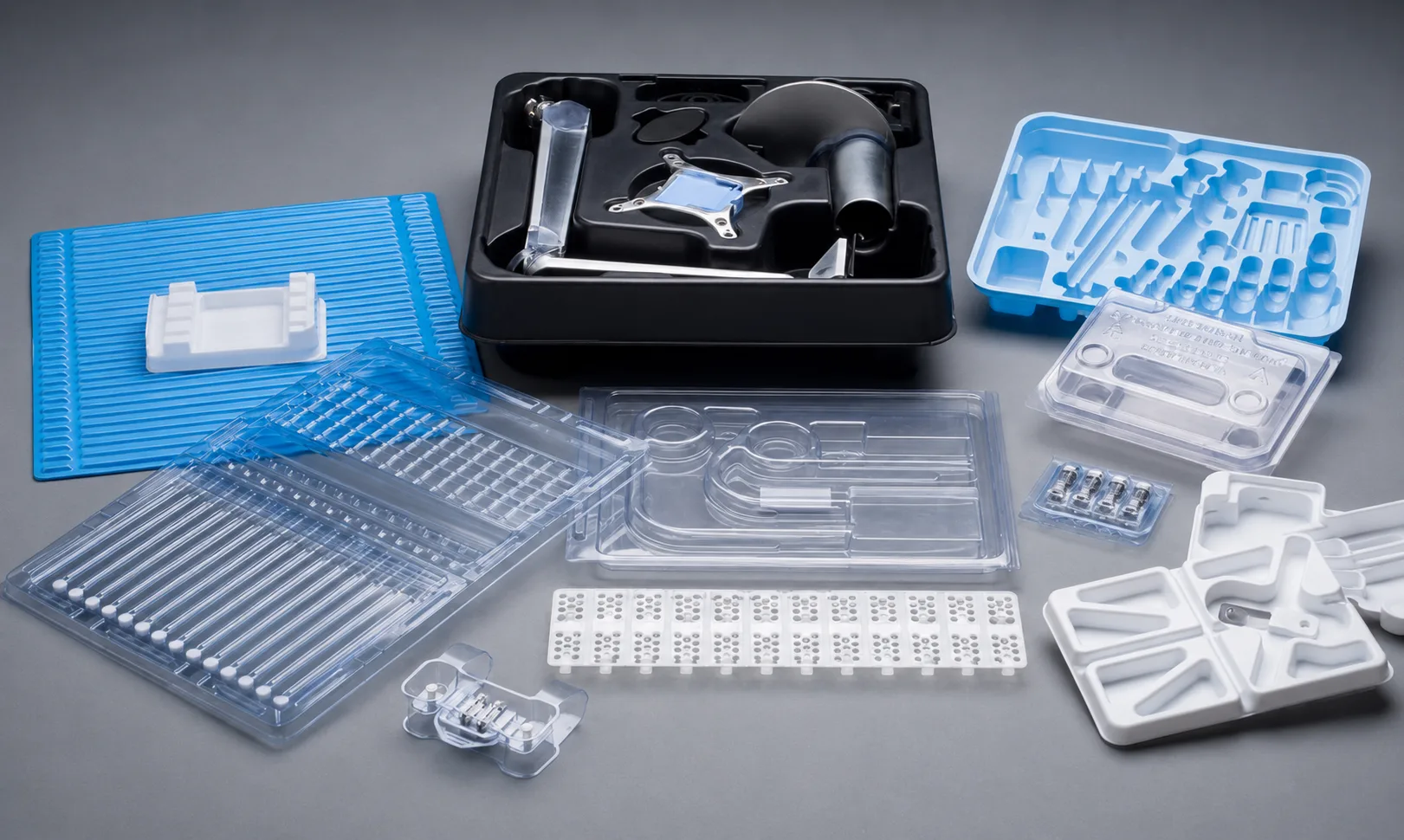
Thermoforming begins with a flat plastic sheet that is heated until it becomes pliable, then formed against a mold using vacuum, pressure, or both. Once cooled, the formed sheet is removed from the mold and trimmed to its final shape. The process is simpler than injection molding, and the tooling is generally less complex.
A full-service supplier handles more than forming. Thermoforming typically includes tool design, material selection, forming, trimming, and finishing operations such as drilling, bonding, printing, and assembly. Having these steps handled in one place shortens lead time and keeps responsibility for part quality with a single supplier.
Vacuum Forming, Pressure Forming, and Twin-Sheet Forming
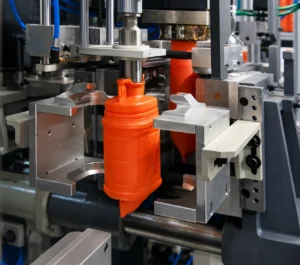
Vacuum forming is the simplest and most common method, using vacuum to pull heated sheet against a single-sided mold. It suits parts where one surface needs detail and the other can be left as formed. Thermoforming built on vacuum forming offers the lowest tooling cost and is widely used for housings, trays, and covers.
Pressure forming adds air pressure to the back of the sheet, pressing it harder against the mold and capturing finer detail, sharper corners, and textured surfaces. Twin-sheet forming forms two sheets at once and fuses them to create hollow, double-walled parts with strong, rigid structures. Each method serves a different level of detail and stiffness.
Thin-Gauge and Heavy-Gauge Thermoforming
Thermoforming is generally divided into thin-gauge and heavy-gauge work. Thin-gauge thermoforming uses sheet thinner than about 0.060 inch, often fed from a roll, and is used for high-volume packaging such as clamshells, trays, and cups. These lines are highly automated and optimized for speed.
Heavy-gauge thermoforming uses thicker sheet cut to size, and produces rigid parts such as equipment enclosures, vehicle panels, and medical device housings. Cycle times are longer and volumes are lower, but the parts are larger and structurally stronger. Choosing between the two depends on part function, volume, and required stiffness.
Materials Used in Thermoforming
Thermoforming Process and Material Selection commonly includes ABS, polycarbonate, high-impact polystyrene, polyethylene, polypropylene, PETG, and acrylic. Each has distinct properties, such as ABS for impact strength and finish, polycarbonate for toughness and clarity, and PETG for clarity and chemical resistance. Material choice affects forming behavior as well as final part performance.
Thermoforming also works with specialty sheet, including flame-retardant grades for aerospace and transportation interiors, antistatic materials for electronics, and medical-grade sheet for healthcare. Because sheet is available in many colors, textures, and co-extruded constructions, finished appearance can be built into the material rather than applied afterward.
Tooling for Thermoforming
Thermoforming tooling is usually much less expensive than injection molds because forming pressures are low. Molds can be made from aluminum, machined or cast, or from composite and wood-based materials for prototypes and short runs. This lower cost makes thermoforming attractive for programs with limited volume or frequently changing designs.
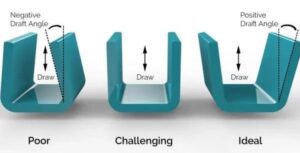
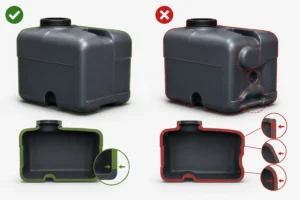
Good tool design still matters. Draft angles, radii, and material draw ratios all affect wall thickness and forming quality, since the sheet thins where it stretches. Experienced thermoforming suppliers review part designs early to place features where the sheet will form cleanly and to avoid areas that would thin too much.
Trimming and Secondary Operations
After forming, the part must be trimmed from the surrounding sheet. Thermoforming uses methods such as steel-rule dies for thin material and five-axis CNC routing for heavy-gauge parts, which allows precise trimming of complex three-dimensional shapes without dedicated trim tooling.
Many parts require further work such as drilling, tapping, bonding, ultrasonic welding, painting, screen printing, or installation of hardware. When thermoforming includes these operations, the supplier can deliver finished assemblies rather than raw formed parts, reducing handling and coordination.
When Thermoforming Beats Injection Molding
Thermoforming often wins on large parts, since the process does not require the enormous clamp tonnage that large injection molded parts demand. It also wins on tooling cost and lead time, which makes it practical for volumes of a few hundred to several thousand parts where an injection mold would be hard to justify.
Injection molding remains better for small, intricate parts, tight tolerances, and very high volumes, where its lower per-part cost outweighs the tooling investment. A knowledgeable thermoforming supplier will say honestly when a part belongs in another process rather than forcing it into thermoforming.
Applications Across Industries
Medical equipment manufacturers use thermoforming for device housings, covers, and trays, where large, lightweight, cleanable parts are needed in moderate volumes. Transportation and aerospace customers use thermoformed panels, ducting, and interior components that meet flame and smoke requirements.
Industrial equipment, electronics, and consumer product makers use thermoformed enclosures and protective components, and packaging customers rely on formed trays and clamshells. Across these markets, the common thread is a need for formed plastic parts without the cost and lead time of injection molding tooling.
Why Hi-Rel Plastics Provides Thermoforming Services
Hi-Rel Plastics & Molding offers thermoforming services alongside injection molding, blow molding, and rotational molding, which lets the company recommend the process that best fits each part rather than the one it happens to run. Customers benefit from a single supplier that can compare options honestly.
Hi-Rel’s secondary operations and assembly capabilities allow thermoformed parts to be trimmed, finished, and assembled under one quality system. This is particularly useful for medical, aerospace, and industrial customers who need documentation and traceability along with the formed parts themselves.
Ready to Evaluate Thermoforming Process and Material Selection?
A thermoforming project starts with a few basic questions: how large the part is, how many are needed, which material suits the application, and which surface needs the best detail. Answering these early helps a supplier recommend the right forming method and tooling approach.
Hi-Rel Plastics & Molding welcomes inquiries from engineers and procurement professionals evaluating thermoforming for an upcoming program. Contact Hi-Rel Plastics & Molding to share your part requirements and discuss how Hi-Rel’s capabilities can support your project.