Plastic Injection Mold Tooling Design Considerations shape the largest single investment in most molding programs, and the decisions made while designing the tool carry through to every part produced. The mold determines part geometry, surface finish, cycle time, and how consistently the process will run over thousands or millions of shots. A tool that is well matched to the part and the production volume pays for itself, while a poorly matched one becomes a recurring source of cost and quality problems.
This article walks through the main design choices in plastic injection mold tooling, including materials, cavity layout, gating, cooling, and maintenance. The goal is to help engineers and procurement professionals understand what drives tooling cost and lead time so they can have more productive conversations with a mold builder before a design is finalized.
What Plastic Injection Mold Tooling Includes
A mold is more than two blocks of steel with a cavity cut into them, and plastic injection mold tooling is best understood as an engineered system. Plastic Injection Mold Tooling Design Considerations typically include the cavity and core that form the part, the base that holds them, the runner or hot runner system that delivers resin, the cooling channels that control temperature, and the ejector system that releases the part. Slides, lifters, and inserts are added when a part has undercuts or features that cannot be formed by a simple opening motion.
Each of these elements interacts with the others, so tooling is designed as a system rather than a collection of parts. A change to the gate location affects cooling layout, and a change to the ejector arrangement can affect surface appearance. Experienced mold designers evaluate these interactions before cutting steel, because changes become far more expensive afterward.
Tool Steel and Aluminum: Choosing Mold Materials
Hardened tool steel is the standard material for production plastic injection mold tooling, since it resists wear, holds tight tolerances, and can run for hundreds of thousands or millions of cycles. Common grades are selected based on the resin being molded, the required surface finish, and expected volume. Corrosive resins and polished optical surfaces may call for stainless grades.
Aluminum tooling is faster and less expensive to machine, which makes it attractive for prototype and low-volume programs. It wears more quickly than steel and is less suited to abrasive resins such as glass-filled materials, but for limited runs the tradeoff is often worthwhile. The right choice depends on volume, resin, and how soon production quantities are expected to follow.
Single-Cavity, Multi-Cavity, and Family Molds
In plastic injection mold tooling, a single-cavity mold produces one part per cycle and costs less to build, while a multi-cavity mold produces several identical parts per cycle and lowers the per-part cost at volume. Tooling with more cavities requires a larger press, tighter cavity balancing, and more upfront investment, so the break-even point depends on annual volume.
Family molds produce different parts in the same cycle, which can suit components that are assembled together and share a resin. They are harder to balance, because parts of different sizes fill and cool at different rates. Many programs avoid family molds unless the parts are closely matched in volume and geometry.
Gate and Runner Design
The gate is where resin enters the cavity, and its location and size affect fill pattern, cosmetic appearance, residual stress, and warpage. Gate placement in plastic injection mold tooling is typically reviewed against flow analysis, with the goal of filling the part evenly while keeping gate vestige away from visible or functional surfaces.
Runner systems in plastic injection mold tooling fall into cold runner and hot runner types. Cold runners create scrap that must be trimmed and reground, while hot runners keep resin molten inside the mold and eliminate that waste. Hot runner systems cost more upfront and require more maintenance, but they can reduce cycle time and material use enough to justify the investment on higher-volume programs.
Cooling Channel Design
Cooling typically accounts for the largest portion of cycle time, so cooling channel layout is one of the most economically important Plastic Injection Mold Tooling Design Considerations. Channels placed too far from the cavity surface or arranged unevenly create hot spots that slow the cycle and cause warpage or sink marks.
In plastic injection mold tooling, conformal cooling channels, which follow the contour of the part and are produced through additive manufacturing of mold inserts, can improve temperature uniformity on complex geometries. They add cost and are not necessary for every part, but they can shorten cycles and improve quality on parts where conventional drilled channels cannot reach critical areas.
Venting, Ejection, and Parting Lines
As resin fills the cavity, air must escape or it will cause burn marks, short shots, or incomplete detail. Vents are shallow channels at the parting line or in other locations, sized to let air out without letting resin flash. Good venting design in plastic injection mold tooling depends on resin viscosity, since thinner materials flash more easily through the same vent depth.
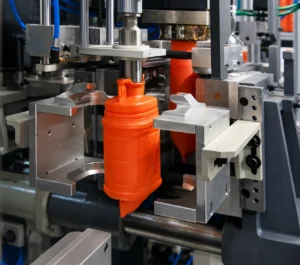
Ejection systems in plastic injection mold tooling must release the part without distortion or marks, using pins, sleeves, blades, or stripper plates placed where the part is strong enough to take the force. Parting line placement affects both appearance and function, since the line where the mold halves meet will leave a visible witness mark that needs to fall in an acceptable location.
Tooling Lead Time and Cost Drivers
Several factors drive the cost and lead time of plastic injection mold tooling, including part size and complexity, number of cavities, steel grade, surface finish requirements, and the number of slides or lifters. Highly polished or textured surfaces add machining and finishing time, and tight tolerances increase both cost and inspection effort.
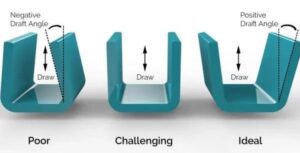
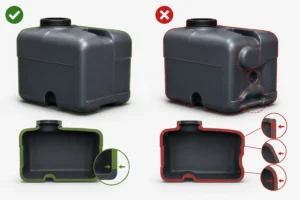
Early design review is the most effective way to control plastic injection mold tooling cost. Simple changes such as adding draft, eliminating undercuts, or relaxing a tolerance on a noncritical feature can remove complexity from the tool. A mold builder who reviews the design before quoting can identify these opportunities while changes are still inexpensive.
Maintenance and Tool Lifecycle
A well-built mold needs regular maintenance to keep performing. Preventive maintenance includes cleaning vents and cooling channels, inspecting wear surfaces and ejector pins, and checking parting line condition. Plastic injection mold tooling that is maintained on a schedule runs more consistently and avoids unplanned downtime during production.
Records matter as well. Documenting shot counts, repairs, and modifications gives a clear picture of tool condition and helps plan refurbishment or replacement before quality suffers. For regulated industries, these records are often part of the quality documentation required for each production lot.
Why Hi-Rel Plastics Builds Plastic Injection Mold Tooling
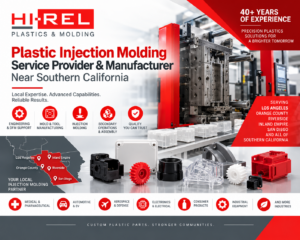
Hi-Rel Plastics & Molding designs and manufactures plastic injection mold tooling alongside its molding services, which keeps tool design and production knowledge in the same place. The company’s engineers review part designs for manufacturability before tooling is committed, with attention to gating, cooling, venting, and material behavior.
Because tooling, molding, and secondary operations are handled under one quality system, customers have a single point of accountability for the full program. Hi-Rel supports programs from prototype tooling through production tooling, preserving design intent as volumes grow.
Ready to Review Your Plastic Injection Mold Tooling Design Considerations?
Good tooling decisions start with a clear understanding of part requirements, expected volume, resin, and regulatory needs. Sharing that information with a mold builder early allows tooling to be matched to the program instead of adjusted after problems appear.
Hi-Rel Plastics & Molding welcomes inquiries from engineers and procurement professionals evaluating plastic injection mold tooling for an upcoming program. Contact Hi-Rel Plastics & Molding to share your part requirements and discuss how Hi-Rel’s capabilities can support your project.