What is bridge tooling in injection molding? It is an interim mold that produces real parts while the full production mold is still being built. It “bridges” the gap between prototypes and high-volume production. Programs use it to launch sooner, test markets, or cover early demand.
We have built molds in Riverside, California, since 1984. Over 40+ years, we have seen bridge tools save launches and, at times, create problems when planned poorly. This guide answers the questions buyers ask most before choosing one.
A bridge tool is a functional injection mold built faster and at lower cost than a production mold. It runs on standard molding presses. It uses the same resin planned for production.
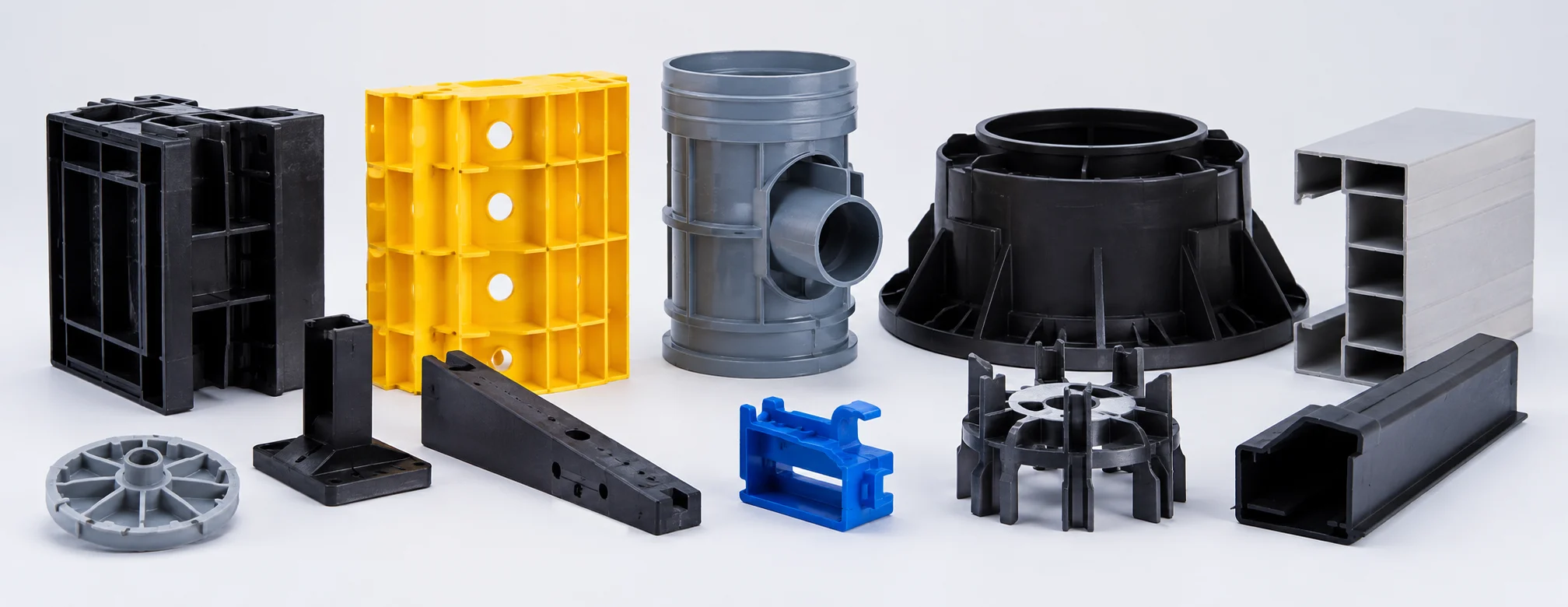
The parts it makes are real molded parts, not 3D-printed models. That makes them useful for fit testing, functional testing, pilot builds, and early sales.
Once the production mold is approved, the bridge tool is usually retired or kept as a backup.
Most bridge tools use aluminum or pre-hardened steel. Aircraft-grade aluminum machines quickly and transfers heat well. Pre-hardened steels such as P20 last longer and handle more demanding resins.
The choice depends on volume, resin, and part geometry. Glass-filled resins wear aluminum faster, so steel is often the better option for them.
Tool life varies widely. Aluminum bridge tools often run from several thousand to tens of thousands of shots. Pre-hardened steel tools can run well beyond that.
Resin abrasiveness, part complexity, and maintenance all affect actual tool life. We discuss expected volume early so the tool matches the need.
Bridge tools typically take about 3 to 8 weeks. Production molds often take 8 to 16 weeks or longer. The time savings come from simpler construction, fewer cavities, and faster-machining materials.
Bridge tooling is not right for every program. It makes sense when timing, design maturity, or demand creates a gap that prototypes cannot fill.
This is the most common reason. A bridge tool lets customers start shipping or building assemblies while the production mold is still in the toolroom. It protects launch dates without rushing the production tool.
Early sales and pilot builds need real molded parts in the final resin. A bridge tool supplies them without committing to a large, multi-cavity mold. Customer feedback can then shape the production design.
Aluminum and pre-hardened steel are easier to modify than hardened steel. If a design may change after early testing, a bridge tool absorbs those changes at lower cost. Changes to a hardened production tool take more time and money.
Some customers keep a bridge tool after production starts. It can cover maintenance downtime or demand spikes on the main mold. It can also support spare-part runs later in the product life.
Both tools make real injection molded parts. The differences come down to durability, speed, cost, and output. Here is a side-by-side comparison.
| Factor | Bridge Tooling | Production Tooling |
| Typical material | Aluminum or pre-hardened steel | Hardened tool steel |
| Typical lead time | About 3–8 weeks | About 8–16+ weeks |
| Tool life | Thousands to tens of thousands of shots | Hundreds of thousands to millions of shots |
| Cavities | Usually one or few | Often multiple |
| Automation | Often simpler, with manual actions | Slides, lifters, hot runners, automation |
| Ease of changes | Easier to modify | Changes cost more time |
| Best fit | Launch, pilot, low volume | Long-term, high-volume supply |
It fits programs that need real parts quickly at low to moderate volume. It also fits designs that may still change. Production tooling fits stable designs with long-term, high-volume demand.
Not always. A bridge tool costs less than a production tool, but it is an added expense. The value comes from earlier revenue, reduced launch risk, or avoided rework on a hardened mold.
Per-part cost is often higher on a bridge tool. Single cavities and manual actions mean longer cycles and more handling.
Bridge tools involve real trade-offs. Knowing them up front prevents surprises later.
Regulated industries can use bridge tools, but planning matters more. Documentation, validation, and traceability affect how bridge parts can be used.
It depends on the program. Medical device makers often validate on the final production process. The FDA process validation guidance describes how a validated process must reflect actual production conditions.
Bridge parts often support design verification, early clinical builds, or usability studies. Medical programs also operate under ISO 13485 change control. Moving from bridge to production tooling should be documented as a planned change.
Many medical parts also need controlled molding conditions. Our cleanroom medical injection molding runs in an ISO 7 (Class 10,000) cleanroom. Bridge and production tools can both run in that environment.
Aerospace customers working under AS9100 need full traceability. That includes resin lot records, inspection data, and first article inspection. Each tool, bridge or production, typically needs its own first article records.
Clear answers to these questions help customers decide whether a bridge tool fits their program:
DFM feedback is just as important for a bridge tool as for a production tool. Fixing draft, wall thickness, and gate location early benefits both molds.
At Hi-Rel Plastics & Molding, we build tooling in-house. Our toolmakers and molding engineers work in the same facility. That keeps feedback between bridge tools, production tools, and molding direct.
We help customers compare bridge and production options against volume, resin, and timeline. When a design will move to production injection molding, we plan both tools together. This reduces dimensional surprises during the transition.
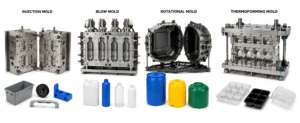
Our quality systems are certified to ISO 9001:2015, AS9100 Rev D, and ISO 13485:2016. We also offer blow, LSR, thermoforming, and rotational molding, plus secondary operations under the same quality system.
Most bridge tools use aluminum or pre-hardened steel such as P20. Aluminum machines faster, while pre-hardened steel lasts longer and handles abrasive or glass-filled resins better.
Bridge tools typically take about 3 to 8 weeks. Production molds often take 8 to 16 weeks or more, depending on cavity count, complexity, and finish requirements.
The customer usually owns a tool they paid for. Ownership, storage, maintenance, and disposal or backup terms should be confirmed in writing before the tool is built.
Yes, and it should whenever possible. Using the production resin gives realistic data on fit, function, and shrinkage. Some resins wear aluminum quickly, so steel may be required.
Usually, yes. Production tools often differ slightly in cooling and steel. Parts from the production mold typically need their own inspection, first article review, and approval.
What is bridge tooling in injection molding? It is an interim mold that delivers real parts while the production tool is built.
Keep these decision points in mind:
If you are weighing a bridge tool for an upcoming program, we are glad to review your part and timeline. You can reach our engineering team here, call 951-354-0258, or visit us at 7575 Jurupa Ave, Riverside, CA 92504.