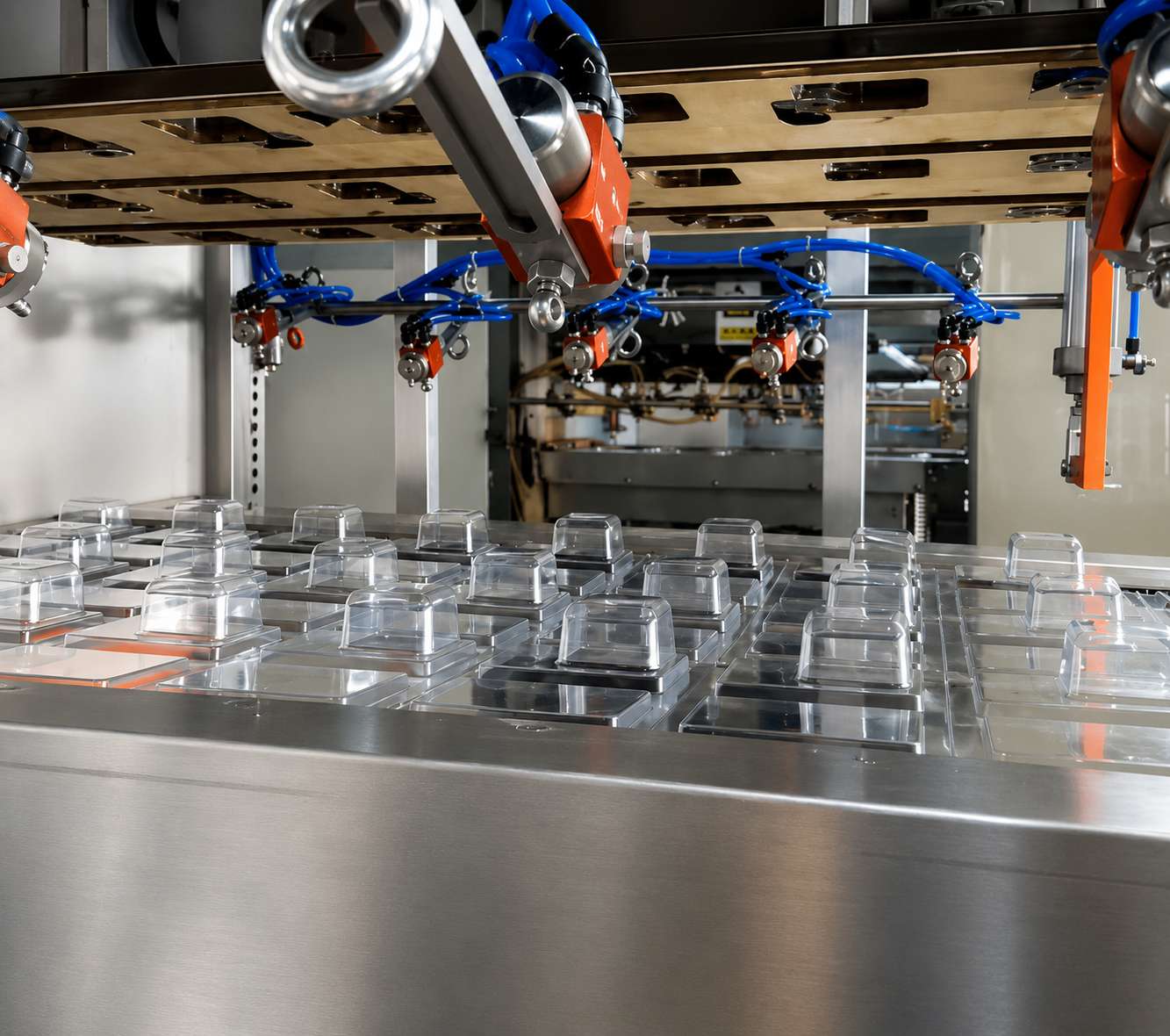
Thermoforming shapes heated plastic sheet over or into a single-sided mold, and the process rewards designs that respect how a stretched sheet behaves. Parts that follow sound thermoforming design guidelines for plastic parts form cleanly, hold their dimensions, and cost less. Parts that ignore them tend to thin, web, or tear in the corners, which leads to rejects and redesign.
This article looks at thermoforming from the design side. It covers draw ratio, draft, radii, mold type, undercuts, tolerances, trimming, and material choices. The aim is to help engineers prepare drawings that a thermoformer can quote and form without surprises.
What Thermoforming Can Do for Part Design
Custom thermoforming works well for large, shallow, or moderately deep parts where tooling cost and lead time matter. Because forming pressures are low, molds are inexpensive compared with injection tooling, and design changes are easier to make. This gives engineers freedom to iterate on enclosures, covers, trays, and panels, and to test several versions before committing to a production design.
The tradeoff is that the process forms only one surface precisely. The side that touches the mold carries the detail, while the other side follows the sheet. Designers who understand this early can decide which surface needs the best appearance and place critical features accordingly.
Draw Ratio and Wall Thinning
As the heated sheet stretches into the mold, it thins. The draw ratio compares the depth of the part to its width, or the area of the formed part to the starting sheet. It predicts how much thinning will occur. Higher ratios produce thinner walls in corners and deep features, which can weaken the part.
Thermoforming services manage this with plug assist tools, pre-stretching the sheet with air, and choosing a starting sheet thick enough to leave adequate wall after forming. Designers can help by limiting depth, using generous radii, and avoiding abrupt transitions that concentrate stretching in small areas.
Draft Angles and Radii
Draft allows the formed part to release from the mold without dragging or distortion. Female molds, which form the outside surface, typically need a few degrees of draft. Male molds, which form the inside surface, often need more because the part shrinks onto the tool as it cools. Adding draft is one of the simplest ways to protect quality in any thermoforming program, and it costs almost nothing at the design stage.
Radii matter just as much. Sharp corners thin out and concentrate stress, so generous radii on both inside and outside corners improve wall uniformity and strength. Thermoformers generally recommend radii at least equal to the sheet thickness, and larger where possible, since larger radii also help with trimming and stacking.
Choosing Male or Female Tooling
In a male mold, the sheet drapes over a positive form, so the inside surface of the part takes the detail. In a female mold, the sheet is drawn into a cavity, and the outside surface takes the detail. The choice depends on which surface must look best or match another component.
Mold type also influences thickness. Male molds tend to give thicker walls at the top and thinner walls near the base, while female molds produce thicker walls near the rim and thinner walls at the bottom. Following thermoforming design guidelines for plastic parts, engineers often select the mold type based on where strength and thickness are needed most.
Undercuts, Textures, and Surface Features
Undercuts are possible in thermoforming but add tooling complexity because the mold must release the part. Solutions include slides, collapsible sections, or simple design changes that eliminate the undercut. Reviewing the part for undercuts during an early design review often reveals a way to avoid them without losing function.
Textures and logos can be molded in, and pressure forming increases the sharpness of fine detail compared with vacuum forming alone. Textured sheet is also available, which can provide a consistent finish without machining texture into the tool. Each approach affects cost and appearance, so discuss it with the thermoformer early in the quoting stage.
Tolerances in Thermoformed Parts
Thermoformed parts hold looser tolerances than injection molded parts, because sheet thickness, shrinkage, and temperature all influence final dimensions. Typical expectations should be confirmed with the supplier rather than assumed. Critical dimensions are best placed on the mold-side surface, where control is better.
Trimmed dimensions can be held more tightly when parts are routed on a CNC machine, because the trim path is controlled by the program. Practical thermoforming design guidelines for plastic parts call for tolerances that reflect the process. Designers should apply tight tolerances only where function demands them, since they add inspection and scrap.
Trim Lines and Finishing
After forming, the part is trimmed from the sheet. Steel-rule dies and punch trimming suit thin gauge material, while five-axis CNC routing is typical for thicker parts and complex shapes. Trim lines should be planned in the design so that edges are accessible and consistent.
Secondary operations such as drilling, bonding, painting, printing, and assembly can be done after trimming. When thermoforming services include these steps, the customer receives a finished part rather than a raw form, which reduces handling and the number of suppliers involved.
Material Thickness, Color, and Cost
Sheet thickness drives cost, since it determines material weight and cycle time. Starting with the thinnest sheet that leaves adequate wall after forming reduces cost, but too thin a sheet can cause failures. Sample forming helps confirm the right thickness before production, and thermoformers can often provide sample parts quickly because the tooling is simple.
Color, texture, and special grades add cost but can eliminate painting or other finishing. Flame-retardant, antistatic, or medical-grade sheet is available for regulated applications, including devices that require biocompatibility evaluation under ISO 10993-1. An experienced thermoformer can compare options and recommend a combination that meets requirements without unnecessary expense.
Why Hi-Rel Plastics Provides Thermoforming Services
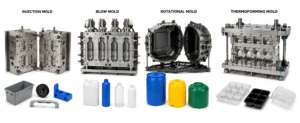
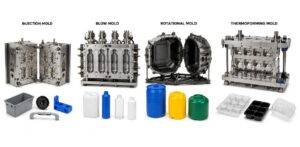
Hi-Rel Plastics & Molding offers thermoforming alongside injection, blow, and rotational molding, which lets its engineers recommend the process that best fits each part. A design that struggles in one process may suit another, and a supplier with several options can advise honestly.
Supported by ISO 13485, ISO 9001, and AS9100D certification, Hi-Rel supports thermoforming programs for medical, aerospace, and industrial customers with documented process control. Secondary operations and assembly are available under the same quality system.
Ready to Apply Thermoforming Design Guidelines for Plastic Parts?
A useful request includes the part drawing or model, material preference, expected volumes, and any appearance or regulatory requirements. Identifying which surface is critical lets the thermoformer choose the right mold type and recommend design adjustments before tooling begins.
Hi-Rel Plastics & Molding welcomes inquiries from engineers and procurement professionals evaluating thermoforming services for an upcoming program. Share your part requirements with Hi-Rel’s team to discuss how its capabilities can support your project.