How long does it take to make an injection mold? For most production tools, the answer falls between 8 and 16 weeks from approved design to first samples. Simple prototype molds can be ready in a few weeks. Complex multi-cavity tools can take 20 weeks or more.
We have built molds in Riverside, California, since 1984. Over those 40+ years, we have learned that the timeline depends on more than machining. It depends on design inputs, approvals, sampling, and the requirements of each industry.
This guide answers the questions buyers ask most about tooling schedules. It covers each stage, the factors that add time, and the steps that keep a program on track.
Injection mold lead time is the time from a released purchase order to approved sample parts. It includes design, steel procurement, machining, assembly, and sampling.
Here are common industry ranges:
These ranges are starting points, not promises. Every quote should reflect the actual part, material, and volume.
A mold moves through a fixed sequence. Each stage has its own duration and its own risk of delay. Understanding the sequence helps buyers plan launches and set realistic dates.
Quoting usually takes a few days to two weeks. The time depends on how complete the request is. A strong request includes 3D models, drawings, resin grade, annual volume, and cosmetic needs.
Design for manufacturability (DFM) review follows. We check draft, wall thickness, undercuts, gate location, and tolerance feasibility. DFM feedback often takes one to two weeks, and customer decisions on it drive the next step.
Mold design typically takes one to three weeks. The designer lays out cavities, runners, cooling, ejection, and any slides or lifters. Mold flow analysis may run during this stage for large or tight-tolerance parts.
The customer then approves the mold design. Fast approval keeps the schedule moving. Slow approval is one of the most common causes of delay.
Steel and mold bases usually arrive within one to two weeks. Standard mold bases ship faster than custom ones. Specialty steels or large blocks can take longer.
Hardened tool steels may also need heat treatment after rough machining. That step adds several days to the schedule.
This is the longest stage. CNC machining, wire EDM, and sinker EDM often take three to eight weeks. Complex cores, deep ribs, and fine details need more EDM time.
Polishing and texturing follow. A high-gloss or optical finish takes longer than a standard finish. Textures are often applied by specialty vendors, which adds shipping and queue time.
Mold assembly and fitting typically take about one week. The toolmaker installs components, checks movement, and confirms cooling lines.
The first trial, called T1, then runs on a press. T1 shows whether the mold fills, ejects, and produces a part close to the design. Early samples almost always need adjustments.
Sampling rounds usually take one to four weeks in total. Each round involves measuring parts, adjusting steel, and running again. Two or three rounds (T1, T2, T3) are normal for production tools.
Clear goals for each round keep this stage short. A short list of open items prevents repeated discussions of the same issues.
| Stage | Typical Duration | Main Delay Risk |
| Quoting and DFM | 1–3 weeks | Missing part data |
| Mold design and approval | 1–3 weeks | Slow customer approval |
| Steel procurement | 1–2 weeks | Specialty steel availability |
| Machining, EDM, polishing | 3–8 weeks | Part complexity, textures |
| Assembly and T1 | About 1 week | Fit and function issues |
| Sampling and adjustments | 1–4 weeks | Late design changes |
Adding the stages gives a typical total of 8 to 16 weeks for a production mold. Simple tools land near the low end. Tools with slides, hot runners, or many cavities land near the high end.
Regulated programs may add several more weeks for process validation. We always build that time into the schedule from the start.
Several design and program choices extend tooling lead times. Knowing them early helps buyers make informed trade-offs.
Yes. Undercuts require slides or lifters, which add design and machining time. Deep ribs, thin walls, and fine details need more EDM work. Simplifying features during DFM often saves weeks.
Yes. Each added cavity must match the others dimensionally. Hot runner systems are often ordered from outside suppliers, and their lead times affect the whole build. Higher volumes justify the added time, but low-volume programs may not.
Tight tolerances need more precise machining and more sampling rounds. Tolerance stack-up across mating parts can also require steel adjustments after T1. We recommend applying tight tolerances only where function demands them.
Changes before steel is cut cost little time. Changes after machining may require welding, re-cutting, or new inserts. A clear design freeze milestone protects the schedule.
Prototype tooling suits early testing and small builds. Aluminum or soft-steel molds machine faster, often in two to six weeks. They have a shorter tool life, though.
Production tooling uses hardened steel and supports long runs. It takes longer to build but holds dimensions over many cycles. Some programs start with a prototype tool and move to production injection molding once the design is stable.
The right choice depends on volume, launch date, and how settled the design is.
The mold build itself follows similar stages. Regulated industries add documentation, validation, and traceability steps around it.
Medical device programs often require molding in a controlled environment. Our cleanroom medical injection molding runs in an ISO 7 (Class 10,000) cleanroom. Medical tools often go through installation, operational, and performance qualification before release. FDA process validation guidance describes this approach, and it can add two to six weeks.
Medical suppliers also operate under ISO 13485 quality systems. Change control matters here. Any later change to the mold or resin may trigger retesting.
Aerospace programs follow AS9100 requirements. These call for full traceability of materials, inspection records, and first article inspection. That documentation takes time to prepare and review.
Buyers have more control over the schedule than many expect. These steps make the biggest difference:
At Hi-Rel Plastics & Molding, we build tooling in-house. Our toolmakers and molding engineers work in the same facility. That keeps feedback between tooling and production fast and direct.
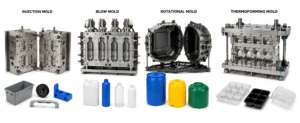
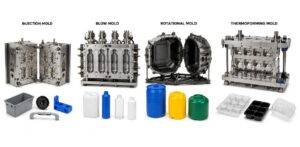
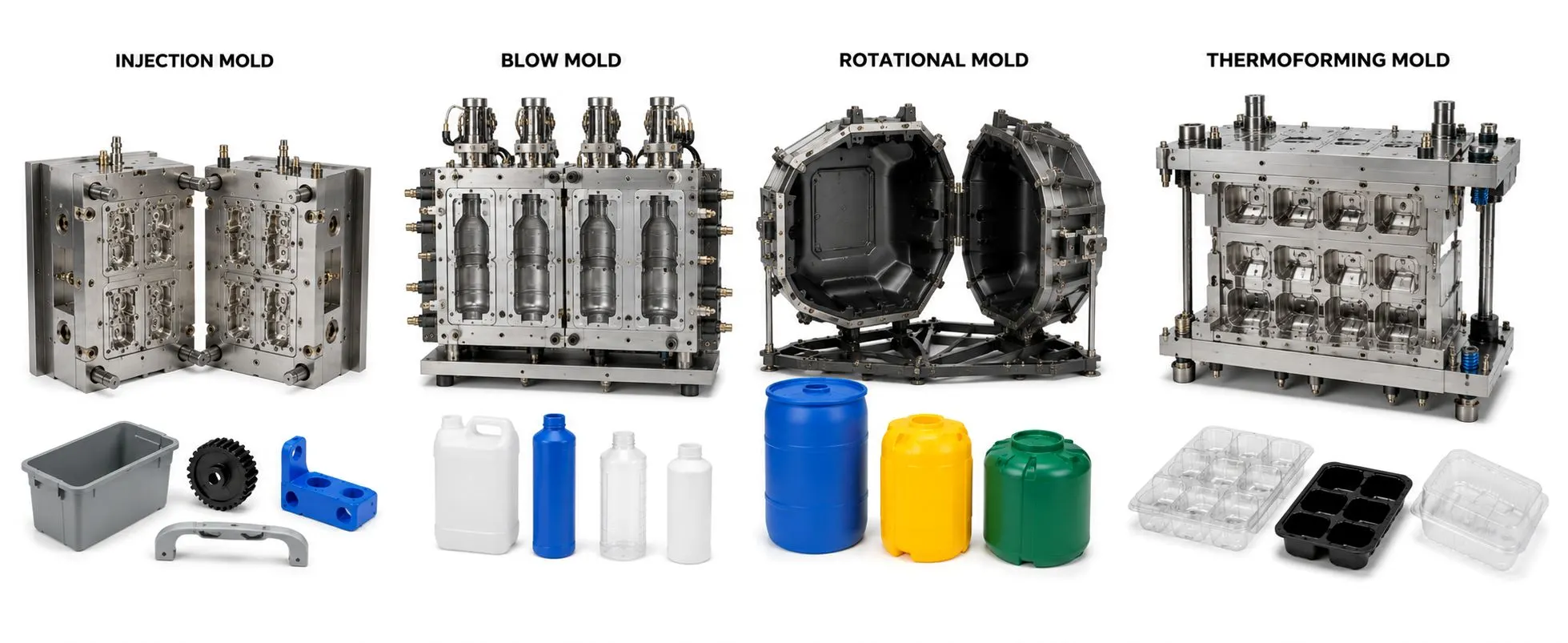
We support injection, blow, LSR, thermoforming, and rotational molding. This lets us recommend the process that fits each part. Our quality systems are certified to ISO 9001:2015, AS9100 Rev D, and ISO 13485:2016.
We set milestone dates for design freeze, mold design approval, T1, and sample approval. Each customer sees the same schedule we work from.
Aluminum or soft-steel prototype molds typically take about 2 to 6 weeks. Simple geometry, single cavities, and fast design approval keep the timeline at the shorter end of that range.
The customer usually owns a tool they paid for, but ownership should be confirmed in writing. The agreement should also cover storage, maintenance, insurance, and transfer conditions.
The mold build itself takes about the same time. Medical programs add time for cleanroom process qualification, documentation, and validation protocols, which can extend the schedule by several weeks.
Medical programs usually need an ISO 13485 quality system. Aerospace programs typically require AS9100 with full traceability. ISO 9001 covers general industrial work. Ask to see current certificates and their scope.
Changes before steel is cut add little time. Changes after machining may require welding, re-cutting, or new inserts. Each one can add days or weeks, depending on the feature.
How long does it take to make an injection mold? For most production tools, plan on 8 to 16 weeks, with prototypes faster and regulated programs longer.
Keep these decision points in mind:
If you are planning a tooling program, we are glad to review your part and talk through a realistic schedule. You can reach our engineering team here, call 951-354-0258, or visit us at 7575 Jurupa Ave, Riverside, CA 92504.