What happens around the press defines medical device injection molding as much as the molding itself. Every part must come from a process that documented evidence shows will produce a conforming product consistently. Validation, monitoring, and release controls turn a capable press into a compliant manufacturing process.
This article looks at injection molding process validation from the production side. It follows the validation sequence, then covers cavity control, in-process monitoring, cleanroom operations, and lot release. Engineers and quality teams will then know what evidence to expect from a molding supplier.
Why Injection Molding Process Validation Matters
Inspection cannot fully verify the output of some processes. For those, regulations such as FDA’s Quality Management System Regulation require process validation. Many molded features, such as wall integrity, sealing performance, and internal dimensions, fall into this category. Medical molding therefore relies on documented process validation rather than inspection alone.
Validation also protects molding programs against drift over time. A characterized, locked-down, and monitored process is far less likely to produce hidden defects. The effort is substantial. In return, device manufacturers gain evidence that their supplier makes each molded component the same way every time.
Installation Qualification and Equipment Readiness
Installation qualification confirms that equipment is installed correctly and operates as specified. For medical molding, this covers the press, the mold, measurement systems, and auxiliary equipment such as dryers and temperature controllers. This stage also verifies calibration records, maintenance plans, and the software that controls temperatures and injection profiles.
Documentation matters as much as hardware. The supplier records equipment identification, software versions, and utilities so it can compare any later change with the validated baseline. A supplier with organized equipment records finds this stage straightforward. Gaps here often delay validation, so buyers should review these records early.
Operational Qualification and Process Windows
Operational qualification, the second stage of injection molding process validation, explores the settings that produce good parts. Engineers vary parameters such as melt temperature, injection speed, pack pressure, and cooling time, then measure the results. The aim is to identify a window, with margin on each side, that the production process will stay within.
Challenging the limits of the window shows how sensitive parts are to variation. Setting production parameters near the center of a wide window leaves room for normal variation. That margin absorbs fluctuations in material and ambient conditions. A narrow window signals a design or material issue best addressed before production begins.
Performance Qualification
Performance qualification demonstrates that the process, running at the chosen settings, produces conforming parts over repeated production runs. The molder typically runs multiple lots, often with different material lots and operators. Technicians then measure parts against all critical requirements. Engineers analyze the results for capability with statistical measures.
The device manufacturer approves acceptance criteria, sample sizes, and measurement methods in advance. If the process meets them, the team freezes the settings as the validated process. Any later change to tooling, material, or process conditions needs review to decide whether it calls for revalidation.
Multi-Cavity Tooling and Cavity-to-Cavity Control
Many medical components come from multi-cavity molds that meet volume demands. Each cavity behaves slightly differently, so injection molding process validation must show that every cavity produces conforming parts. Molds typically mark parts by cavity, and tracked measurements reveal any differences.
Cavity balance depends on runner design, temperature control, and venting. A well-designed tool fills and cools each cavity evenly, which narrows cavity-to-cavity variation. Where a cavity drifts, the molder can block it off or repair the mold. Records show which cavities supplied which lots.
In-Process Monitoring and Statistical Control
After validation, the process must stay in control. Sensors monitor injection pressure, cushion, cycle time, and temperatures, and software can flag deviations immediately. Some programs use cavity pressure sensors that track what the material experiences inside the mold. That reading directly indicates part consistency.
Statistical process control charts critical dimensions over time, showing trends before parts go out of tolerance. Operators and engineers respond to defined signals, such as drift or shifts, rather than waiting for failures. This approach reduces scrap and builds a continuous record of control for audits.
Cleanroom Operations and Contamination Control in Medical Device Injection Molding
Many devices require molding in a controlled environment to limit particulates and bioburden. Cleanroom molding involves gowning procedures, controlled material flow, monitored air quality, and limits on what enters the space. The supplier documents cleaning schedules, lubricant controls, and environmental monitoring.
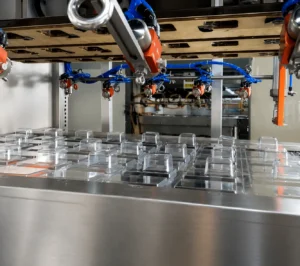
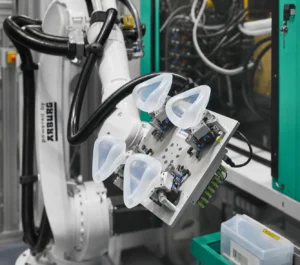
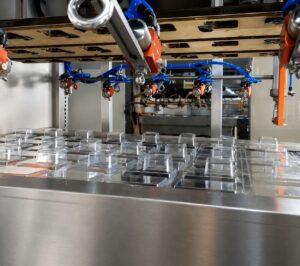
Packaging at the press protects parts after molding. Automation can remove parts, and staff inspect and seal them in clean bags or trays inside the controlled space. Keeping handling to a minimum reduces contamination risk and supports claims about the condition of parts on arrival.
Inspection, Lot Release, and Traceability
Inspection plans define which characteristics to measure, how often, and with which instruments. Each gauge carries current calibration, and repeatability studies evaluate the measurement systems. Critical characteristics receive the most attention, and inspectors record results against lot numbers.
Lot release requires a complete record review. Reviewers check material certificates, process data, inspection results, and environmental records before parts ship. Traceability links each lot to its resin, equipment, and operators. If a problem appears later, the team can quickly identify and contain the affected product.
Why Hi-Rel Plastics Is a Trusted Partner for Medical Device Injection Molding
Hi-Rel Plastics & Molding provides medical molding backed by ISO 13485 and ISO 9001 certification and cleanroom manufacturing capability. Its engineers work with device teams on process development and validation, so documented evidence supports every molded component.
Tooling, molding, secondary operations, and assembly run under one quality system. This keeps records consistent from first articles through commercial production. That continuity helps device manufacturers manage change control and audit readiness over the life of a program.
Ready to Validate Your Molding Process?
The best time to plan injection molding process validation is before anyone builds the tooling. Sharing requirements for critical dimensions, sterilization, cleanliness, and volumes lets the molder plan the validation approach and identify risks early.
Hi-Rel Plastics & Molding welcomes engineers, quality teams, and buyers evaluating medical device injection molding for an upcoming program. Contact our team to share your part requirements and discuss how Hi-Rel’s capabilities can support your project.