Vacuum forming services shape heated plastic sheet against a single-sided mold using suction. They produce enclosures, covers, trays, panels, and housings at a fraction of the tooling cost of injection molding. The method is simple in principle, yet results depend on tooling, material, and process control. Understanding the basics helps buyers specify parts that form well and quote accurately.
This article explains how vacuum forming works. It covers the process steps, tooling options, sheet materials, part limits, scaling from prototypes to production, and finishing. We wrote it for engineers and buyers who want a practical view of what the process can and cannot do.
What Vacuum Forming Services Provide
A forming supplier converts flat plastic sheet into three-dimensional parts, then trims and finishes them to the customer’s requirements. The process suits large parts, shallow to moderate draws, and programs where low tooling cost and short lead times matter. It is common in medical equipment, transportation, industrial products, and retail displays.
A full-service supplier handles tool design, sheet selection, forming, trimming, and secondary operations. Having these steps under one roof shortens lead times and keeps responsibility for part quality with one supplier. That matters when a part needs bonding, drilling, or assembly after forming. Buyers also benefit from a single point of contact for design questions.
How Does Vacuum Forming Work?
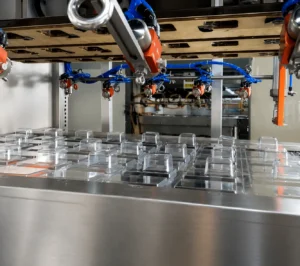
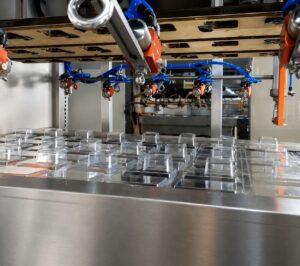
The machine clamps a thermoplastic sheet in a frame and heats it until it becomes soft and pliable. The heated sheet then moves over or into a mold. A vacuum pulls air from between the sheet and the mold surface. Atmospheric pressure pushes the sheet tightly against the tool, capturing its shape.
After cooling, the operator releases the formed sheet from the mold and removes it from the machine. Cooling methods such as fans or mist help the plastic set quickly. Controlled mold temperature lets every part cool at a consistent rate. Trimming then separates the formed part from the surrounding sheet, and the cycle begins again with a new sheet.
Tooling Options for Vacuum Forming
Because vacuum forming uses low forming pressure, toolmakers can build molds from a wide range of materials. Wood and composite molds suit prototypes and very short runs. Epoxy and other resin molds serve moderate volumes. Machined or cast aluminum molds provide durability and cooling for production runs.
Production tools often include cooling channels and well-placed vacuum holes. These features determine how quickly the sheet conforms and sets. Lower tooling costs are a major reason customers choose vacuum forming services. Quick tool changes also support designs that evolve through testing.
Sheet Materials and Thickness
Common materials include ABS, polycarbonate, high-impact polystyrene, polyethylene, polypropylene, PETG, and acrylic. ABS offers impact strength and finish, polycarbonate adds toughness, and PETG provides clarity and chemical resistance. Specialty sheets include flame-retardant, antistatic, and medical-grade options.
Sheet thickness affects strength and cost. Thicker sheet makes stiffer parts but takes longer to heat and cool, and it thins in deep areas during forming. Choose a starting thickness that keeps the thinnest region of the finished part within requirements. Forming trials then confirm the choice. Experienced providers understand how vacuum forming works with each material and can often estimate thinning before the first part.
Part Features and Limits of Vacuum Forming
Vacuum forming works best when parts have generous radii, adequate draft, and moderate depth relative to width. Deep draws and sharp corners thin the sheet and can cause webbing or tearing. Plug-assisted forming and pre-stretching help distribute material more evenly in deeper parts.
Because of how vacuum forming works, detail forms only on the surface that touches the mold. The force of the vacuum alone also limits fine detail. Some parts need sharper features or textures than vacuum alone can deliver. For those, pressure forming adds air pressure on the back of the sheet to push it harder against the tool. A supplier can recommend the better method.
Vacuum Forming from Prototype to Production
One advantage of vacuum forming is how smoothly it scales. A supplier can form a prototype on a simple tool in a few days, giving engineers a real part to test. If the design changes, the supplier can make a new tool quickly and at modest cost.
As volumes grow, the same part can move to a more durable production tool with improved cooling and tighter control. Many programs run for years on aluminum tooling at volumes of hundreds to thousands of parts. At those volumes, injection molding tooling would be difficult to justify.
Trimming, Finishing, and Assembly
After forming, the supplier trims parts with steel-rule dies, punch presses, or CNC routers. Five-axis routing is common for heavy-gauge parts with complex shapes and allows accurate trimming without dedicated trim tooling. Trim methods affect edge quality and cost, so both sides should agree on the preferred method before building the tool.
Finishing may include drilling, tapping, bonding, ultrasonic welding, painting, printing, or hardware installation. When the supplier handles these operations, the customer receives finished parts or subassemblies rather than raw formed sheets. That reduces handling and coordination.
Typical Applications
Common uses include medical equipment housings, instrument covers, aircraft interior components, vehicle panels, protective enclosures, and point-of-purchase displays. These parts are often large and lightweight, produced in moderate volumes, and benefit from design flexibility and short lead times.
Customers in industrial and electronics markets use formed covers and trays for equipment and protective packaging. Across these markets, buyers choose vacuum forming when they need a formed plastic part. It avoids the cost and schedule of injection molding tooling.
Why Hi-Rel Plastics Provides Vacuum Forming Services
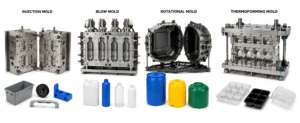
Hi-Rel Plastics & Molding offers thermoforming, including vacuum forming, alongside injection, blow, and rotational molding. Its engineers review each part and recommend the process that best fits its size, volume, and requirements. They avoid forcing every design into a single method.
Hi-Rel holds ISO 13485, ISO 9001, and AS9100D certification. That foundation supports formed-plastic programs for medical, aerospace, and industrial customers with documented process control. Secondary operations and assembly are available under the same quality system.
Ready to Start a Vacuum Forming Project?
A useful request includes the part drawing or model, material preference, expected volumes, and any appearance or regulatory requirements. Identifying the critical surface early helps the supplier choose the right mold type and recommend design changes before tooling begins.
Hi-Rel Plastics & Molding welcomes inquiries from engineers and buyers who want to know how vacuum forming works for an upcoming program. Contact our team to share your part requirements and discuss how Hi-Rel’s capabilities can support your project.