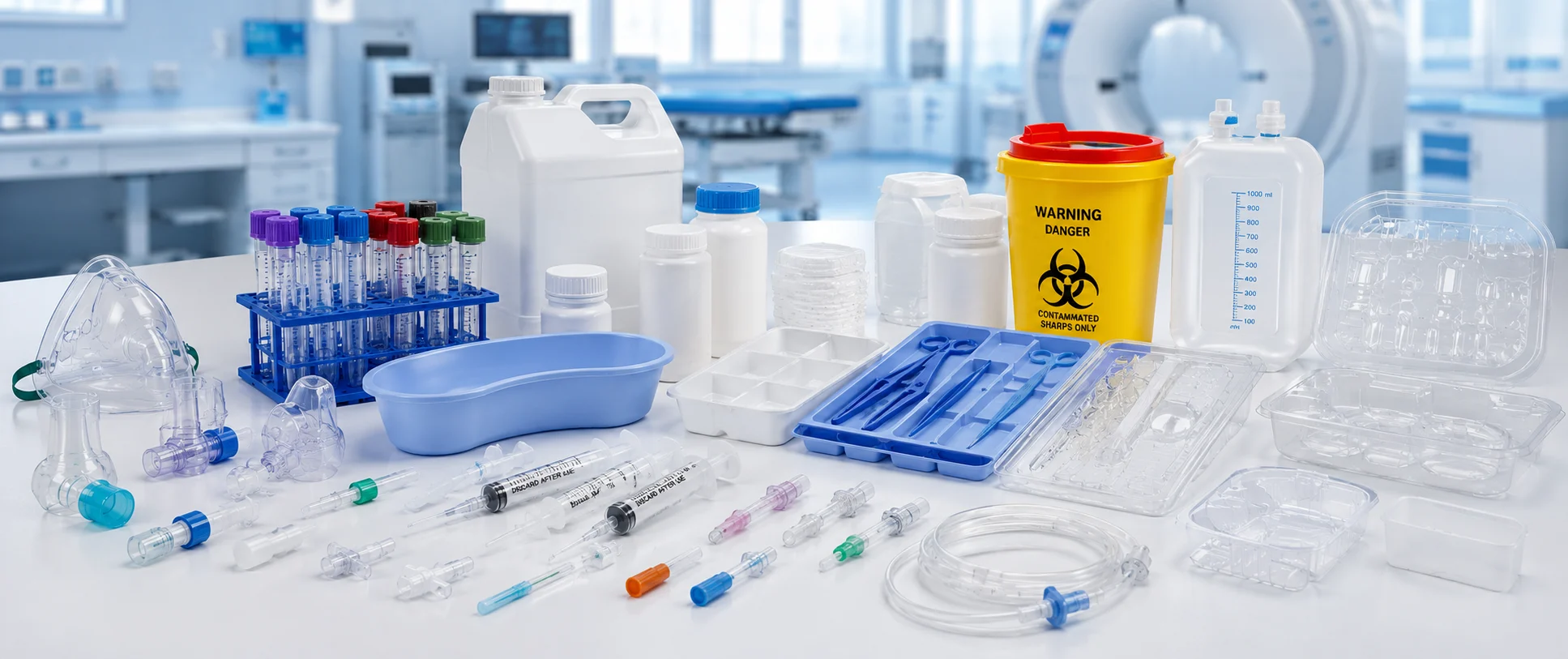
Medical Device Injection Molding Design and Sterilization looks like standard molding from the outside, but the decisions behind a medical part reach well beyond the press. Design controls, sterilization, risk management, and long product lifecycles all shape how a molded component should be designed and produced. Engineers who consider these factors early avoid redesigns, revalidation, and supply problems that surface only after tooling is built.
This article looks at medical device injection molding from the design and lifecycle side, covering how design controls affect molded parts, how sterilization influences material choice, and how to manage change over the life of a program. It complements supplier selection guidance by focusing on what engineers can do before a program reaches the molding floor.
Design Controls and Their Effect on Molded Components
Design controls require medical device manufacturers to document design inputs, outputs, reviews, verification, and validation. For molded components, this means that dimensions, materials, and tolerances become formal requirements tied to the device’s intended use. Medical Device Injection Molding Design and Sterilization programs benefit when the molder understands which features are critical so that process development focuses on them.
Changes to a part after design transfer are not casual in medical molding. A revised wall thickness, a new gate location, or a different resin may require reverification and sometimes revalidation. Treating the molding drawing as a controlled document, and involving the molder before release, reduces the likelihood of expensive late changes.
Designing for Manufacturability in Medical Device Injection Molding
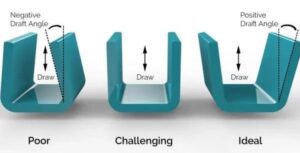
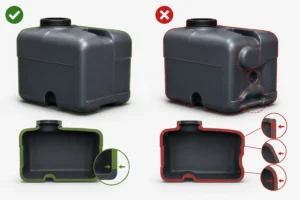
Good design for manufacturability is especially valuable in medical molding because tolerances are often tight and validation is costly. Uniform wall thickness, adequate draft, generous radii, and gates placed away from critical surfaces all improve consistency. Features that are hard to fill or hard to measure tend to cause problems during validation.
Early design review with the molder can also address cleanability and inspection for molded medical parts. Sharp internal corners can trap contamination, and features that cannot be reached by a gauge or vision system complicate quality control. Resolving these questions on paper is far less expensive than resolving them in steel.
Sterilization Methods and Their Effect on Plastics
Sterilization method is one of the most consequential inputs to material selection. Gamma and electron beam irradiation can discolor or embrittle some resins, ethylene oxide requires materials that tolerate the gas and aeration process, and steam sterilization demands materials that withstand repeated high-temperature cycles. A resin that performs well mechanically may fail after sterilization.
For Medical Device Injection Molding Design and Sterilization, the safest practice is to test the finished molded part, not just the raw material, through the intended sterilization process and any repeat cycles. Molding conditions affect residual stress and crystallinity, which in turn affect how a part responds to sterilization.
Tight Tolerances and Critical-to-Quality Features
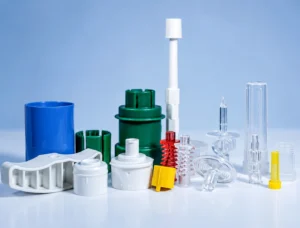
Medical components often include features that must mate precisely with other parts, such as luer fittings, snap features, and sealing surfaces. Identifying these critical-to-quality features on the drawing allows the molder to prioritize them in tooling design, process development, and inspection planning.
Not every dimension in medical molding needs a tight tolerance. Applying tight tolerances only where function requires them reduces tooling cost and improves yield. Programs that distinguish critical from noncritical features generally run more smoothly and cost less to validate.
Drug Delivery and Combination Device Components
Components used in drug delivery devices, such as inhalers, auto-injectors, and syringe parts, add requirements related to extractables and leachables, dosing accuracy, and compatibility with the drug formulation. Material selection for these parts involves the drug manufacturer as well as the device manufacturer.
Dimensional consistency is often more demanding in these applications because small variations can affect dose delivery or device function. Medical molding for drug delivery therefore relies heavily on multi-cavity tooling with well-controlled processes and thorough documentation of cavity-to-cavity consistency.
Material Change Control and Supplier Notification
In medical molding, resin suppliers occasionally change formulations, additives, or manufacturing sites. In a regulated program, even a minor change can affect biocompatibility, sterilization performance, or processing behavior. Medical Device Injection Molding Design and Sterilization programs need an agreement in which material suppliers and molders notify the device manufacturer of changes before they reach production.
Many programs also qualify a second source or hold safety stock of critical resins. These steps cost something, but they protect against disruptions that could halt production of a device with no easy substitute.
Risk Management in Molding Programs
Risk management frameworks such as ISO 14971 ask manufacturers to identify hazards, estimate risk, and implement controls. For molded components, hazards might include particulate contamination, flash or sharp edges, dimensional drift, or material degradation. Controls might include process monitoring, inspection, or design changes.
A molder who understands risk management can contribute useful information, such as which failure modes are most common for a given geometry and which process controls are most effective. Medical molding works best when this knowledge is shared during design rather than after a problem appears.
Transferring a Program Between Molders
Moving a validated medical molding program from one molder to another is more involved than moving a tool. The new site must establish its own process window and complete qualification, and any difference in press, resin lot, or environment must be evaluated. Documentation from the original supplier, including process sheets and inspection data, shortens this work.
Planning for possible transfer from the start, by keeping tooling documentation current and maintaining clear ownership of tools, makes medical molding programs more resilient. Transfers are often driven by capacity, cost, or quality concerns, and preparation shortens the disruption.
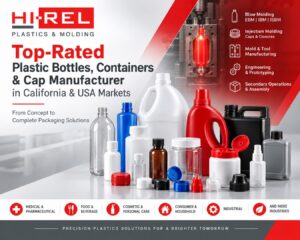
Why Hi-Rel Plastics Delivers Medical Device Injection Molding
Hi-Rel Plastics & Molding provides medical device injection molding supported by ISO 13485 certification and cleanroom manufacturing capability. The company’s engineers work with device teams on design for manufacturability, material selection, and process development so that molded components are ready for validation.
Hi-Rel’s combination of tooling, molding, secondary operations, and assembly under one quality system gives medical customers a single accountable partner. That continuity supports programs from early development builds through commercial production.
Ready to Discuss Your Medical Device Injection Molding Design and Sterilization Program?
The most valuable conversations with a molder happen before the design is frozen and before tooling decisions are made. Sharing intended use, sterilization method, volumes, and tolerance priorities allows the molder to identify risks early.
Hi-Rel Plastics & Molding welcomes inquiries from medical device engineers, quality teams, and procurement professionals evaluating medical molding for an upcoming program. Contact Hi-Rel Plastics & Molding to share your part requirements and discuss how Hi-Rel’s capabilities can support your project.