Insert Molding Design Guidelines cover placing a pre-formed component, usually metal, inside a mold so that plastic flows around it and locks it in place. The result is a single part with threads, contacts, pins, or reinforcements built in, which removes assembly steps and avoids loose hardware. The process works well, but only when the insert and the plastic are designed to work together.
This article looks at insert molding services from the design side, covering insert materials, retention features, plastic flow, loading methods, and quality checks. The aim is to help engineers avoid common causes of rejects, such as pull-out failures, cracked bosses, and misplaced inserts, before tooling is built.
What Insert Molding Services Include
Insert molding services typically cover insert handling, tool design, molding, and inspection. The molder loads each insert into the open mold, closes the tool, injects resin, and removes the finished part. Common inserts include threaded bushings, electrical terminals, pins, magnets, and stamped metal components.
Capabilities vary between suppliers. Some insert molding services use manual loading with fixtures, while others use robots and vision systems that confirm every insert is present and correctly oriented. Understanding which approach fits your volume and tolerance requirements is the first step toward choosing a supplier. Asking to see a similar part in production is a practical way to confirm that claimed capability is real.
Choosing Insert Materials and Plating
Brass, stainless steel, and aluminum are common insert materials, selected for strength, conductivity, corrosion resistance, and cost. Plating or surface treatment may be added for solderability or corrosion protection. Material choice also affects how the insert expands and contracts relative to the surrounding plastic during temperature changes.
That difference in thermal expansion matters in insert molding because mismatched materials create stress at the interface. A metal insert that expands less than the resin can leave the plastic in tension as it cools, which may lead to cracking over time. Reviewing material pairs early reduces these risks, and resin suppliers can often provide shrinkage and stress data for the pairing.
Designing Inserts for Retention
A smooth cylinder simply sits in the plastic and can spin or pull out under load. Knurling, grooves, undercuts, and cross holes give the resin something to grip. Good Insert Molding Design Guidelines include both an axial feature to resist pull-out and a rotational feature to resist torque.
Retention features should be sized for the expected load, and pull-out and torque testing on prototypes confirms the design. Sharp edges on inserts create stress concentrations in the plastic, so smooth transitions and chamfered corners are generally preferred. Consistent insert tolerances also matter, since oversized or undersized inserts change how the mold closes and seals.
Wall Thickness and Plastic Flow Around Inserts
The plastic surrounding an insert must be thick enough to carry load without cracking, and a common guideline is to keep wall thickness around the insert comparable to the insert diameter, adjusted for the resin. Thin walls near metal inserts are a frequent source of failure in insert molding.
Flow also needs attention. Inserts act as obstacles that create weld lines and can trap air behind them. Gate placement, venting, and insert orientation should be reviewed together so the resin wraps the insert evenly and fills without voids. Flow analysis can reveal trouble spots before the tool is built.
Preheating, Cleanliness, and Insert Preparation
Cold metal inserts can chill the resin at the interface, weakening the bond and increasing residual stress. Preheating inserts reduces that effect and helps the plastic flow tightly around the retention features. Preheat temperature and time are controlled parameters in well-run insert molding programs.
Cleanliness matters too. Oils from machining, residue from plating, and fingerprints can interfere with adhesion, and some inserts need cleaning or a surface treatment before molding. Documented incoming inspection and cleaning steps keep insert quality consistent from lot to lot. Suppliers of inserts should also provide certificates so that material and plating can be verified on receipt.
Loading Methods in Insert Molding
Manual loading suits low volumes, prototypes, and complex part shapes. It requires trained operators and fixtures that prevent mistakes, and cycle times are longer. Automated loading, using vibratory feeders, robots, or shuttle tables, improves consistency and cuts labor on higher-volume programs.
Sensors can confirm that every insert is present before the mold closes, which protects the tool from damage and prevents defective parts. Choosing the right loading method balances tooling cost, volume, and risk, and a molder with experience in both approaches can advise honestly, including when a design would be better served by post-molding assembly instead.
Protecting Delicate Components During Molding
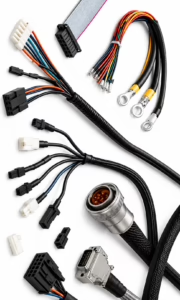
Insert molding also encapsulates electronic components such as sensors, contacts, and wire connections. These need lower injection pressure and temperature to avoid damage, and the mold must seal around them to prevent flash on contact surfaces.
Material selection becomes more important in these cases. Low-pressure processes and resins with moderate processing temperatures are often chosen so that sensitive parts survive molding. Prototype trials confirm that components function after encapsulation, and electrical testing after molding catches damage that visual inspection would miss.
Quality Checks for Insert Molded Parts
Inspection in insert molding covers insert position, flush or protrusion height, thread quality, and absence of cracks around the insert. Gauges, vision systems, and torque and pull testing provide objective evidence that parts meet requirements.
Process controls are as important as final inspection. Recording preheat settings, insert lot numbers, and mold conditions supports traceability, which is especially valuable in medical, aerospace, and electronics programs where a problem must be traced to a specific lot. Statistical sampling plans define how often parts are checked during a run.
Why Hi-Rel Plastics Provides Insert Molding Services
Hi-Rel Plastics & Molding provides insert molding services alongside injection, blow, rotational, and thermoforming processes. Its engineers review inserts, retention features, and gating with customers before tooling is committed so that designs are ready for production.
Supported by ISO 13485, ISO 9001, and AS9100D certification, Hi-Rel can support insert molding services for medical, aerospace, and industrial applications with documented process control. Secondary operations and assembly are available under the same quality system.
Ready to Apply Insert Molding Design Guidelines?
A useful quote request includes insert drawings, resin preferences, expected volumes, and any load or electrical requirements. Sharing that information early lets the molder recommend retention features and loading methods that fit the program.
Hi-Rel Plastics & Molding welcomes inquiries from engineers and procurement professionals evaluating insert molding for an upcoming program. Contact Hi-Rel Plastics & Molding to share your part requirements and discuss how Hi-Rel’s capabilities can support your project.