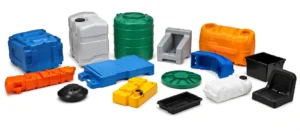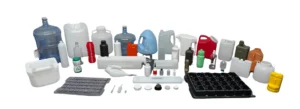

Custom blow molding design and manufacturing process creates hollow plastic parts for diverse industrial needs. Bottles, containers, tanks, ducts, and similar components get produced through this proven method. The process inflates heated plastic inside a mold. The material conforms to the mold’s internal geometry. The result is a precisely engineered hollow component. Companies source this solution across consumer packaging, agriculture, automotive systems, and medical applications. The distinction lies in customization. Commodity blow molding produces standard parts. This approach delivers components designed to exact customer specifications. Shape, material, wall thickness, volume, and performance characteristics all get optimized.
Companies seek manufacturing partners who translate functional requirements into manufacturable designs. Hold volume, pressure rating, chemical compatibility, and regulatory compliance matter significantly. Engineers and procurement professionals must understand this process thoroughly. Its variants demand attention. Design considerations affect part performance directly. Material selection drives outcomes. Engaging effectively with suppliers requires knowledge. Better decisions emerge throughout development and production cycles. Explore Hi-Rel’s blow molding capabilities to see how this manufacturing method solves real problems.
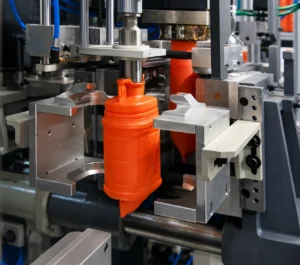
The process begins with a plastic parison — a softened thermoplastic tube. This tube positions inside a split mold. Once the mold closes around the parison, pressurized air injects into the tube. It inflates against the mold walls. The plastic conforms to the mold’s internal shape. Cooling follows against the mold surface. The part ejects as a hollow component.
The mold determines external geometry. Internal geometry responds to different factors. Parison dimensions control wall thickness distribution. Volume and interior surface characteristics depend on parison dimensions. Inflation pressure shapes final characteristics.
In custom blow molding design and manufacturing process applications, every variable gets engineered. Parison dimensions, material, and process parameters all require careful optimization. This differs dramatically from commodity bottle production. Standard parisons and molds produce millions of identical units. This approach involves tooling designed specifically for one application. The tooling investment delivers dimensional precision. Material performance improves. Functional characteristics exceed standard commodity parts significantly.
The custom blow molding design and manufacturing process encompasses three primary variants. Extrusion blow molding ranks as most widely used. Industrial containers, automotive parts, and consumer products benefit. Complex shapes, handles, and multi-layer constructions become possible. An extruder melts plastic continuously. It produces a parison captured by the mold. Flexibility in part size and geometry exists. Cost-effectiveness applies to medium and high volumes.
Injection blow molding starts differently. An injection-molded preform serves as the precursor. This test-tube-shaped component transfers to a blow mold. Inflation produces the final part geometry. Tighter dimensional tolerances result. Neck finish accuracy improves compared to extrusion methods. Pharmaceutical containers and cosmetic packaging use this approach. Precise thread and neck dimensions prove critical for these applications.
Injection stretch blow molding adds biaxial stretching. The plastic’s molecular structure becomes oriented. Clarity, strength, and barrier properties all increase. PET beverage bottles use this process. Custom applications requiring clarity or pressure ratings benefit significantly. This variant of custom blow molding design and manufacturing process delivers superior performance characteristics.
Materials selection depends on application requirements. Chemical resistance, flexibility, transparency, impact strength, and temperature performance drive choices. Regulatory compliance adds another layer.
High-density polyethylene ranks as most common. Its toughness and chemical resistance prove valuable. Processability makes it practical for manufacturers. Industrial containers, automotive fuel tanks, agricultural tanks, and household products use HDPE. Low-density polyethylene offers greater flexibility. Squeeze bottles and flexible containers benefit. Products requiring softer material performance gain advantages.
Polypropylene suits applications needing higher temperature resistance. Polyethylene temperatures fall short here. Automotive fluid reservoirs, laboratory containers, and food-contact applications use it. Hot-fill capability becomes possible with polypropylene.
PET serves clarity-critical applications. Pressure-rated containers rely on its properties. Engineering resins including polycarbonate, ABS, and nylon address technical applications. Specific mechanical, thermal, or barrier properties become achievable. Medical-grade and FDA-compliant resin grades support food contact, pharmaceutical packaging, and medical device applications. Regulatory documentation accompanies these specialized materials.
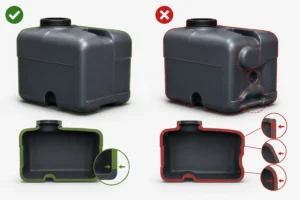
Successful part design requires understanding how inflation distributes material. Wall thickness remains non-uniform throughout the part. Areas reached first by expanding parison tend to be thicker. Distant areas receive thinner walls. Engineers must account for this distribution. Critical areas need adequate material. Structural performance depends on proper wall thickness planning.
Parting line placement deserves careful attention. The parting line marks where mold halves meet. It creates a seam on the finished part. Location and geometry affect aesthetics and function. Deflashing ease depends partly on parting line design. For sealing containers, positioning away from sealing surfaces proves essential. Appearance requirements demand thoughtful parting line specification. Discovering these constraints after tooling completion causes problems. Early collaboration prevents costly errors.
Tooling construction uses aluminum or steel. Production volume, part size, and mold life drive material selection. Aluminum molds cost less and produce faster. Development programs and lower-volume runs benefit. Steel molds offer greater durability. High-volume production with millions of cycles justifies steel. Multi-cavity molds maximize throughput in high-volume applications.
Tooling lead time generally runs shorter than injection mold development. Blow molds define external geometry only. Internal core structures aren’t required. Design work still demands attention. Proper parison capture, adequate cooling, and appropriate venting need careful engineering. Suppliers maintaining in-house tooling capabilities provide faster iteration. Greater control over quality follows. Outsourced mold construction creates delays and quality concerns.
Industrial and automotive markets represent major segments. Fluid reservoirs, ductwork, air intake components, and tanks use this process. Structural hollow parts in vehicles get produced. The automotive industry demands light weight, chemical resistance, and structural performance under thermal cycling. Blow-molded engineering thermoplastics deliver these capabilities. Close collaboration between designers, material suppliers, and manufacturers proves essential. Dimensional and performance specifications require coordination.
Industrial containers and tanks serve agricultural, chemical, and equipment applications. Chemical resistance to specific fluids matters greatly. UV stabilization for outdoor use becomes necessary. Structural integrity under filling and handling loads requires careful design. Custom blow molding design and manufacturing process enables design for specific capacities. Connection configurations and mounting features get customized. Standard off-the-shelf containers cannot match this functionality. System integration improves. Products become more functionally efficient.
Quality control encompasses dimensional inspection and wall thickness measurement. Visual inspection and functional testing complete the process. Critical dimensions require verification. Neck thread dimensions, flange tolerances, hold volume, overall height, and width need checking. Engineering drawings guide inspection protocols.
Wall thickness measurement uses destructive cross-section analysis initially. Development and first article qualification phases benefit. Production monitoring can use nondestructive ultrasonic measurement. Leak testing and pressure testing verify integrity. Containers and fluid system components need this verification. FDA compliance standards apply to food contact and pharmaceutical applications. ASTM International standards provide testing and material specifications. Material certifications and resin lot traceability become mandatory. Compliance documentation gets provided. First article inspection reports document all critical characteristics. Tooling or process changes trigger new documentation. Statistical process control monitors critical dimensions. High-volume production receives ongoing process stability evidence.
Hi-Rel Plastics & Molding provides comprehensive blow molding capabilities. Customers in industrial, agricultural, automotive, medical, and consumer markets receive support. Hollow plastic parts designed to specific requirements become reality. Experience with extrusion blow molding, injection blow molding, and related processes guides recommendations. Application geometry, material requirements, volume, and budget receive careful analysis. Quality systems support both regulated and non-regulated industries equally.
The approach integrates tooling design, material selection, and process development. Secondary operations complete the solution. Customers benefit from early project engagement. Conceptual design through production receives team attention. Practical manufacturing knowledge informs design processes immediately. Contact Hi-Rel today to discuss your specific requirements.
This process proves right when applications require specific geometries. Material properties and performance characteristics matter. Commodity products cannot deliver your exact needs. Early-stage development, tooling readiness, or alternative supplier qualification all benefit. Engaging with capable partners early saves time. Costly design changes after tooling commitment get eliminated. Understanding volume requirements, material constraints, and timelines upfront proves essential. Suppliers recommend appropriate tooling approaches. Process selection becomes optimized for your specific situation.
Hi-Rel Plastics & Molding welcomes inquiries from engineers and procurement professionals. Custom blow molding design and manufacturing process requirements deserve expert attention. Visit the company website to request quotes. Discuss your project details with the experienced Hi-Rel team. They’ll guide you through material selection, design optimization, and manufacturing strategy for hollow plastic components that perform.