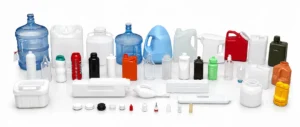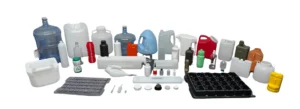
Custom blow molding services produce hollow plastic components engineered to specific application requirements rather than standard off-the-shelf containers. Bottles, tanks, ducts, and structural components are designed and manufactured to meet particular performance specifications. When evaluating this manufacturing approach, the distinction between commodity and custom production becomes clear: commodity blow molding produces high volumes of generic containers using standard molds and resins; custom solutions deliver components where geometry, material selection, or performance characteristics exceed what standard products provide. Tooling is designed specifically for the application. Material selection is optimized to match chemical exposure, temperature range, UV requirements, and regulatory compliance needs. Understanding these key considerations ensures production processes develop around the unique characteristics of each part.
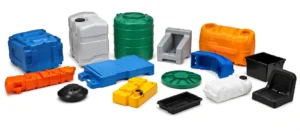
The range of applications served by custom blow molding is impressively broad. Medical device fluid containers, agricultural spray tanks, automotive fluid reservoirs, industrial chemical containers, and food-grade bottles all require this level of customization. Specialty consumer products also benefit when their geometry, material, or performance requirements exceed standard options. Explore Hi-Rel’s custom blow molding capabilities to see how engineering excellence translates into practical solutions. For engineers and procurement professionals evaluating this process, understanding the tooling variants, design principles, and material options available makes informed sourcing decisions more achievable.
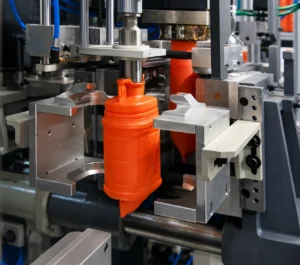
Three primary process variants exist within blow molding, and each presents distinct considerations for tooling and production. Extrusion blow molding is the most widely applied variant. An extruder continuously melts plastic resin and extrudes it into a hollow tube — the parison — which is captured by the blow mold. Once the mold closes around the parison, compressed air inflates it against the mold walls to create the finished part shape. This approach accommodates a wide range of part sizes, complex geometries with handles and features, and multi-layer constructions through coextrusion. It works well across low to high production volumes and offers good cost-effectiveness relative to part capability.
Injection blow molding begins with injection-molded parisons — precision-formed hollow preforms with fully-formed necks and complete thread geometry. These preforms transfer to blow molds where inflation creates the final part geometry. This variant produces superior neck dimensional accuracy and thread finish, making it preferred for pharmaceutical containers and cosmetic packaging that require precise closure compatibility. Injection stretch blow molding adds a mechanical stretching step that orients polymer molecules in two directions — axially through mechanical stretching and hoop-wise through inflation pressure. This biaxial orientation dramatically improves clarity, strength, and barrier properties. Selecting the right process variant requires understanding how each approach affects tooling investment, cycle time, and part quality.
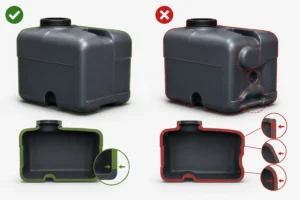
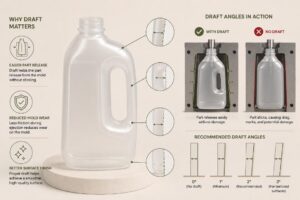
Effective part design requires understanding how blow molding distributes material as the parison inflates. Unlike injection molding, which produces relatively uniform wall thickness, blow molding creates varying wall thickness across the part as the parison stretches unevenly. Areas of the mold that the parison reaches first develop thicker walls; distant areas or deep recesses develop thinner walls. Structural design must accommodate this wall thickness variation — critical structural features should be located in areas expected to receive adequate material, and thin sections should be avoided in high-stress areas.
Parting line location — where the mold halves meet — determines the appearance and function of the seam on the finished part. For sealing containers, designers should place the parting line away from sealing surfaces. For appearance-critical applications, they should make the seam visually unobtrusive.
Additionally, early collaboration between the part designer and the custom blow molding tooling production considerations supplier captures these insights during the design review phase. As a result, suppliers with process experience can recommend geometry improvements that enhance moldability, reduce tooling complexity, and improve part consistency. Therefore, incorporating these insights before finalizing mold design creates more efficient and reliable production outcomes.
Application performance requirements drive material selection in custom blow molding programs. Chemical resistance to specific fluids must be verified. Temperature ranges during use and storage affect which resins are suitable. UV exposure for outdoor storage or use requires UV-stabilized grades. Regulatory compliance — food contact approval, pharmaceutical compatibility, or medical device biocompatibility — adds another layer to material evaluation. High-density polyethylene is the workhorse resin, offering excellent chemical resistance, toughness, and processability at competitive cost. It is widely approved for food contact and pharmaceutical applications.
When HDPE properties fall short, alternative selections address specific needs: polypropylene for hot-fill applications, PET for optical clarity and pressure rating, polycarbonate for impact resistance and medical device transparency, and engineering resins like polysulfone or PEEK for extreme chemical or temperature resistance. Coextrusion combines multiple resin layers to achieve property combinations that single resins cannot deliver. Structural HDPE layers provide strength; EVOH barrier layers reduce permeation. Multi-layer structures are particularly common in automotive fluid reservoirs, where chemical resistance, barrier properties, and weight optimization all matter. Material selection requires careful analysis of specific exposure conditions and performance requirements. ISO 10993 standards guide medical material selection. Suppliers with broad material experience and access to regulatory documentation support this evaluation process effectively.
Tooling costs less than comparable injection molds because only the external geometry needs to be defined — internal core structures are not required. Large parts show the advantage most clearly: a five-liter container blow mold costs a fraction of an equivalent injection mold. Aluminum dominates tooling for low to medium volumes, offering adequate durability for hundreds of thousands of cycles at significantly lower cost than steel. Steel tooling is reserved for high-volume programs where mold life requirements justify the investment.
Total program economics — balancing upfront tooling cost against per-part manufacturing cost and tool life — represent critical decision points. A lower-cost aluminum tool that requires earlier replacement may cost more per part over the program life than a higher-cost steel tool that lasts longer. Understanding these economic tradeoffs is essential when planning custom blow molding tooling production considerations strategy. Realistic supplier guidance on tool life expectancy, production cycle considerations, and total cost of ownership helps engineering teams make sound decisions aligned with program volume projections and timelines.
Quality control encompasses dimensional inspection, wall thickness measurement, visual inspection for defects, leak testing, and functional testing as appropriate to the application. Critical dimensions — neck thread dimensions, container height and width, fill-line volume accuracy — receive inspection against drawing specifications. Wall thickness measurement uses destructive cross-section analysis during development; production monitoring can use nondestructive ultrasonic measurement. Leak testing validates that containers hold liquid without seepage. Pressure or vacuum containers require additional testing to verify structural integrity under service loads.
For food contact applications, extractables and leachables testing verifies that container material does not contaminate product. For pharmaceutical packaging, USP standards define container specifications. And for medical device applications, ISO 13485 quality systems and biocompatibility documentation per ISO 10993 are required. Suppliers serving regulated markets maintain the inspection capabilities, testing programs, and documentation infrastructure these markets demand.
Agricultural and industrial markets represent the largest segment for custom blow molding applications. Spray tanks for agricultural equipment, chemical storage and transport containers, irrigation system components, and industrial fluid handling equipment all rely on blow-molded solutions. Custom engineering addresses specific tank capacities, connection configurations, and structural performance requirements. Handle integration, fill neck design, drain port placement, and baffles get molded directly into the product, eliminating separately sourced components and reducing assembly steps.
UV stabilization is critical for outdoor storage and use. Unstabilized polyethylene degrades in sunlight, becoming brittle and prone to cracking. UV-absorbing additives and HALS stabilizers are incorporated into outdoor-use grades to provide extended service life. Geographic UV exposure intensity, expected outdoor storage duration, and required service life drive material formulation choices. Suppliers with outdoor product experience understand these dynamics and can recommend appropriate material packages that balance initial cost against long-term durability.
Medical device fluid containers and pharmaceutical primary packaging represent the highest-value and most technically demanding segment for custom blow molding applications. Irrigation solution bottles, specimen collection containers, and pharmaceutical preparation containers require material biocompatibility per ISO 10993 and must comply with USP standards for container specifications. FDA regulations and ISO 13485 quality systems govern manufacturing.
Injection blow molding is the preferred process for medical and pharmaceutical containers because the precision neck molding and elimination of pinch-off seams deliver superior quality and closure compatibility. Cleanroom production environments — typically ISO Class 7 or Class 8 — are required for sterile pharmaceutical packaging. Process validation following IQ/OQ/PQ protocols and container closure integrity testing are mandatory. The combination of validated processes, regulatory-aligned quality systems, biocompatible materials, and rigorous testing and documentation creates the compliance infrastructure that pharmaceutical and medical device OEMs require from their suppliers.
Hi-Rel Plastics & Molding offers extrusion and injection blow molding capabilities serving industrial, agricultural, medical, and consumer markets. The company’s experience with diverse part geometries, material requirements, and regulated applications helps it provide valuable technical input. This support begins during design and tooling planning phases. Hi-Rel works with customers during design reviews before committing to tooling costs. This early collaboration helps optimize part geometry, improve moldability, and increase manufacturing efficiency.
Hi-Rel’s quality systems and secondary service capabilities extend beyond molding.
Hi-Rel performs trimming, drilling, painting, marking, assembly, and other secondary operations in-house. As a result, customers receive more complete solutions than molding-only suppliers can provide. Additionally, the integration of tooling design, material expertise, production discipline, and quality documentation demonstrates a commitment to engineered solutions. These capabilities help address the complete requirements of each program.
. Contact the Hi-Rel team to discuss how this expertise applies to your project.
Custom blow molding works when specific requirements demand engineered hollow plastic components beyond what standard products provide. Understanding your program’s key requirements helps you select the right approach from the start. These considerations include tooling material and cost, process selection, material requirements, quality standards, and production volume. Successful programs begin by defining application requirements clearly. Evaluate the fluids or materials the container will hold, operating and storage temperatures, UV exposure, outdoor durability needs, regulatory requirements, and production volume expectations. Early supplier involvement, especially during the design phase, adds valuable manufacturing expertise. This collaboration improves part design and addresses critical factors before finalizing the tooling strategy.
Hi-Rel Plastics & Molding invites engineers and procurement professionals to explore solutions for your specific application. Visit hirelplastics.com to request a quote or contact the Hi-Rel team to discuss your specific application requirements, material needs, and program timeline.