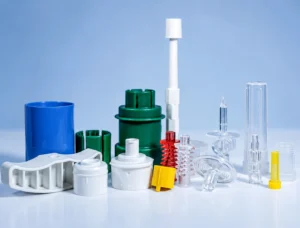
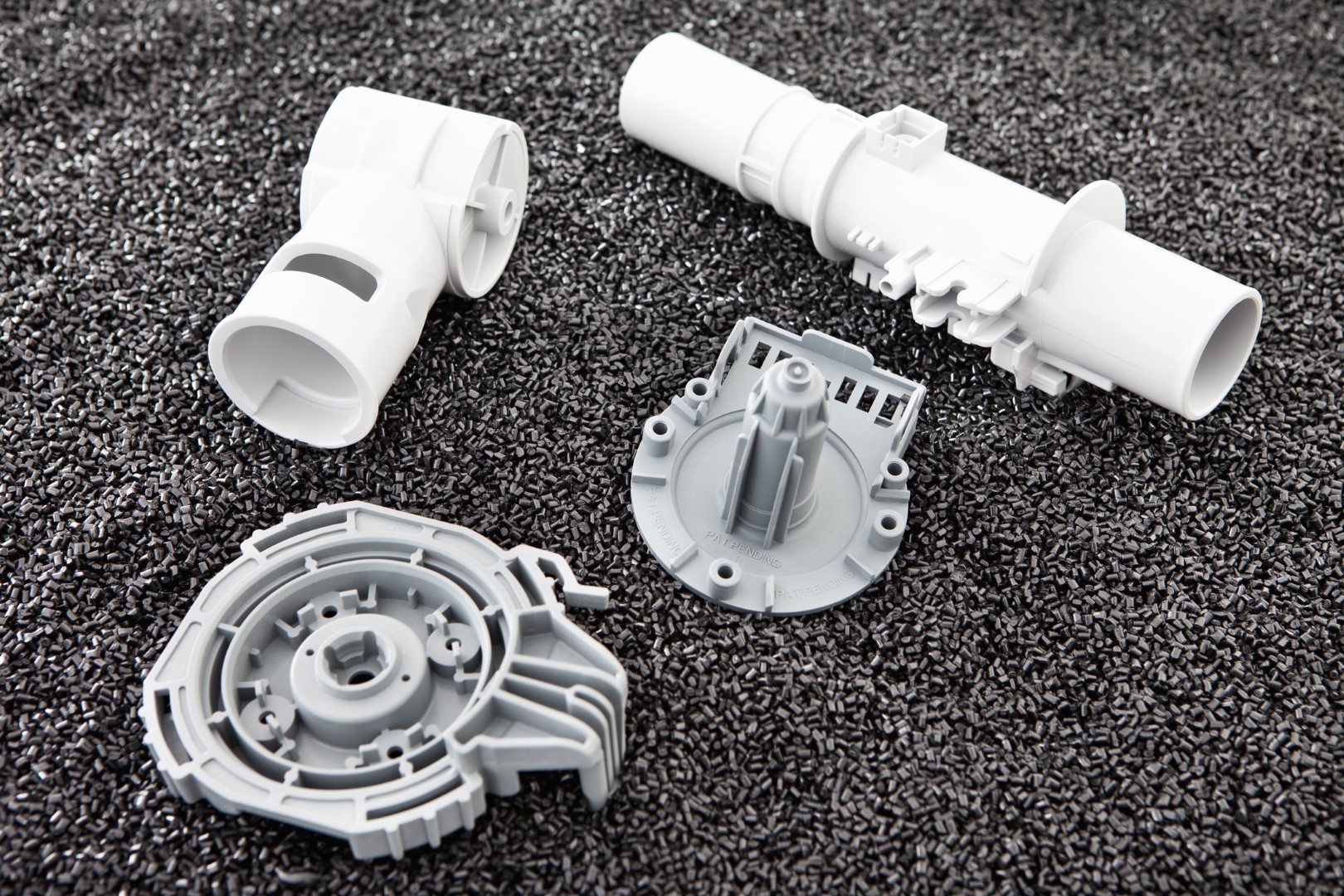
Insert molding services produce plastic components that permanently encapsulate metal inserts, electronic components, or other substrates within a single injection-molded part. The process eliminates post-mold assembly steps by integrating multiple materials into one unified part during the molding cycle itself. The resulting component is stronger, more dimensionally consistent, and often less expensive to produce at volume than an equivalent assembly built from separately molded and mechanically joined parts. For engineers designing products that combine plastic housings with threaded interfaces, electrical contacts, or structural reinforcements, insert molding process metal plastic encapsulation offers a manufacturing path that improves both product performance and production economics.
Insert molding is applied across a remarkable range of industries and product categories. Medical devices, consumer electronics, aerospace assemblies, automotive components, and industrial equipment all incorporate insert-molded parts as functional elements. The variety of inserts that can be accommodated — from standard brass threaded bushings to precision-ground metal shafts to overmolded electronic assemblies — means that the process can be adapted to serve many different design requirements. Explore Hi-Rel’s metal-plastic integration capabilities to see precision manufacturing excellence. This article examines how insert molding services work, what determines success in insert-molded part design, and what engineering and procurement teams should look for when sourcing these services.
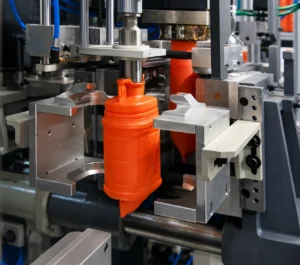
An insert molding cycle begins before the mold closes. The insert — whether a threaded bushing, a terminal, a pin, or a more complex substrate — must be positioned within the mold cavity at the precise location where it will be encapsulated by the incoming plastic. Depending on production volume and insert geometry, this placement is performed manually by a press operator, semi-automatically using a fixture or pick-and-place mechanism, or fully automatically by a robotic system integrated with the molding press. The insert must be held in position during mold closing and throughout the injection and packing phases without being displaced by the forces of incoming plastic.
Once the insert is positioned and the mold closes, the cycle proceeds as standard injection molding. Molten thermoplastic is injected into the cavity under controlled pressure and speed, flowing around and over the insert to encapsulate it according to the mold geometry. The plastic cools and solidifies in contact with the insert, mechanically locking around the retention features — knurling, grooves, holes, or undercuts — machined into the insert surface. When the mold opens, the finished part containing the encapsulated insert is ejected. The entire cycle — from insert loading to part ejection — typically takes only seconds longer than a standard injection molding cycle of equivalent part complexity, making insert molding services highly efficient relative to the assembly operations they replace.
Threaded metal inserts are the most commonly encountered components in insert molding services. Brass is the material of choice for most applications because it machines cleanly, holds precise thread geometry, and provides the knurling and groove geometry needed for strong plastic-to-metal bonding. Standard threaded inserts are used wherever a plastic part must accept a machine screw or bolt without the risk of thread stripping that direct tapping in plastic produces. Medical device enclosures, electronic instrument housings, automotive panels, and industrial equipment covers all routinely incorporate brass threaded inserts delivered through insert molding process metal plastic encapsulation.
Beyond threaded inserts, insert molding services accommodate a wide variety of embedded components. Manufacturers insert electrical terminals and contacts into connector housings to create integrated electrical assemblies. These terminals use stamped copper alloy sheets and precise forming processes. Manufacturers also encapsulate precision-ground pins and shafts in plastic. This creates accurate positioning features and mechanical pivots. They can also insert filters, screens, and membranes into plastic frames to create integrated filtration assemblies. Insert molding supports many component types. The main limitations involve accurate insert placement and proper plastic design. Engineers must ensure the plastic fully encapsulates the insert without causing displacement or stress concentration.
The thermoplastic resin selected for an insert molding program must be compatible with both the insert material and the functional requirements of the finished part. Thermal expansion mismatch between the plastic and the insert material is one of the most important compatibility considerations. All materials expand and contract with temperature changes, but different materials do so at different rates. When the coefficient of thermal expansion of the plastic differs significantly from that of the insert material — most commonly metal — temperature cycling in service creates stress at the interface. If this stress exceeds the bond strength between the plastic and the insert, cracking or pull-out can result. Selecting resins with lower shrinkage rates and thermal expansion coefficients closer to the insert material reduces this risk.
Processing characteristics of the selected resin affect insert molding success as well. High-viscosity resins require more injection pressure, which can displace inserts that are not firmly retained in the mold. Resins with high mold shrinkage create more compressive stress around the insert as they cool, which can actually enhance retention in some geometries but may crack brittle insert materials in others. Glass-fiber-reinforced resins improve dimensional stability and reduce shrinkage but require attention to fiber orientation near the insert interface, where crossing fiber orientations can create weak knit lines. An experienced insert molding services provider evaluates these interactions during the design phase and recommends the resin best suited to the full set of requirements.
Insert design and part design must be considered together to achieve reliable insert-molded assemblies. The insert’s retention features — the geometric elements that mechanically lock it into the surrounding plastic — are the primary determinant of pull-out and torque resistance. Knurling is the most common retention feature for cylindrical inserts, creating a pattern of ridges and valleys that the plastic flows into and solidifies around. Circumferential grooves provide axial retention, preventing the insert from being pulled out along its axis. Through-holes or transverse features in flat inserts allow plastic to flow through and create a mechanical interlock in the through direction. The specific retention geometry should be designed with the applied load direction in mind.
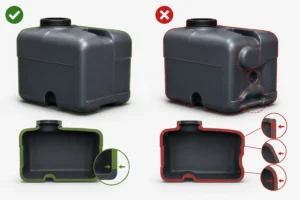
The plastic wall around the insert must provide enough thickness to hold the insert securely. It must also prevent cracking under service loads. A common guideline uses a minimum wall thickness equal to half the insert’s outer diameter. However, requirements vary based on material, insert design, and loading conditions. Gate location should direct material flow around the insert from multiple directions. This promotes complete filling and consistent mechanical properties around the insert perimeter. Applying these design principles during insert molding services development creates more reliable parts and reduces production issues.
Positional accuracy of the insert within the finished part is a critical quality characteristic in most insert molding applications. Threaded inserts must be positioned so that mating fasteners can be driven perpendicular to the surface; angular deviation creates cross-threading risk and reduces joint strength. Electrical terminals must be positioned accurately relative to the connector’s mating geometry; positional errors produce intermittent contact or assembly interference. Precision pins must be located accurately relative to mating features in the assembled product. All of these requirements place demands on both the mold design — which must securely locate the insert during injection — and the insert itself, which must be manufactured to tolerances tight enough to be consistently positioned by the mold’s locating features.
Insert molding services providers use several approaches to achieve consistent insert positioning. Core pins in the mold engage the insert’s bore or external geometry to locate it radially and axially. Spring-loaded locating features accommodate small insert-to-insert dimensional variation while maintaining consistent positioning. For automated insert loading, robotic vision systems verify insert orientation and position before mold closing, rejecting or repositioning inserts that do not meet placement requirements. The combination of well-designed mold locating features and controlled insert loading produces the positional consistency that precision insert-molded assemblies require.
Insert molding services for medical device and aerospace applications operate under the same quality and regulatory frameworks as other precision injection molding in those industries. ISO 13485 quality management systems are required by medical device OEM customers who source insert-molded components. Process validation following IQ/OQ/PQ protocols is standard for medical device programs, with insert placement accuracy and insert pull-out strength typically defined as critical characteristics subject to ongoing measurement and statistical process control monitoring.
First article inspection for insert-molded medical and aerospace components documents part dimensions and insert-to-plastic interface performance. Pull-out force testing measures the force required to remove the insert from the plastic. This test is a standard acceptance method for insert-molded threaded and press-fit components. Torque-out testing measures resistance to rotational displacement for threaded inserts subject to fastener installation torque. These functional tests supplement dimensional inspection to provide a complete picture of insert-molded assembly performance before production shipments begin.
The choice between manual, semi-automated, and fully automated insert loading depends on production volume, insert complexity, cycle time requirements, and accuracy needs. Manual insert loading works well for low-volume programs, complex insert configurations, and development builds. It also suits projects where teams have not yet optimized production processes. Manual loading offers flexibility without requiring automation equipment investment. However, it creates more positional variation and increases labor costs per cycle.
Robotic insert loading uses vibratory feeders, indexed trays, or vision-guided pick-and-place systems. These methods improve positional consistency and cycle time repeatability. They require a higher initial capital investment. For high-volume programs producing millions of insert-molded parts annually, automation often provides a strong return. Labor savings can justify the investment within a relatively short payback period. Semi-automated methods offer a middle option. An operator loads inserts into a precision fixture, and the system positions them accurately in the mold. This approach improves consistency without the full cost of robotic automation. Insert molding service providers with experience across different automation levels can recommend the best approach. They consider both program economics and quality requirements.
Hi-Rel Plastics & Molding provides insert molding services as part of its precision manufacturing capabilities. The company serves customers in medical, aerospace, electronics, automotive, and industrial markets. Hi-Rel works with various insert types, thermoplastic resins, and regulatory requirements. This experience helps the team provide technical guidance during the design phase. The company supports customers before tooling decisions are made and delivers consistent, documented results through production. Hi-Rel’s quality systems support the inspection, traceability, and process control requirements that regulated-industry customers expect from their insert molding suppliers.
Hi-Rel’s insert molding capabilities include tooling design, secondary services, and assembly operations. This gives customers a complete manufacturing solution beyond what a molding-only supplier can provide. The company engages with customers early in the process. Hi-Rel reviews part designs, insert specifications, and assembly requirements before committing to tooling. This approach reduces design changes after tool build and supports efficient timelines from development through production. Contact Hi-Rel to discuss your specific application.
Insert molding can improve assembly strength, dimensional consistency, and production efficiency. It works well for products that currently combine plastic and metal components through post-mold assembly. Whether you are developing a new product or converting an existing assembly, start with a technical review. Evaluate part geometry, insert specifications, material requirements, and production volume. An experienced insert molding services provider can assess feasibility before any commitment. The team can provide realistic estimates for tooling investment, cycle time, and per-part costs.
Hi-Rel Plastics & Molding invites engineers and procurement professionals to visit hirelplasticsm.com and submit a project inquiry or quote request. The Hi-Rel team is available to review drawings, discuss insert specifications, and provide technical guidance on design and tooling decisions for insert molded components.