The insert molding process metal plastic encapsulation integrates metal inserts and electronic components into plastic parts during injection molding. This eliminates separate assembly steps entirely. Manufacturers encapsulate components in one production cycle instead of assembling them afterward. The result? Stronger, more reliable assemblies than post-molded mechanical fastening provides. Total cost per part often drops significantly. Assembly labor, secondary operations, and inventory complexity all decrease.
Medical device manufacturers, electronics companies, aerospace suppliers, automotive OEMs, and industrial equipment makers all use this process. Applications range from simple threaded brass inserts in plastic housings to complex multi-material assemblies. These combine conductive metal terminals with engineered thermoplastics seamlessly. Engineers and procurement professionals must understand insert molding process metal plastic encapsulation. They need to know when it’s appropriate for their applications. Selecting the right services provider makes all the difference. Explore Hi-Rel’s insert molding capabilities to see how this manufacturing approach delivers results.
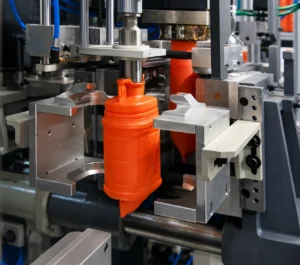
The insert molding process metal plastic encapsulation begins with a pre-formed insert. This insert is typically a metal component like a threaded bushing, pin, terminal, or contact. An operator places it into a prepared position within the injection mold. Robotic handling equipment automates this placement for high-volume programs. The mold closes once the insert sits in position. Molten thermoplastic resin flows into the cavity. The plastic encapsulates the insert or bonds to specific surfaces. It then cools and solidifies to form the finished part.
Geometric features on the insert create mechanical bonding. Knurling, grooves, holes, or undercuts serve this purpose. Plastic material flows into these features and locks around them. This mechanical interlocking creates a strong, pull-resistant bond. Several factors determine bond strength effectively. Insert geometry matters significantly. Resin selection affects performance substantially. Material compatibility between insert and plastic influences results directly. Processing parameters during molding play critical roles. Experienced providers help customers optimize every variable. They ensure required bond strength for each application.
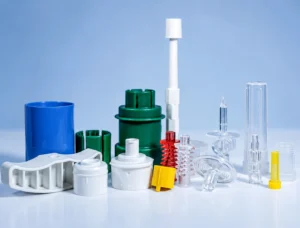
Threaded metal inserts are the most common type used in this process. Brass, stainless steel, or aluminum construction is standard for industrial applications. These provide durable threaded features in plastic parts. Plastic threads alone would strip or fail under repeated fastening. Brass inserts set the industry standard for most applications. Brass machines cleanly and holds tolerances well consistently. It provides excellent knurling for strong plastic-to-metal bonding strength. Stainless steel inserts work where corrosion resistance matters. Magnetic properties sometimes drive stainless steel selection.
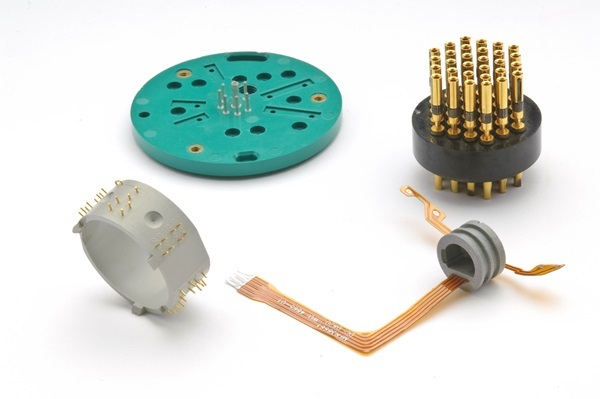
Beyond threaded inserts, the insert molding process metal plastic encapsulation accommodates diverse components. Electrical terminals and contacts integrate into connector housings seamlessly. This creates unified electrical assemblies. Pins, studs, and shafts encapsulate in plastic. Mechanical assemblies with precise positional tolerance result. Labels, RFID chips, sensors, and filters are candidates too. Applications requiring permanent component integration benefit greatly. This manufacturing method addresses broad assembly challenges effectively.
Thermoplastic resins must be compatible with insert materials. They must achieve required bond strength, dimensional tolerance, and functional performance. Common resins include nylon, polypropylene, ABS, polycarbonate, PEEK, PPS, and glass-filled engineering thermoplastics. Thermal expansion coefficients matter significantly. Comparing resin expansion rates to insert material rates proves essential. Significant mismatches create stress concentrations at the interface. Bond weakness or cracking under thermal cycling can result from poor material pairing.
Resin selection affects the molding process directly. Higher-viscosity resins demand more injection pressure significantly. This pressure can displace inserts if they lack proper support. High shrinkage resins create dimensional variation around the insert interface. Glass-filled or mineral-filled resins improve dimensional stability substantially. They reduce shrinkage effectively. Careful gate and runner design prevents fiber orientation issues. An experienced insert molding services provider evaluates interactions during design. They recommend the best resin for your specific requirements.
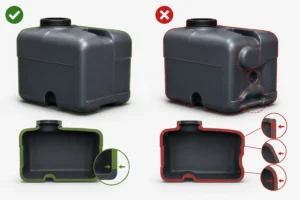
Good part and insert design ensures successful insert molding outcomes. The insert requires features that allow plastic to mechanically lock. Knurling, grooves, and through-holes serve as common retention features. Plastic material depth surrounding the insert must prevent cracking. Delamination under mechanical loads cannot occur in well-designed parts. Wall thickness uniformity around the insert promotes even cooling. Residual stress decreases significantly with uniform walls.
Gate location profoundly impacts insert molding process metal plastic encapsulation results. The gate should direct material flow across the insert strategically. Complete encapsulation results from proper gate positioning. Voids and knit lines in critical areas disappear. The mold must securely locate the insert during injection. Insert movement during fill stages creates positional variation problems. This compromises assembled part function substantially. Services providers who engage early identify critical considerations. They prevent tooling mistakes and production issues from occurring.
This manufacturing process offers clear advantages over post-assembly methods entirely. The primary advantage is structural integrity. Mechanical interlocking of plastic around the insert creates stronger joints. Post-assembly methods like press-fit or ultrasonic rarely match this strength. Most applications benefit significantly from the insert molding process metal plastic encapsulation approach. Insert molded joints resist vibration-induced loosening effectively. Automotive, aerospace, and industrial equipment applications value this reliability tremendously.
Process efficiency represents a secondary major advantage. Consolidating two or more assembly steps into one reduces manufacturing cost. The individual molding cycle becomes slightly more complex. Overall cost benefits emerge when all factors combine. Inventory management simplifies dramatically. Sub-components integrate during molding instead of being stocked separately. Quality control streamlines with fewer assembly steps. Assembly errors that introduce defects decrease substantially. Well-integrated services deliver consistent quality and reliability.
Medical device and aerospace insert molding operates within strict quality frameworks. ISO 13485 quality management systems are required for most medical device customers. Process validation using IQ, OQ, and PQ protocols is standard. Insert placement accuracy becomes a critical characteristic. Pull-out strength requires careful monitoring and documentation. In-process inspection and statistical process control ensure consistency. Documentation proves every control measure.
Aerospace applications demand FAA, AS9100, or customer-specific quality compliance. Material traceability is mandatory. Documented process parameters support compliance requirements. First article inspection reports provide required evidence. Insert molding services providers with regulatory experience bring institutional knowledge. They reduce compliance burden on customers significantly. Design history file and technical documentation processes proceed smoothly. ISO 13485 standards define the quality framework for medical device applications. AS9100 requirements govern aerospace component manufacturing.
High-volume programs benefit enormously from automated insert placement. Robotic handling systems significantly improve cycle time consistency. Labor costs decrease substantially. Positional variation from manual placement disappears. Robotic systems pick inserts from vibratory feeders. They place components in the mold with consistent accuracy. Vision systems verify correct orientation and positioning before mold closure. Automated insert molding process metal plastic encapsulation proves particularly valuable. Programs producing millions of parts annually gain maximum benefit. Labor efficiency and dimensional consistency drive profitability.
Semi-automated insert molding offers a practical approach for medium-volume programs. Full automation isn’t yet economically justified at these volumes. An operator loads inserts into a fixture. The fixture positions them accurately in the mold. Better positional consistency results than fully manual insertion. Program flexibility remains for multiple insert configurations. Frequent changeovers proceed smoothly. Services providers with broad automation experience guide these decisions. They recommend appropriate approaches based on volume and complexity requirements.
Hi-Rel Plastics & Molding offers comprehensive insert molding capabilities. These services integrate with broader precision manufacturing operations. The company works with diverse insert types and thermoplastic materials. Customer engagement begins during the design phase. Consistent results continue through production cycles. Hi-Rel’s quality systems meet medical device and aerospace demands. Insert molded components often function as critical product elements.
Hi-Rel integrates insert molding process metal plastic encapsulation with tooling and assembly operations. Customers access complete supply chain solutions. Molding-only suppliers cannot match this integration. Design review through production quality documentation receives attention. Hi-Rel’s team brings technical depth and process discipline. Contact the Hi-Rel team to discuss your metal-plastic encapsulation requirements. They deliver reliable, well-documented results consistently.
Insert molding process metal plastic encapsulation can simplify your supply chain. Component reliability improves measurably. Total assembly cost decreases significantly. Applications suited to this approach gain maximum benefit. Evaluating it for new products makes sense. Replacing existing post-mold assembly processes offers clear advantages. An experienced services provider assesses feasibility. They develop production solutions tailored to your needs. Early design engagement proves particularly valuable. Tooling and process decisions shape long-term production performance.
Hi-Rel Plastics & Molding invites collaboration from engineers and procurement professionals. Visit the company website to submit quote requests. The Hi-Rel team reviews drawings with careful attention. Insert specifications receive thorough discussion. Technical guidance on material selection gets provided freely. Tooling design recommendations ensure optimal component performance. Metal-plastic encapsulation solutions are tailored to your specific challenges.