Liquid injection molding is a precision manufacturing process used to produce components from liquid silicone rubber and other liquid thermoset materials. The process is defined by its starting material state — unlike thermoplastic injection molding, which begins with solid pellets that are melted before injection, liquid injection molding process steps precision manufacturing begins with a low-viscosity two-component liquid system that is metered, mixed, and injected into a heated mold where a chemical curing reaction converts it to a solid elastomer. The result is a part with a combination of flexibility, thermal stability, chemical inertness, and biocompatibility that thermoplastic materials alone cannot deliver.
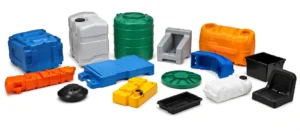
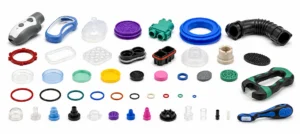
The range of industries that depend on this process has expanded steadily as designers have recognized what it makes possible. Medical devices, infant care products, food processing equipment, automotive sealing systems, wearable technology, and industrial fluid control components all incorporate liquid injection molded parts that perform functions no other material or process combination can match as efficiently. Explore Hi-Rel’s liquid silicone rubber capabilities to see precision manufacturing in action. This article examines how liquid injection molding works, what distinguishes it from other silicone processing methods, and what engineers and procurement professionals need to understand when evaluating it for their programs.
Liquid silicone rubber — commonly abbreviated LSR — is the material most closely associated with liquid injection molding. It is supplied as a two-component system: Part A contains the vinyl-functional polydimethylsiloxane base polymer along with pigment when color is needed, and Part B contains the crosslinker and a platinum-based catalyst. When combined in a precisely controlled 1:1 ratio and exposed to elevated mold temperature, the platinum catalyst drives a hydrosilylation crosslinking reaction that converts the liquid blend into a solid, elastomeric network. The cured material retains the silicon-oxygen backbone chemistry that gives silicone rubber its distinctive combination of properties.
Liquid silicone rubber formulations span a wide range of durometer values — typically from Shore A 10 to Shore A 80 — allowing designers to specify the hardness that best matches the mechanical demands of their application. Specialty formulations extend the material system further: self-lubricating grades reduce friction in moving assemblies, electrically conductive grades enable EMI shielding and contact applications, fluorosilicone grades provide enhanced resistance to fuels and solvents, and optical-grade formulations offer high light transmission for LED encapsulation and optics applications. The diversity of the LSR material system is a key reason liquid injection molding process steps precision delivers results across such a broad range of demanding applications.
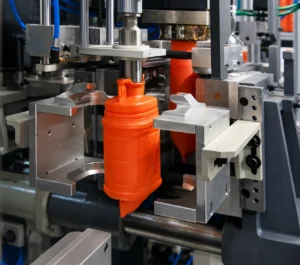
Liquid injection molding begins at the material delivery system, where Part A and Part B are stored in separate containers connected to a metering pump that dispenses them at a precisely controlled 1:1 volumetric ratio. The metered streams pass through a static or dynamic mixer that blends them thoroughly before the combined material enters the injection barrel. Because LSR is a liquid at room temperature — with viscosity similar to thick grease — it requires none of the thermal plasticating that thermoplastic injection molding demands. The injection barrel and screw assembly convey the blended material to the mold without applying significant heat, relying instead on the mold itself to provide the curing temperature.
When injected into the closed, heated mold — typically maintained between 150 and 200 degrees Celsius depending on the formulation — the LSR material cures through the heated cavity. Unlike thermoplastic molding, where parts cool and solidify in the mold, liquid injection molding parts cure — meaning the material undergoes a chemical crosslinking reaction that converts it from a liquid to a solid elastomer. Cure time depends on part wall thickness, mold temperature, and the specific formulation’s cure kinetics. Thinner parts at higher mold temperatures cure in seconds; thicker parts or lower mold temperatures extend the cure cycle. After curing, the mold opens and the part is ejected — often by robotic handling systems that maintain positional consistency and protect part quality. Cold-runner or valve-gate systems maintain the material in the feed channels in an uncured liquid state between cycles, eliminating runner waste and enabling fast, efficient cycling.
Liquid injection molding is not the only process for producing silicone rubber components. High-consistency rubber compression molding and transfer molding are established alternatives that use solid or semi-solid silicone compounds rather than liquid systems. Compression molding places a pre-weighed slug of uncured silicone into an open mold, closes the mold under press force, and cures the material. Transfer molding uses a pot and plunger to push semi-solid compound through sprues into a closed mold. Both processes have been used for decades and remain cost-effective for certain part geometries and volumes.
Liquid injection molding process steps precision surpasses both compression and transfer molding in several important dimensions. The automated, closed-mold injection of low-viscosity LSR produces more consistent part-to-part dimensions, less flash, faster cycle times, and lower labor content than manual compression molding. Cold-runner liquid injection molding systems eliminate the runner waste that transfer molding generates, reducing material cost over the life of the program. For applications requiring cleanroom production — particularly medical device components — the closed-mold, automated nature of this process is a significant contamination control advantage over open-mold processes. These combined advantages have driven the adoption of liquid injection molding as the preferred production method for high-volume, high-quality silicone components across regulated industries.
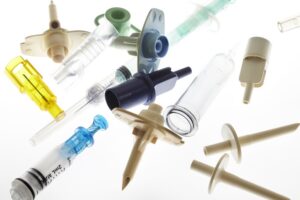
The medical device industry is the most demanding and highest-value market for liquid injection molding. Biocompatibility — evaluated per ISO 10993 — is a baseline requirement for medical LSR formulations, and many medical-grade materials carry USP Class VI certification as well. The material’s compatibility with ethylene oxide, gamma irradiation, autoclave steam, and electron beam sterilization makes it suitable for both single-use and reusable medical components. Drug delivery devices, respiratory care equipment, cardiovascular catheters, implantable components, surgical seals, and diagnostic instrument parts all rely on liquid injection molding to produce the flexible, biocompatible components these applications require.
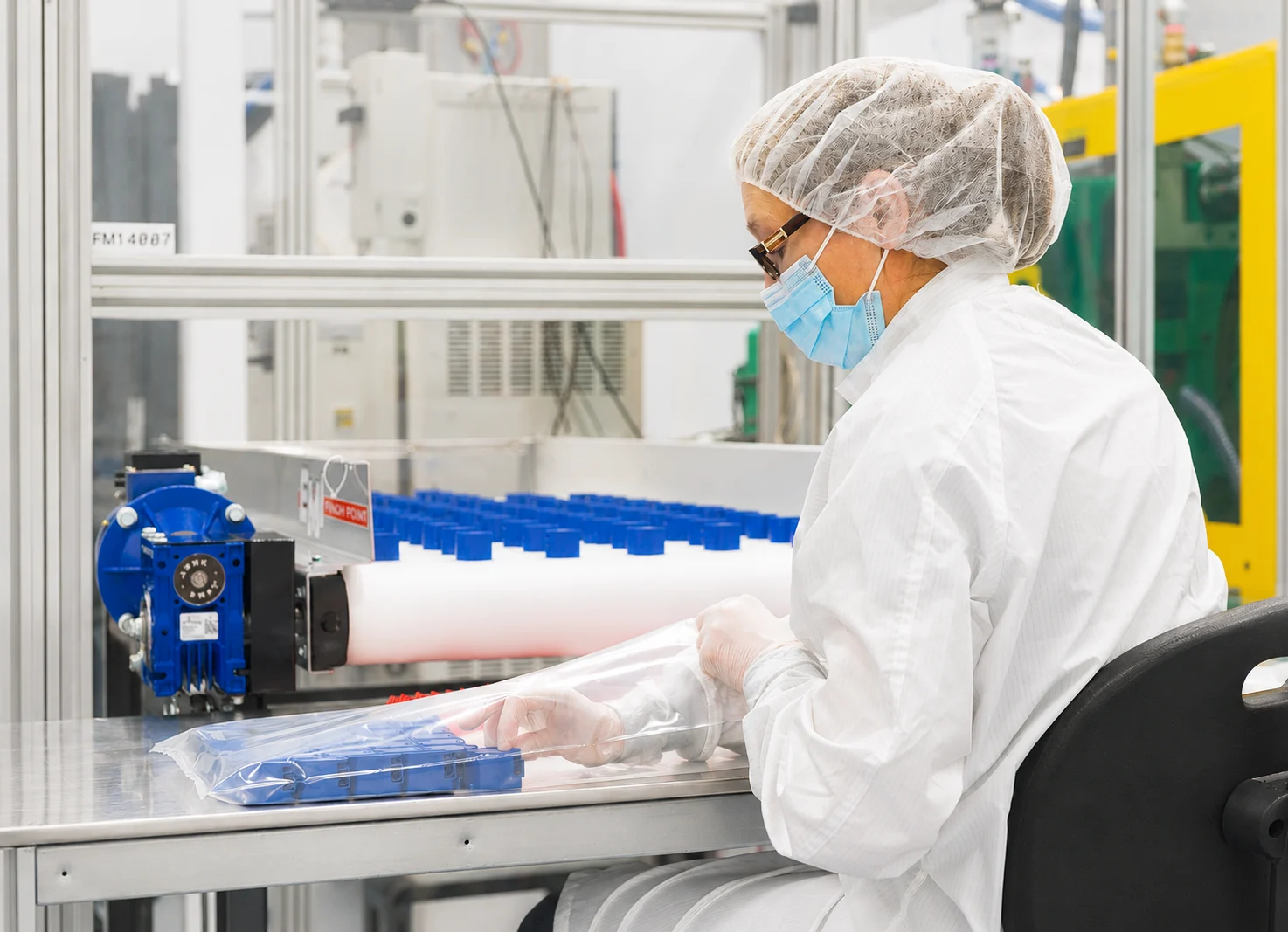
Liquid injection molding for medical devices typically requires cleanroom production to meet FDA and ISO contamination control requirements. ISO Class 7 or Class 8 cleanrooms are the standard environments for medical LSR production, with the appropriate classification determined by the device’s intended use and patient contact characteristics. Process validation following IQ/OQ/PQ protocols is required, and the resulting documentation supports regulatory submissions including 510(k) applications. The combination of cleanroom production, validated processes, ISO 13485 quality systems, and biocompatible material documentation creates the compliance infrastructure that medical device OEMs require from their liquid injection molding suppliers.
Tooling for liquid injection molding differs from thermoplastic injection mold tooling in several important ways. Because liquid silicone rubber has very low viscosity — significantly lower than most thermoplastic melts — it will flow into parting line gaps that would simply trap air in a thermoplastic mold. Parting line tolerances in liquid injection molds must be held to extremely tight levels, often in the range of a few microns, to prevent flash formation. This requirement places greater precision demands on the mold machining and finishing process than thermoplastic tooling typically requires.
Unlike thermoplastic molds, which are cooled to solidify the part, liquid injection molds are heated to cure the silicone. Uniform mold temperature distribution is critical to consistent cure throughout the part, particularly for components with varying wall thickness. Hot spots cause faster local curing. This can create flow restrictions and dimensional variation. Cool spots can leave under-cured areas with weaker mechanical properties. Cold-runner systems keep feed channels below cure temperature while maintaining full cure temperature in the mold cavity. These systems require precise thermal management. Proper control keeps cured and uncured material in the correct locations throughout production.
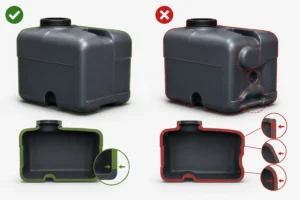
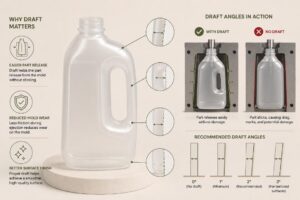
Designing parts for liquid injection molding requires understanding material flow, curing, and demolding behavior. The low-viscosity material must flow evenly through the mold cavity. The cured elastomer must also release without damage. Uniform wall thickness promotes consistent curing. It also reduces dimensional variation and surface defects. Draft angles on vertical walls help with clean demolding. Even small angles of one to two degrees can reduce the risk of tearing flexible parts during ejection. Gate location also affects part quality. Proper placement directs material flow and minimizes knit lines. This is especially important in areas exposed to mechanical stress or visible to the end user.
Liquid injection molded silicone parts allow more undercut designs than rigid thermoplastics. The cured elastomer can stretch over mold features during demolding without permanent deformation. This design flexibility supports features such as internal grooves, reverse draft angles, and complex sealing profiles. Rigid thermoplastic molds often require collapsing cores or side actions to create these features. Early collaboration between the part designer and the liquid injection molding supplier helps identify these opportunities. It also prevents tooling changes caused by moldability issues discovered after the mold is built.
Quality control in liquid injection molding for regulated industries operates under the same frameworks as other medical and aerospace plastic manufacturing.</span> ISO 13485 certification is the standard quality management system requirement for medical device supply chains, and FDA 21 CFR Part 820 applies to manufacturers supplying the U.S. medical device market. These frameworks mandate documented procedures for process control, non-conformance management, corrective and preventive action, internal auditing, and supplier management — all of which apply directly to the liquid injection molding operation.</span>
In-process monitoring in liquid injection molding tracks metering ratio accuracy, mold temperature uniformity, injection parameters, and cure cycle consistency. Material lot traceability links each production run to specific LSR lots and associated certifications. Dimensional inspection of finished parts verifies conformance to drawing requirements. For medical device applications, first article inspection reports and ongoing statistical process control monitoring of critical dimensions are standard quality deliverables. The combination of validated processes, documented quality systems, and rigorous inspection creates the production control foundation that regulated-industry customers require.
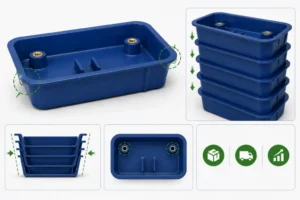
Liquid injection molding supports different production volumes throughout the product lifecycle. The process works for development builds, clinical trials, niche applications, and large-scale commercial production. Low-volume liquid injection molding uses single-cavity or simple multi-cavity tooling. It supports programs with limited annual volumes. These tools require lower investment than comparable thermoplastic tools. They also allow shorter development timelines when part designs remain straightforward.
High-volume liquid injection molding uses multi-cavity tooling with automated demolding and inspection systems. Some tools include eight, sixteen, or more cavities. This setup delivers the production speed and cost efficiency needed for consumer and medical device programs producing millions of units annually. Cold-runner systems are standard in high-volume liquid injection molding. They eliminate runner waste that can increase material costs at scale. The ability to scale from development volumes to mass production with the same material system and similar process principles makes liquid injection molding a strong long-term manufacturing strategy.
<h2>Why Hi-Rel Plastics Offers Liquid Injection Molding
Hi-Rel Plastics & Molding provides liquid injection molding as part of its plastics manufacturing capabilities. The company serves medical device, industrial, and specialty customers that need the performance benefits of liquid silicone rubber. Hi-Rel supports complex applications with LSR material expertise, precision tooling, and cleanroom manufacturing environments. The company works with regulated and technically demanding programs across multiple industries. Hi-Rel’s quality systems and documentation practices support the needs of medical device OEMs and customers seeking ISO 13485-aligned manufacturing from their liquid injection molding supplier.
<p class=”isSelectedEnd”>Hi-Rel works with customers during the design phase to improve part quality and production efficiency. The team provides guidance on part geometry, gate location, parting line design, and material selection before committing to tooling costs. Whether a program requires a low-volume medical device build or high-volume commercial production, Hi-Rel supports the full product lifecycle. Its liquid injection molding capabilities and quality infrastructure cover prototyping through validated production. Contact Hi-Rel to discuss your requirements.
Liquid injection molding is the right choice when your application needs biocompatibility, thermal stability, chemical resistance, and elastic performance. Liquid silicone rubber provides this unique combination of properties. Medical components, sealing systems, and flexible assemblies often require these advantages. If thermoplastics cannot meet your performance needs, evaluate liquid injection molding. Start with a technical discussion with an experienced supplier. A knowledgeable partner can assess your specific application requirements and recommend the right approach.
Hi-Rel Plastics & Molding welcomes inquiries from engineers and procurement professionals exploring liquid injection molding for new or existing programs. Visit hirelplasticsm.com to request a quote or connect with the Hi-Rel team to discuss your application requirements, material needs, and program timeline.</span>