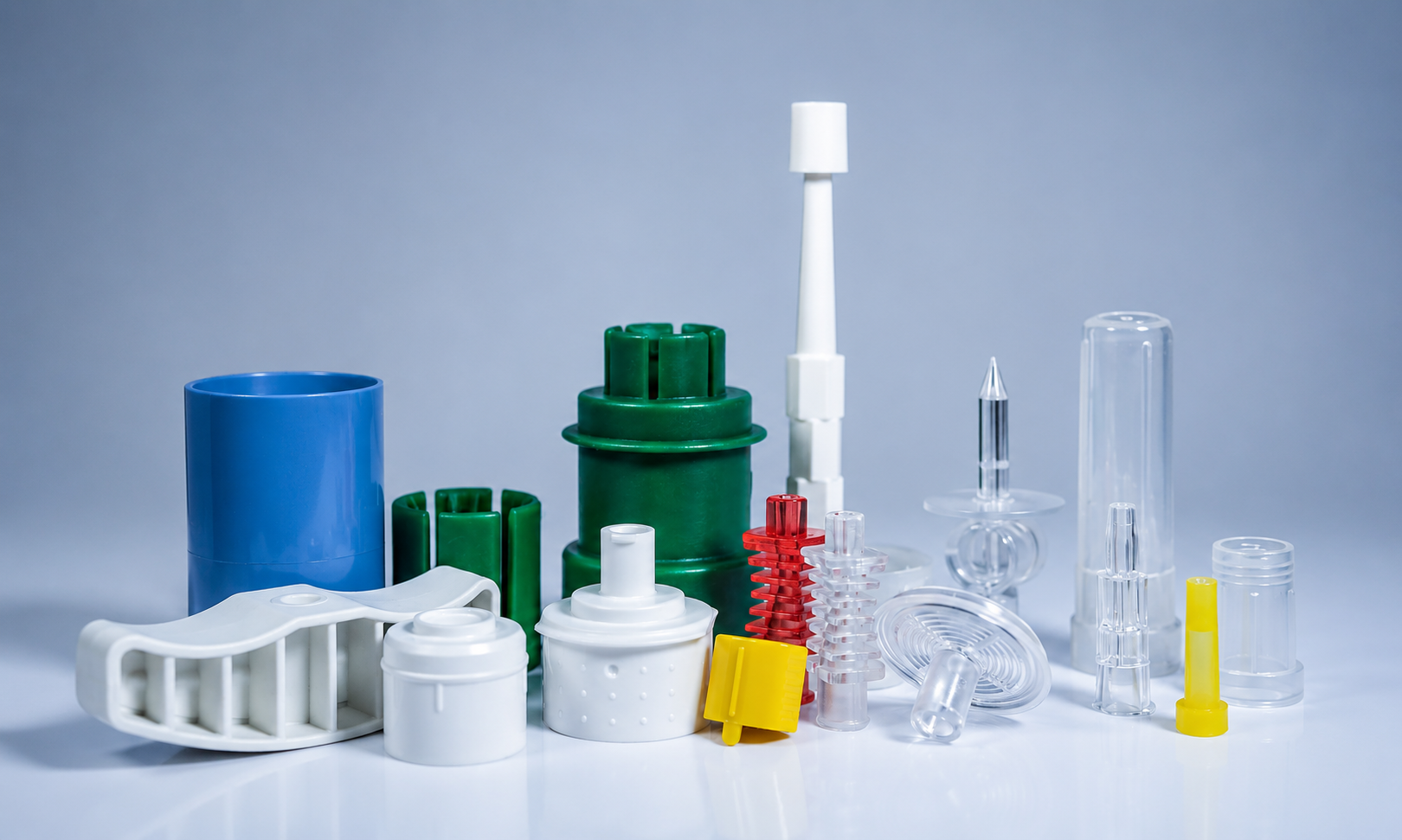
Low volume injection molding product development strategy enables companies to produce injection-molded plastic parts in smaller quantities. These quantities are smaller than full-scale commercial manufacturing runs. Depending on the part and industry, this may describe annual quantities from a few hundred to several thousand parts. The process provides precision, material variety, and part quality. It does this without requiring massive tooling investments. Full-scale commercial production volumes aren’t necessary. For many companies, this approach isn’t a compromise. It represents the most appropriate manufacturing strategy for their stage. Market size and regulatory timeline drive these decisions.
This strategy has grown increasingly relevant as product development cycles accelerate. Niche markets continue to become more viable business targets. Engineers working on medical devices, aerospace components, industrial equipment, and consumer products encounter this need regularly. Injection-molded parts are required in smaller quantities than traditional economics favor. Understanding low volume injection molding product development strategy helps organizations navigate these situations effectively. Explore Hi-Rel’s development solutions to see how strategic planning drives success.
Low volume injection molding product development strategy applies across several distinct scenarios. During product development and validation, companies need functional plastic parts. These must match final production intent in material, geometry, and surface finish. Quantities that 3D printing cannot provide at required fidelity become necessary. Clinical trial builds for medical devices frequently fall into this category. Dozens or hundreds of parts require production from approved materials. Validated processes must be used throughout. This strategy serves this need directly and effectively.
Some products have long life cycles and relatively small installed bases. Annual production volumes are inherently low for these items. Custom instrumentation, specialized laboratory equipment, and niche industrial components exemplify this. Replacement parts for legacy systems represent another important category. In these cases, low volume injection molding product development strategy becomes the primary production approach. It’s not merely transitional. Tooling and process decisions should assume sustained low-volume production. Future volume transitions shouldn’t drive current choices.
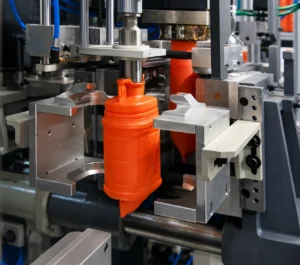
Tooling cost represents the most significant economic consideration. Full hardened-steel production molds designed for millions of cycles are difficult to justify. Total production quantities remain small. Several strategic approaches address this challenge effectively. Aluminum molds cost less to machine than steel molds. They can produce thousands to tens of thousands of parts. Replacement or refurbishment occurs before higher-volume tools fail. Programs with quantities in this range benefit greatly. Aluminum tooling provides practical balance between cost and quality.
Soft tooling using pre-hardened steel or machined aluminum offers another cost-effective approach. These tools aren’t as durable as full production molds. They’re faster and less expensive to produce. Proto-molds are simplified single-cavity designs for development builds. They allow engineers to produce injection-molded parts with production characteristics. Material and process properties match final production exactly. Tooling cost drops to a fraction of full production molds. Understanding which strategy matches your program’s volume and timeline is essential. Quality requirements must guide the decision process.
One major advantage over alternative rapid manufacturing methods is material access. The full range of engineering thermoplastics becomes available to you. 3D printing supports limited material options only. Low volume injection molding product development strategy enables use of virtually any injection-moldable resin. Polypropylene, nylon, polycarbonate, ABS, PEEK, PPS, TPE, and medical-grade formulations all work. This material breadth allows testing and validation in exact commercial production materials. Proxies that approximate final production don’t suffice. Development programs achieve full material fidelity.
Regulated applications require material traceability and certification. Small quantities don’t eliminate these requirements. Medical device, aerospace, and pharmaceutical customers demand documentation. Material lot records become essential. Resin certifications and biocompatibility data must be maintained. Suppliers providing low volume injection molding product development strategy services for regulated industries maintain the same documentation practices. Higher-volume producers follow identical procedures. Downstream part use demands equivalent quality evidence. Production quantity doesn’t determine these requirements.
A common misconception suggests lower-volume production requires less rigorous process control. Reality proves the opposite. Low volume injection molding product development strategy programs serving regulated industries require full process validation. Inspection protocols and quality documentation become mandatory regardless of quantity. The FDA and ISO regulatory frameworks govern these industries. Quality requirements derive from product nature and intended use. Production volume doesn’t determine regulatory obligations.
For non-regulated applications, process quality in this strategy still matters significantly. Small lot sizes leave little room for defects. Customer commitments become compromised quickly. A 500-piece production run with a 2% defect rate yields only 490 acceptable parts. Additional defects require scheduling extra production. Delivery timelines suffer immediately. Suppliers with disciplined process control provide reliability. First-piece inspection practices prevent problems. Documented quality records prove commitment. These suppliers outperform those treating small runs as lower-priority work consistently.
Lead time often proves critical in low volume injection molding product development strategy engagements. Product development cycles mean engineering changes remain possible. Time-to-market pressure intensifies. Lead time breaks into two distinct phases for these programs. Tooling lead time represents the first phase. Production lead time follows after tool completion. Tooling lead time for prototype or bridge molds runs shorter. Aluminum molds may be ready in two to four weeks. Hardened steel production tooling requires six to twelve weeks or more. Production lead time depends on scheduling, part complexity, and secondary operations.
Communicating timeline requirements clearly at program outset allows suppliers to plan resources. Prioritization occurs accordingly. Some suppliers offer expedited tooling programs. Premium pricing applies to urgent timelines. Understanding critical milestones helps both parties align expectations. Is tooling completion the priority? Or is first-article delivery? Clear milestone definition prevents surprises and misunderstandings throughout the engagement.
Bridge tooling refers to interim tooling designed to support production timing. The period between development completion and full production tooling availability requires solutions. Bridge tools in low volume injection molding product development strategy cost less than final molds. Build time runs faster. They’re designed to produce sufficient parts. Market launch becomes possible without waiting. Initial customer deliveries proceed smoothly. Full production tooling completes in parallel. This approach prevents delays and accelerates market entry.
Bridge tooling also applies when production volumes are expected to ramp significantly. Initial launch quantities need support. A bridge tool sized for launch volumes may produce five thousand to twenty thousand parts. Retirement occurs when multi-cavity hardened production molds become available. Higher throughput molds optimize for volume. Economics depend on commercial trajectory. Cost differentials between bridge and production tooling matter. Timeline for volume ramp drives decisions. Low volume injection molding product development strategy suppliers offering both tooling types in-house provide smoother transitions. Development phases connect seamlessly to commercial production phases.
Engineers evaluating low volume plastic component production frequently compare approaches. Injection molding competes with 3D printing, CNC machining, and urethane casting. Each process excels in specific contexts. 3D printing offers fastest turnaround for one-off prototypes. Very low quantity runs benefit from this method. Complex geometries that are difficult to mold produce easily. Material properties don’t match injection molding standards. Surface finish remains inferior. Dimensional accuracy falls short at volume.
CNC machining produces excellent surface finish and dimensional accuracy. Significant material waste occurs during production. Cost-effectiveness applies only to very low quantities. Simpler geometries work best. Urethane casting produces parts in wider material ranges than 3D printing. Cost-effectiveness extends to a few hundred parts. Cycle times run slower than injection molding. Part-to-part consistency lags behind molded components.
Low volume injection molding product development strategy occupies unique middle ground. Production-intent material properties become achievable. Dimensional consistency meets commercial standards. Surface finish matches production requirements. Quantities exceed what machining or casting supports economically. As quantities increase from hundreds into thousands, injection molding’s unit cost advantage grows. Tooling investment becomes easier to justify. Understanding crossover points matters for manufacturing strategy decisions.
Hi-Rel Plastics & Molding works with customers across diverse program scales. Low volume injection molding product development strategy engagements receive dedicated attention. Development builds, clinical trial supplies, niche industrial applications, and bridge production all benefit. The company’s tooling capabilities, material expertise, and quality systems serve programs with equal technical rigor. High-volume commercial production receives the same attention level. Hi-Rel’s team understands timeline pressure and cost sensitivity. These characterize low volume programs fundamentally. Practical guidance on tooling strategy, material selection, and production planning gets provided.
Hi-Rel’s experience with regulated industries including medical devices and aerospace ensures quality compliance. Low volume injection molding product development strategy programs receive complete quality documentation. Traceability and process discipline meet market demands. Non-regulated industry customers benefit equally. Hi-Rel’s quality-focused culture translates into reliable production results. Surprises and problems decrease substantially. Suppliers treating small runs as afterthoughts cannot match this commitment level. Contact Hi-Rel today to discuss your development program requirements.
When evaluating manufacturing methods for product development, injection molding offers distinct advantages. 3D printing technologies excel at rapid prototyping but lack material fidelity. CNC machining services produce excellent tolerances but waste material and cost more. Urethane casting processes bridge some gaps but suffer consistency issues. Low volume injection molding product development strategy combines production-intent materials with proven dimensional accuracy. Cost per part decreases as volumes grow. Quality scales with commercial production processes.
If your program requires injection-molded plastic parts in quantities below high-volume thresholds, this strategy applies perfectly. Assess tooling options, material requirements, and quality documentation needs early. Timeline expectations should be discussed at program start. Selecting the right supplier becomes critical to success. Engaging early with experienced low volume injection molding product development strategy providers produces better outcomes. Adapting high-volume contract manufacturers to development-scale programs creates problems.
Hi-Rel Plastics & Molding welcomes inquiries from engineers and procurement professionals. Low volume programs deserve specialized attention and expertise. Visit the company website to submit a project inquiry or request a quote. Discuss your low volume injection molding product development strategy requirements with the Hi-Rel team directly. They’ll help you make informed decisions about tooling, timing, and materials for your specific program needs.