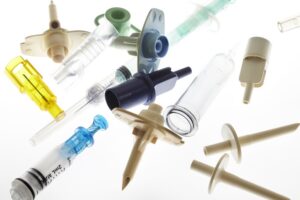
Medical Device Plastic Component Compliance Requirements sit at the intersection of precision manufacturing, materials science, quality management, and regulatory compliance. Injection molding produces plastic components used in diagnostic instruments, surgical tools, drug delivery systems, implantable devices, and single-use disposables — applications where dimensional accuracy, material consistency, and contamination control are not optional. Unlike general industrial injection molding, medical component manufacturing operates within international standards and federal regulatory frameworks that define how applicable parts and finished devices must be manufactured, documented, controlled, and validated before they reach a patient or clinician.
The growing complexity of medical devices has increased demand for more sophisticated plastic components, and the supply chain that produces them has evolved accordingly. Contract manufacturers specializing in medical device injection molding capabilities have invested in controlled manufacturing environments, quality systems, process validation capabilities, and documentation practices that standard industrial molders may not maintain. For engineers and procurement professionals evaluating manufacturing partners for medical applications, understanding what separates a qualified medical injection molding supplier from a general-purpose shop is essential to making the right sourcing decision.
Medical device manufacturing in the United States operates under FDA oversight. Effective February 2, 2026, the FDA’s Quality Management System Regulation (QMSR) amended 21 CFR Part 820 and incorporated ISO 13485:2016 by reference into the medical device current good manufacturing practice framework. ISO 13485 is the internationally recognized quality management system standard for the medical device industry and is widely used across international markets. These frameworks establish requirements involving documented procedures, change control, supplier controls, corrective actions, production controls, and quality records that can directly affect injection molding operations producing regulated components.
The device classification system — Class I, II, or III based on risk level — influences the depth of regulatory scrutiny a finished device receives. Higher-risk devices generally carry more demanding requirements for regulatory review, documentation, validation, and design controls. A supplier producing an injection molded component for a Class III implantable device may therefore face substantially different customer and process requirements than one producing parts for a lower-risk application. Understanding the device, intended use, applicable specifications, and regulatory requirements helps establish appropriate expectations for supplier qualification and process documentation.
Material selection for regulated medical plastic components begins with biocompatibility — the biological safety of the material in the context of its intended use and patient contact. ISO 10993 provides a framework for biological evaluation that can include endpoints such as cytotoxicity, sensitization, systemic toxicity, and genotoxicity depending on the nature and duration of contact. The appropriate evaluation depends on whether the component contacts intact skin, mucosal membranes, blood, internal tissues, or other biological environments and for how long. Material suppliers may provide supporting biological or medical-grade resin documentation, but the finished device manufacturer remains responsible for determining the biological safety requirements applicable to the final device.
Beyond biocompatibility, material selection must account for sterilization compatibility, chemical resistance, mechanical performance, dimensional stability, and processing characteristics. Resins that perform well mechanically may degrade under gamma irradiation or become brittle after repeated autoclave cycles. Materials that process effectively under standard injection molding conditions may absorb moisture over time, affecting dimensional stability in humid storage or use environments. A thorough material selection process evaluates these factors together and documents the rationale for the selected resin within the applicable design and quality records.
Process validation is one of the most important elements of Medical Device Plastic Component Compliance Requirements. Validation provides documented evidence that a molding process can consistently produce parts that meet predetermined requirements across expected variation in materials, equipment, operators, and environmental conditions over the life of the program.
A commonly applied qualification approach includes Installation Qualification, Operational Qualification, and Performance Qualification, abbreviated IQ/OQ/PQ. IQ documents that applicable equipment and tooling are installed and configured appropriately. OQ establishes acceptable operating ranges and evaluates process parameters under defined conditions. PQ demonstrates that the established process can repeatedly produce conforming output under routine production conditions. The resulting records support the manufacturer’s quality system and provide objective evidence of process control.
Any subsequent change to tooling, material, equipment, or significant process parameters should be evaluated against the validated state. Depending on the nature and potential impact of the change, additional qualification or revalidation may be required before it is released into routine production.
Many injection molded medical components must be produced in controlled environments to meet contamination requirements associated with their intended use and subsequent processing. ISO 14644-1 defines cleanroom classifications based on airborne particle concentrations. ISO Class 7 and Class 8 environments are commonly used for medical manufacturing applications, although the required environment should be determined by the product, process, contamination risk, customer specifications, and applicable regulatory requirements.
A cleanroom classification alone does not define the complete contamination-control strategy. Effective operation can also involve HEPA filtration, pressure control, gowning procedures, controlled material movement, environmental monitoring, cleaning procedures, employee training, and documented operational controls.
Cleanroom qualification is not a one-time activity. Controlled environments require ongoing monitoring, periodic testing, maintenance, and documented procedures appropriate to their classification and use. Suppliers offering cleanroom injection molding should be able to provide applicable certification documentation, environmental monitoring records, and evidence that personnel training and procedural controls are maintained. Reviewing this information during supplier qualification can be as important as evaluating molding equipment and tooling capabilities.
Injection molds used for regulated medical components are often designed and maintained to demanding standards because tooling performance directly affects dimensional consistency, surface condition, repeatability, and process control. Medical-grade tooling may use hardened stainless steel or suitable tool steels selected for dimensional stability, production life, corrosion resistance, maintenance requirements, and compatibility with the manufacturing environment.
Cavity finishes may also be specified precisely for cosmetic and functional reasons, including assembly interfaces, fluid-contact surfaces, optical features, sealing surfaces, or areas that must release reliably from the mold.
Tool qualification can form part of the broader process qualification strategy. When tooling ownership transfers between suppliers, significant mold modifications are made, or critical components are replaced, the manufacturer should evaluate whether existing qualification documentation remains applicable and whether additional testing or requalification is necessary to maintain the validated process state.
Dimensional inspection for medical plastic components is often more rigorous than standard commercial molding because dimensional variation can affect device performance, assembly, reliability, or patient safety. Critical dimensions and features are identified through engineering requirements and risk-based controls and may be subject to more intensive inspection than non-critical characteristics.
Coordinate measuring machines, optical comparators, vision systems, functional gauges, and other calibrated measurement equipment may be used depending on component geometry, tolerance requirements, and inspection strategy. Measurement methods should be capable of reliably evaluating the characteristics they are intended to verify.
First article inspection reports documenting drawing requirements against actual measurement results are frequently used at the beginning of production and after significant tooling or process changes. Statistical process control can also monitor critical characteristics over time, helping identify process drift before it creates nonconforming parts. Together, these inspection practices and documented results create objective evidence that customers and regulatory quality systems can rely on.
Traceability is a critical part of regulated medical component manufacturing. Production records should provide sufficient information to connect finished components with relevant manufacturing inputs and process history, including applicable raw material lots, production dates, tooling or cavity identification, inspection results, equipment information, and other records required by the product specification or quality system.
A reliable traceability system supports investigations, containment activities, corrective actions, and recalls when necessary. It also helps manufacturers demonstrate control over production and supplier activities under the FDA Quality Management System Regulation, which has applied under the revised 21 CFR Part 820 framework since February 2, 2026.
Traceability systems can range from controlled production records to integrated enterprise platforms that connect material receipt, manufacturing, inspection, and shipment information. The technology itself is less important than ensuring the system is reliable, consistently followed, appropriately retained, and capable of producing relevant production history when needed. Medical device OEMs commonly evaluate supplier traceability capabilities as part of qualification and ongoing supplier control.
Medical injection molded components frequently require secondary operations before shipment. Ultrasonic welding, heat staking, insert installation, laser marking, pad printing, assembly, and clean packaging may all be required between molding and final delivery. When these operations are performed by the same supplier that molds the components, handling between vendors can be reduced, traceability may be simplified, and contamination risks associated with additional transportation and handling can be minimized.
The integration of secondary operations into a regulated manufacturing workflow requires those activities to operate under appropriate quality controls. Procedures, process parameters, acceptance criteria, inspection activities, and production records should be established according to the requirements of the device and the manufacturer’s quality system. The internationally recognized ISO 13485:2016 quality management standard provides a framework for maintaining controlled processes and documented quality systems for medical device manufacturing.
Suppliers capable of integrating molding, secondary processing, inspection, and assembly can provide a more complete manufacturing solution than companies that perform only the molding step and outsource all subsequent operations.
Hi-Rel Plastics & Molding is a Southern California manufacturer with the manufacturing capabilities, quality systems, and process experience required to support medical plastic component programs. The company’s team applies practical manufacturing knowledge throughout the product lifecycle — from material selection and mold design through production, inspection, secondary operations, and quality documentation.
Hi-Rel’s combination of injection molding, secondary services, and assembly capabilities makes it a practical single-source partner for medical device programs requiring more than bare molded parts. Its focus on traceability, documentation, manufacturing control, and process discipline aligns with the expectations medical device OEMs place on qualified contract manufacturing partners.
Engineers and procurement teams beginning a new medical injection molding program can engage Hi-Rel early to obtain manufacturing input and process planning before tooling is committed.
Meeting Medical Device Plastic Component Compliance Requirements requires more than producing a plastic part to dimensional specifications. It requires a manufacturing approach that accounts for materials, process control, validation, contamination risk, inspection, traceability, documentation, and the regulatory context of the finished device.
Whether your program is in early development, preparing for clinical builds, or transitioning to commercial production, selecting a manufacturing partner early can reduce avoidable risk and support a more controlled path toward production. Productive supplier discussions often begin before the design is frozen and before final tooling decisions have been made.
Hi-Rel Plastics & Molding welcomes inquiries from medical device engineers, quality teams, and procurement professionals. Contact Hi-Rel Plastics & Molding to discuss your program’s requirements, timeline, manufacturing needs, and quality documentation expectations.