The precision-machined steel or aluminum mold defines part shape, surface, and dimensions. This foundation forms the basis of injection molding. The plastic injection mold tooling design build qualification process determines fill behavior. Whether parts fill completely and uniformly matters enormously. Clean ejection capability depends on design. Dimensional tolerance achievement requires careful engineering. Production throughput depends on cavity count. Tooling investment represents the largest upfront cost typically. Plastic injection mold tooling design build qualification process quality affects every part produced. Throughout the program’s life, this matters.
For engineers, product managers, and procurement professionals, understanding this process proves essential. Better decisions emerge about tooling investment. Supplier selection becomes clearer. Design for manufacturability improves significantly. Long-term production planning benefits. This article covers key elements comprehensively. Mold design gets explained thoroughly. Tooling materials receive detailed attention. Cavity considerations get addressed. Qualification protocols are detailed. Ownership arrangements get clarified. Explore Hi-Rel’s precision tooling expertise to see manufacturing excellence in action.
Two primary halves comprise the mold structure. The cavity side — also called the A-side — defines the outer visible surface. The core side represents the B-side. It defines internal features and functional geometry. When the mold closes, enclosed space forms. Molten plastic injects into this cavity. The cavity side gets machined to required finish. The core side contains attachment bosses. Functional geometry gets integrated here. The parting line divides geometry between sides. This line marks where mold halves meet. Critical design decisions affect appearance. Flash control depends on placement. Moldability improves with proper location.
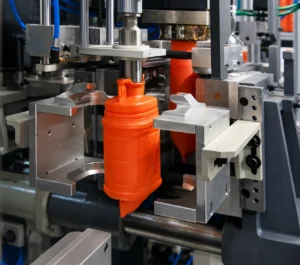
The mold base houses precision components. Standardized steel frames accept cavity and core inserts. The cooling system mounts here. Ejection mechanisms attach to the base. Guide pins and bushings ensure precision. Runner and gate systems integrate. Leader pins align mold halves precisely. Closing accuracy remains critical. The ejection system removes solidified parts. Ejector pins, blades, and sleeves accomplish this. The cooling system extracts heat. Water channels manage solidification rates. Cycle time control follows. Part quality depends on cooling. Each system works together as a unit.
Plastic injection mold tooling design build qualification process uses varied materials. Steel and aluminum alloys dominate choices. Each suits different requirements. Hardened tool steels include H13, S7, and P20 pre-hardened options. These prove most durable. Production molds cycling millions of times use them. Wear resistance from abrasive glass-filled resins matters. Dimensional stability under thermal cycling remains essential. Mirror finishes for optical applications require steel. Class A appearance applications need this quality.
Aluminum molds offer significant advantages too. Machining times run considerably faster. Raw material costs decrease substantially. Prototype tooling benefits greatly. Bridge tooling applications suit aluminum well. Low-volume production programs work here. Design iterations get accommodated easily. Modern aerospace-grade aluminum alloys perform better. Grades 7075 and QC-10 provide notable hardness. Wear resistance approaches pre-hardened steel. Useful tool life extends beyond older grades. Practical tradeoffs compare aluminum savings against steel longevity. Program’s expected production volume matters. Tool life projections guide decisions. Contact Hi-Rel for material strategy guidance.
Cavity count determines parts per cycle. Single-cavity molds produce one part only. Development programs use these. Low-volume production suits single-cavity. Complex parts difficult to balance work here. Multi-cavity molds produce multiple parts simultaneously. Two, four, eight, sixteen, or more cavities exist. Per-part costs decrease substantially. Machine time spreads across cavities. Higher tooling investment becomes necessary. Careful design ensures uniform fill. Identical part production across cavities matters. Family molds contain multiple different parts. Single mold base houses them. Related parts always produced together suit this approach. Reduced tooling costs emerge. Complexity in material flow management follows. Production scheduling becomes more challenging. Demand ratio changes create complications. Tooling cost savings require careful analysis. Production volume analysis guides decisions. Scheduling flexibility gets evaluated. Cost tradeoffs between investment and per-part manufacturing cost matter significantly.
The gate marks where molten plastic enters the cavity. It comes from the runner system. Gate design in plastic injection mold tooling design build qualification process affects fill patterns significantly. Weld line formation depends on location. Gate vestige appearance matters. Part removal ease influences automation. Edge gates enter at parting lines. Visible vestiges appear. Submarine (tunnel) gates shear automatically. Part ejection removes the gate. Pin gates work with three-plate molds. Hot tip or valve gates use hot runner systems. Optimal gate type depends on geometry. Material characteristics matter. Appearance requirements guide selection. Production volume influences choice.
Runner systems distribute molten plastic. Sprue feeds the gates. Cold runner systems solidify with each cycle. Material removal or regrinding occurs. Simpler and less expensive approach applies. Lower-volume programs use this method. Regroundable materials work well. Hot runner systems maintain molten material. Runner channels stay liquid between cycles. Runner scrap eliminates completely. Faster cycles result. Better process control emerges. Significant tooling cost increases occur. Material waste reduces substantially. Operating costs decrease. High-volume production justifies expense. Economic payback occurs over tool life.
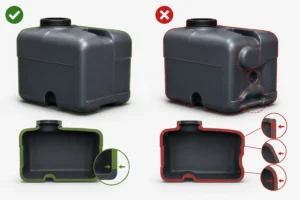
The Cooling system design drives production efficiency fundamentally. Cooling time represents fifty to seventy percent of total cycle. And cooling time reductions increase throughput directly. Per-part cost drops measurably. Effective cooling positions water channels strategically. Close positioning to mold surfaces extracts heat rapidly. Solidifying plastic cools uniformly. Sufficient steel thickness prevents stress cracking. Mold deformation doesn’t occur.
Conformal cooling advances the field significantly. Cooling channels follow part surface contours. Straight-drilled channels don’t compare. More uniform cooling results. Faster cycle times emerge. Geometrically complex parts benefit most. Additive manufacturing produces conformal channels. Laser powder bed fusion enables complexity. Conventional machining cannot achieve this. Internal geometries become intricate. Cost premiums apply initially. High-volume programs justify expense. Cycle time reduction proves valuable. Part quality improvements matter. Economic benefit accrues over tool production life. NIST guidelines support cooling system standards.
Formal qualification is standard practice for plastic injection mold tooling design build qualification process. Regulated industries require documentation. Medical device, pharmaceutical, and aerospace programs need it. Automotive and industrial programs increasingly use it. Three-phase qualification provides evidence. Installation Qualification comes first. Operational Qualification follows. Performance Qualification completes the sequence. Design history files get this documentation. Technical documentation packages incorporate it. Regulatory submissions need this support. Customer quality audits require evidence.
Installation Qualification documents correct mold placement. Molding machine installation gets verified. Mounting configuration follows specifications. Cooling connections work properly. Hot runner connections function correctly. Electrical connections for heated components validate. Operational Qualification establishes parameter ranges. Systematic studies determine boundaries. One parameter varies at a time. Part quality gets monitored continuously. Acceptable part ranges get identified. Performance Qualification demonstrates consistency. Parts meet all drawing requirements. Normal production variation stays within limits. Sampling plans use statistical definitions. Confidence in process capability builds.
Preventive maintenance sustains production quality throughout tool life. Dimensional accuracy gets maintained. Maintenance activities include several essentials. Parting line surface cleaning prevents contamination. Vent location maintenance ensures gas escape. Moving components need lubrication. Slides and lifters require attention. Worn ejector pins and bushings need inspection. Replacement happens when needed. Cavity surfaces get polished. Repeated use degrades finishes. Flash damage requires repair. Ejection forces create wear. Well-maintained tooling produces consistent quality. Neglected tooling produces increasing defects. Dimensional drift accelerates. Defect rates rise measurably.
Tool life measured in production cycles varies significantly. Tooling material affects durability. Resin type influences longevity. Maintenance practices matter greatly. Hardened steel molds with unfilled resins achieve several million cycles. Refurbishment becomes necessary eventually. Aluminum molds with abrasive glass-filled resins have lower cycle counts. Refurbishment or replacement becomes sooner necessary. Long-term production cost management requires planning. Tooling maintenance and replacement need budgeting. Suppliers maintaining maintenance records produce reliability. Proactive scheduling prevents problems. Reactive maintenance creates issues. Consistent production results follow responsible management. ISO 9001 standards guide quality protocols.
Hi-Rel Plastics & Molding maintains comprehensive capabilities. Mold design, build, and qualification integrate. Ongoing production maintenance receives attention. The company’s approach integrates tooling with production. Molds get designed for production environments. Maintenance follows scheduled protocols. Qualification follows customer requirements. Plastic injection mold tooling design build qualification process expertise spans prototypes. Production tooling receives equal attention. Materials range broadly. Cavity configurations vary. Runner system types get covered.
For customers owning their tooling, transparent records provide evidence. Maintenance documentation stays complete. Tool condition communication happens proactively. Refurbishment needs get projected. For customers making tooling investments, guidance emerges. Tooling strategy gets balanced carefully. Upfront investment compares against economics. Long-term production costs receive analysis. Practical experience with performance informs recommendations. Different volume scenarios get addressed. Various applications get considered.
Early plastic injection mold tooling design build qualification process decisions have lasting effects. Part quality gets determined initially. Production economics depend on choices. Supply chain flexibility emerges. New product development programs benefit from expertise. Existing products needing new suppliers require knowledge. Legacy programs with aging tooling need solutions. Genuine tooling expertise matters most. Understanding options reduces risk. Tooling material choices get evaluated. Cavity count decisions matter. Runner system selection affects performance. Qualification approach planning prevents problems. Committing to tool builds requires knowledge.
Hi-Rel Plastics & Molding welcomes conversations from engineers and procurement professionals. Tooling planning and development stages all benefit. Visit the website to reach the Hi-Rel team. Submit quote requests when ready. Initiate discussions about plastic injection mold tooling design build qualification process needs. Expertise guides every decision point. Solutions emerge from collaboration. Production success follows thoughtful planning.