Modern vehicles contain hundreds of injection-molded plastic components. Interior panels and dashboard assemblies use this technology. Under-hood fluid systems benefit from it. Exterior trim gets produced this way. Structural brackets rely on injection molding. The automotive industry drives massive demand. Weight reduction objectives motivate this shift. Design flexibility enables innovation. Cost competitiveness remains important. Engineering thermoplastics meet demanding conditions. Thermal, chemical, and mechanical stress don’t compromise performance.
For engineers, procurement managers, and manufacturing teams, understanding plastic injection molding automotive parts sourcing process proves essential. Supply chain management depends on this knowledge. Product development succeeds with it. This article explores the processes in detail. Materials get explained thoroughly. Quality standards receive full coverage. Supplier considerations get addressed. Key sourcing decisions become clearer. Explore Hi-Rel’s automotive plastic molding capabilities to see precision manufacturing in action.
Injection molding spans an enormous range of applications. Every major vehicle system uses this technology. Interior components rank highest in volume. Door panels get produced constantly. Center consoles are molded daily. Instrument panel substrates require precision. Pillar trim components integrate seamlessly. Seat components come together. Appearance requirements drive tight specifications. Surface finish matters greatly. Color consistency proves essential. Dimensional accuracy must remain tight. Impact resistance and UV stability are functional necessities. Material aging performance over vehicle life matters tremendously.
Under-hood applications face challenging conditions. Air intake manifolds use engineered resins. Resonators rely on this technology. Coolant overflow tanks get molded. Fluid reservoirs depend on it. Engine covers protect components. Elevated temperatures test materials. Aggressive chemicals challenge performance. Mechanical vibration stresses components. Engineering thermoplastics with superior thermal and chemical resistance work here. Commodity resins fall short. Exterior applications include fascias and grilles. Mirror housings and roof rails benefit. Trim components withstand UV radiation. Temperature cycling doesn’t compromise function. Mechanical impact remains manageable. Each application category demands distinct material, tooling, and process approaches.
Material selection depends on specific application environments. Polypropylene dominates automotive injection molding. Mechanical properties balance well. Chemical resistance proves adequate. Processability remains excellent. Cost competitiveness helps adoption. Filled grades enhance performance. Glass-fiber-reinforced polypropylene adds stiffness. Mineral-filled versions improve dimensional stability. Structural applications benefit greatly. Impact-modified grades handle demanding use.
ABS and PC/ABS blends suit interior components. Class A surface finishes emerge naturally. Dimensional stability remains consistent. Moderate impact resistance handles typical loads. Nylon—particularly glass-filled nylon 6 and nylon 66—performs under-hood. Higher strength enables structural use. Temperature resistance surpasses polypropylene. Load-bearing brackets and connectors rely on it. PPS, PEEK, and polyetherimide handle extreme conditions. Thermal exposure limits get pushed higher. Standard engineering resins cannot match this performance. Thermoplastic olefins and thermoplastic elastomers serve flexible applications. Seals and trim components use them. Overmolded soft-touch surfaces benefit. Detailed performance envelope understanding guides selection. Testing standards define requirements.
Quality management systems reflect automotive industry demands. Reliability, safety, and consistency matter most. IATF 16949 defines automotive-specific standards. ISO 9001 forms the foundation. Additional defect prevention requirements apply. Continual improvement expectations are clear. Supply chain management receives emphasis. Most Tier 1 and Tier 2 suppliers maintain IATF 16949 certification. OEM qualification frequently requires it. This certification becomes a condition of approval.
APQP—Advanced Product Quality Planning—manages development and launch. OEMs and Tier 1 suppliers use it structurally. Design reviews through production validation follow sequences. Risks get identified early. Problems resolve before production launch. PPAP—Production Part Approval Process—documents supplier capability. Consistent part production gets demonstrated formally. Design requirement compliance gets proven. PPAP submissions include dimensional measurements. Material certifications accompany documentation. Process capability data gets provided. Control plans demonstrate discipline. FMEA documentation shows risk analysis.
Engineering drawings define dimensional requirements. Material shrinkage characteristics get considered. Tooling tolerances factor in. Assembly fit requirements drive specifications. Automotive components typically require tighter tolerances. General industrial components don’t match this precision. Vehicle assembly involves precise fit-up. Adjacent parts and components align closely. Gaps or misalignment become immediately visible. Customers notice quality defects instantly. GD&T—Geometric Dimensioning and Tolerancing communicates requirements on drawings.
Surface finish requirements address visible components. Texture, gloss level, and defect absence matter. Sink marks disappear from Class A surfaces. Weld lines get minimized. Gate vestiges remain invisible. Class A surfaces demand highest quality. Tooling finish requires care. Gate location affects outcomes. Material flow patterns shape results. Process optimization becomes essential. Non-visible components hold less stringent standards. Functional sealing surfaces still matter. Assembly interfaces require attention. Structural features need strength.
Tooling complexity ranks among the highest in plastics manufacturing. Hardened steel tools handle millions of production cycles. Hot runner systems increase sophistication. Side actions and lifters complicate design. Complex cooling circuits enable fast cycles. Development follows defined processes. Design reviews come first. Tool builds and sampling follow. Formal dimensional approval concludes the sequence. PPAP submission validates production readiness.
Tooling ownership creates important commercial considerations. OEMs or Tier 1 customers sometimes own the molds. Injection molding suppliers receive tooling for production. OEMs retain supplier switching flexibility. Alternative suppliers become possible if needed. In other programs, suppliers own or co-invest in tooling. Economics shift substantially. Supplier flexibility changes. Supply chain continuity implications vary. Understanding ownership arrangements affects commercial planning significantly. Contact Hi-Rel to discuss tooling strategies for your program.
The APQP framework guides validation processes. PPAP submission culminates development work. Process capability gets demonstrated through studies. Critical characteristic production within tolerance proves capability. Cpk—process capability index—values of 1.33 or higher are typical targets. Critical dimensions require this level. Normal process variation gets accounted for. Parts stay well within tolerance consistently. Optimized tooling makes this possible. Validated process parameters ensure consistency. Stable raw material supply matters. Disciplined production practices are mandatory.
First production runs receive close monitoring. Initial samples get inspected frequently. Detailed documentation builds confidence. Production stability emerges gradually. Inspection frequency decreases as stability improves. Approved control plans guide reduction schedules. Tooling changes require formal notification. Material changes demand review. Process parameter modifications need approval. Equipment changes trigger evaluation. PPAP resubmission may be needed. Change magnitude determines requirements. Customer expectations guide the process.
Vehicle weight reduction improves fuel economy. Electric vehicle range increases. Plastic injection molding substitutes for metals increasingly. Structural components transition to thermoplastics. Glass-fiber-reinforced brackets replace metal. Cross-car beams become plastic. Composite front-end modules emerge. Weight reduction accelerates across vehicle systems. Engineering thermoplastics provide required structural performance. Lower density delivers benefits. Weight savings improve efficiency measurably.
Sustainability requirements shape material choices increasingly. Recycled content requirements gain importance. End-of-life recyclability considerations emerge. Carbon footprint of raw materials matters. Bio-based thermoplastics get evaluated. Post-consumer recycled content integrates into resins. Post-industrial recycled material sees adoption. Interior applications lead adoption. Non-structural components pioneer use. Performance requirements guide material selection. Alternative materials meet these needs. Suppliers supporting sustainability documentation add value. Carbon reporting capabilities matter. Environmental commitment demonstrates responsibility.
Hi-Rel Plastics & Molding brings required capabilities. Process expertise spans vehicle systems. Material knowledge covers engineering thermoplastics. Precision tooling experience demonstrates competence. Quality systems align with automotive expectations. Experience with engineering thermoplastics proves valuable. Precision tooling expertise matters greatly. Automotive industry quality documentation practices get followed precisely. Tier 1 and Tier 2 customer engagement happens routinely. OEM supply chain partner roles develop naturally. Process discipline guides every decision. Traceability remains complete throughout production. Continuous improvement drives outcomes. Automotive OEM expectations get consistently met.
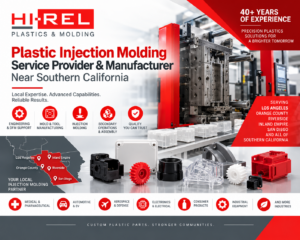
Hi-Rel offers comprehensive manufacturing services. Injection molding forms the foundation. Insert molding adds capability. Overmolding enables complex assemblies. Secondary services complete solutions. Assembly work integrates components. Pad printing adds branding. Finishing operations perfect components. Complete component solutions emerge. Molding alone doesn’t suffice for complex programs. Southern California location serves the region efficiently. Automotive suppliers throughout the area benefit. Logistics support remains excellent. On-site collaboration during development occurs readily.
Finding the right manufacturing partner requires careful evaluation. Quality system certifications matter first. Material expertise comes next. Tooling capabilities enable success. Process validation experience proves essential. Automotive launch process understanding separates capable suppliers. Early engagement accelerates success. Design stage involvement helps most. Suppliers contribute manufacturability input. Material selection guidance improves outcomes. Tooling strategy advice saves money. Production efficiency gains follow. Part quality improves measurably. Supplier qualification timing affects program success. Early starts prevent timeline constraints. Thorough evaluations require time. Formal qualification needs completion before launch pressure arrives.
Hi-Rel Plastics & Molding welcomes inquiries from automotive teams. Engineers and procurement managers should connect. Program managers benefit from early engagement. Visit the website to discuss plastic injection molding automotive parts sourcing process requirements. The Hi-Rel team reviews drawings carefully. Material options get discussed thoroughly. Design through validated production guidance gets provided. Automotive component manufacturing excellence emerges from partnership.