Three-Station Injection Blow Molding combines two familiar processes in one machine. A preform is injection molded around a steel core, then the core carries it to a blow mold where air inflates it into its final shape. The method is valued for precise necks, clean surfaces, and no trimmed flash, which makes it a common choice for small containers in pharmaceutical, cosmetic, and specialty applications.
This article explains how injection blow molding works station by station, where its precision comes from, and which parts and resins suit it best. The aim is to help engineers and buyers judge whether the process fits a project before they request quotes.
How Three-Station Injection Blow Molding Works
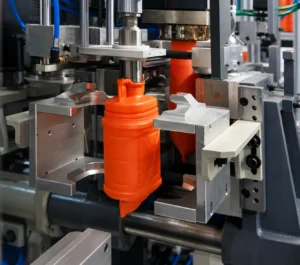
Most injection blow molding machines use three stations arranged on a rotating table. At the first station, resin is injected around a core rod to form a preform. At the second, the core rod moves the still-warm preform into a blow mold and air inflates it. At the third, the finished container is stripped from the core rod and ejected.
Because the preform is molded rather than extruded, the process starts with a tightly controlled shape. The same core rod that forms the interior of the preform delivers the air for blowing, which keeps everything aligned. This sequence is the source of the consistency that Three-Station Injection Blow Molding is known for.
The Injection Station and Preform Design
The preform defines the wall thickness distribution of the finished container, so its design is central to the process. A designer shapes the preform with thicker areas where the container will stretch most, which helps produce even walls after inflation. This level of control is hard to match in processes that start with an extruded tube.
The injection station also forms the neck and any threads completely, using the same tool precision as standard injection molding. Resin is metered into a hot runner system, and the shot weight is consistent from cycle to cycle, which supports tight weight tolerances on finished containers. Weight is also one of the simplest quality checks to run on every shift.
Blow Station and Wall Distribution
At the blow station, air pressure expands the preform until it contacts the cooled mold surface and takes its final shape. Temperature of the preform at transfer matters, because plastic that is too cool resists stretching and plastic that is too hot may thin unevenly. Operators tune this window for each resin and container, and the settings are recorded so that the process can be repeated on later runs.
The blow mold defines the exterior shape, surface finish, and any embossed features. Because the preform is designed for the container, wall distribution in Three-Station Injection Blow Molding is generally more even than in processes that rely on free-hanging tubes, which reduces weak spots and material waste.
Ejection and Part Handling
Once the container has cooled in the blow mold, it moves to the stripping station, where it is removed from the core rod. Cooling time sets the pace of the cycle, and mold cooling design strongly influences output. After ejection, containers can pass directly to inspection or packaging.
Since the process produces no parison tail or pinch-off scrap, there is little waste to trim or regrind, and the bottom of the container has a clean surface. This simplifies handling for cosmetic and pharmaceutical products where appearance and cleanliness matter. Cleanroom packaging can follow directly when the application requires it.
Neck Finish Precision in Injection Blow Molding
Neck finish accuracy is one of the strongest arguments for Three-Station Injection Blow Molding. The threads and sealing surface are formed in the injection mold, so dimensions are repeatable, and closures fit reliably without trimming or calibrating the neck afterward. This improves sealing and reduces leaks.
Tight neck tolerances matter for products such as medicine bottles, dropper containers, and dispensers that must work with pumps or child-resistant closures. Specifying critical neck dimensions on the drawing allows the molder to build and inspect the tool to the requirements that affect closure performance.
Container Shapes Suited to Injection Blow Molding
The process works best for small to moderate containers with round, oval, or rectangular profiles, and it is widely used for vials, bottles, and jars. Complex shapes are possible, but features such as integrated handles are generally better suited to extrusion processes.
Wall thickness can be varied in Three-Station Injection Blow Molding by changing preform geometry, which gives designers flexibility for containers that need stiff shoulders or thicker bases. Very large containers and high stretch ratios are limits, and a molder can advise whether a design falls within them.
Resins for Injection Blow Molding
Common resins for injection blow molding include polyethylene, polypropylene, polystyrene, PETG, and several engineering grades. Selection depends on clarity, chemical resistance, barrier needs, and regulatory requirements. Materials must have enough melt strength and stretch behavior to inflate without tearing.
For pharmaceutical and medical containers, resin grades should meet relevant standards, and compatibility with the contents should be tested over time. Sterilization method can also limit material choices, so these requirements should be set early in the design process.
Tooling Cost and Production Volumes
Three-Station Injection Blow Molding tooling includes injection cavities, core rods, and blow molds, so initial cost exceeds that of simpler blow molding tools. The investment is typically justified when volumes are moderate to high, or when precision and appearance requirements rule out other processes.
Multi-cavity tooling raises output and lowers cost per container, but it adds complexity and requires careful balancing so every cavity fills and cools equally. A molder can compare options and recommend a cavity count that matches expected annual demand and machine capacity.
Why Hi-Rel Plastics Offers Injection Blow Molding
Hi-Rel Plastics & Molding provides injection blow molding alongside extrusion blow, rotational, thermoforming, and injection processes. Because it offers several approaches, its engineers can recommend the process that best fits a container’s shape, tolerances, and volume instead of forcing every design into one method.
Supported by ISO 13485, ISO 9001, and AS9100D certification and cleanroom manufacturing capability, Hi-Rel can support injection blow molding programs for medical, pharmaceutical, and industrial customers. Secondary operations and assembly are available under the same quality system.
Ready to Start a Three-Station Injection Blow Molding Project?
A productive first conversation covers container size, neck finish, resin, expected volumes, and any regulatory requirements. Sharing a drawing or sample early allows the molder to confirm whether injection blow molding is the right fit and to identify risks while changes are still inexpensive.
Hi-Rel Plastics & Molding welcomes inquiries from engineers and procurement professionals evaluating injection blow molding for an upcoming program. Contact Hi-Rel Plastics & Molding to share your part requirements and discuss how Hi-Rel’s capabilities can support your project.