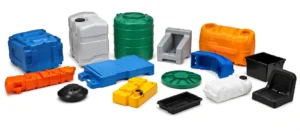
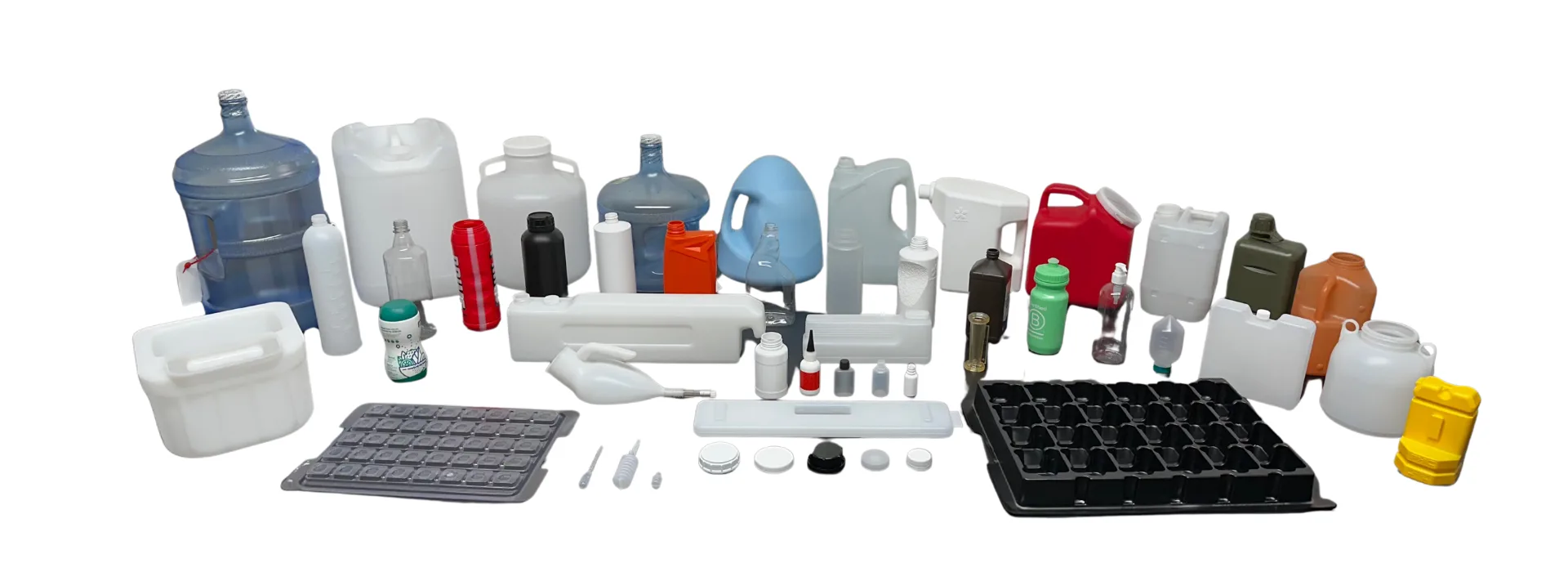
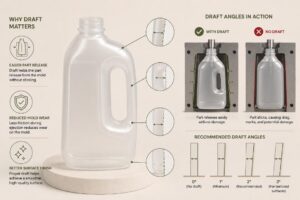
Injection blow molding is a two-stage plastic manufacturing process that produces hollow containers and components with a level of dimensional precision and surface quality that extrusion blow molding cannot consistently achieve. The process combines the controlled accuracy of injection molding — used to form a precision parison — with the hollow-part forming capability of blow molding to produce bottles, vials, containers, and other hollow parts with accurate neck geometries, consistent wall thickness, and surfaces free of the pinch-off seams that extrusion processes inherently create. These characteristics make injection blow molding the process of choice for pharmaceutical packaging, medical device containers, cosmetic bottles, and precision hollow components across regulated industries.
For engineers and procurement professionals sourcing hollow plastic components, understanding how injection blow molding works — and how it compares to alternative blow molding processes — is essential to making informed decisions about process selection, supplier capabilities, and design requirements. The differences between injection blow molding and extrusion blow molding are not simply technical footnotes; they determine whether a container will meet the dimensional, appearance, and regulatory requirements of its application. This article provides a detailed examination of injection blow molding from process mechanics through material selection, tooling, quality systems, and applications.
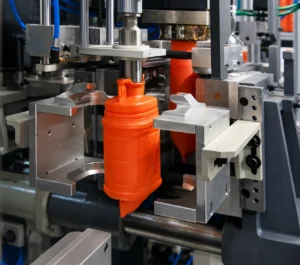
Injection blow molding uses three sequential stations. Manufacturers typically integrate them into one rotary machine for continuous production. At the first station, the machine injection-molds molten thermoplastic resin onto a core rod. This precision steel mandrel forms the parison. The parison is a thick-walled, test-tube-shaped precursor. The injection mold precisely defines its geometry. Injection molding controls the parison’s wall thickness profile, inner diameter, and neck geometry. Extruded parisons offer less dimensional consistency.
At the second station, the core rod moves the parison into the blow mold while it remains at forming temperature. Pressurized air flows through the rod and inflates the parison against the blow mold walls. The part takes the shape of the mold interior. It cools against the mold surface before ejection. At the third station, the machine strips the finished container from the core rod. It then ejects the container. All three stations run simultaneously in a rotary machine. Therefore, throughput matches a single-stage process. The result is a hollow container with precise injection-molded necks, consistent wall distribution, and no base parting-line seam. Extrusion blow molding cannot replicate this combination.
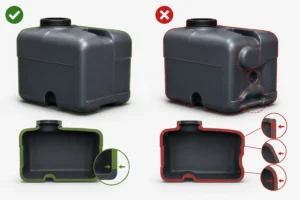
Injection blow molding and extrusion blow molding differ most at the finished container’s neck and base. In extrusion blow molding, the machine forms the parison as an extruded tube. The mold then pinches and seals the tube at its base. This action creates a weld zone called a pinch-off. Heat and pressure fuse two plastic layers in this area. The pinch-off leaves a base seam. Its strength and appearance can vary with the material, process parameters, and tooling condition. In pharmaceutical and medical containers, this seam can create a potential failure mode. Injection blow molding avoids it because its injection-molded parison has a fully formed, seamless base.
Neck finish accuracy is another major differentiator. In extrusion blow molding, the blow step forms the container’s neck and thread features. The parison inflates against the mold’s neck area. This method provides adequate neck dimensions for many commercial applications. However, it cannot match the precision of an injection-molded neck. Injection molding forms neck threads, sealing surfaces, and thread start positions with full injection-molding accuracy. Specific closure systems require this precision. Examples include metered-dose pumps, child-resistant caps, and pharmaceutical closures. Injection blow molding delivers it consistently. Extrusion blow molding does not.
Injection stretch blow molding adds a biaxial stretching step to injection blow molding. After the parison moves to the blow mold, a stretch rod extends through it. The rod stretches the parison axially before or during air inflation. Air pressure creates hoop stretching. Together, these actions align polymer chains in two directions. This biaxial orientation improves crystallinity and molecular orientation in the container wall. The resulting container offers better optical clarity, barrier properties, and tensile strength. PET beverage bottles are the most visible example. The process also serves pharmaceutical packaging, food containers, and other applications that need clarity or strength.
Standard injection blow molding omits the stretch step. Manufacturers choose it when biaxial orientation offers no needed property improvement. They also choose it for materials that gain little from stretching. Polyethylene and polypropylene, for example, do not show the dramatic improvements that PET achieves through biaxial orientation. Standard injection blow molding is often the more economical choice for these resins. It suits containers where neck precision and base integrity matter most. The choice between the two processes depends on the material, container geometry, and application requirements. Neither process is universally preferable.
Injection blow molding works with a range of thermoplastic resins. Container function, regulatory compliance needs, and processing characteristics guide material selection. Manufacturers widely use high-density and low-density polyethylene for pharmaceutical oral solid and liquid containers. They also use it for personal care packaging and medical device components. HDPE provides good chemical resistance and a moisture barrier. It is also compatible with many drug products. LDPE provides greater flexibility for squeeze-bottle applications. Medical-grade and FDA-compliant formulations are available for both materials. These formulations include the documentation needed for regulated markets.
Manufacturers use polypropylene for applications that need more temperature resistance than polyethylene offers. Common examples include autoclavable medical containers, hot-fill food packaging, and laboratory containers. Polycarbonate provides optical clarity and high impact resistance. It suits reusable medical containers and laboratory equipment. PETG provides glass-like clarity and better impact resistance than standard PET. It is used in cosmetic packaging, medical device containers, and food-contact applications. Specialty resins include polysulfone, polyphenylsulfone, and various copolymers. These materials support demanding applications that require chemical resistance, temperature performance, and regulatory compliance.
Pharmaceutical packaging is the largest and most technically demanding market for injection blow molding. Precise injection blow molded neck finishes support reliable pharmaceutical closure systems. Child-resistant caps, tamper-evident closures, pump dispensers, and dropper assemblies depend on accurate neck threads and sealing surfaces. Container closure integrity is also essential. It describes the container and closure system’s ability to maintain a sterile barrier or prevent contamination ingress. Many pharmaceutical products require it for regulatory compliance. Consistent container-neck dimensions directly support this performance.
USP and FDA requirements for pharmaceutical primary packaging define material compliance, extractables and leachables limits, and container closure integrity testing protocols that injection blow molding suppliers for this market must understand and support. Material certifications, resin lot traceability, and compliance documentation are standard deliverables for pharmaceutical injection blow molding programs. Process validation following FDA guidance and ICH Q10 pharmaceutical quality system requirements is expected of suppliers producing primary packaging for regulated drug products. Suppliers who treat pharmaceutical packaging programs with the same rigor as medical device programs — rather than as commercial industrial work — are the appropriate partners for this market.
Medical device hollow components — irrigation solution bottles, specimen collection containers, reagent vessels, drug delivery device reservoirs, and sterile fluid containers — are produced through injection blow molding using medical-grade resins with ISO 10993 biocompatibility documentation. For components that will be terminally sterilized, resin selection must confirm compatibility with the intended sterilization method — ethylene oxide, gamma irradiation, or autoclave steam — including verification that the material retains its mechanical and dimensional properties and does not generate sterilization-related extractables above acceptable limits after the specified sterilization dose or cycle.
Cleanroom injection blow molding is the standard production environment for medical device containers. ISO Class 7 or Class 8 cleanrooms control particulate contamination during production and packaging, ensuring that components enter downstream sterilization processes in a controlled state. ISO 13485 quality management systems and IQ/OQ/PQ process validation are expected of contract manufacturers producing injection blow molded medical device components. Traceability from finished container back to resin lot must be maintained throughout production and documented in lot records that support the device manufacturer’s design history file and regulatory submissions.
The parison tool is the most critical element of an injection blow molding tooling system. The injection mold that forms the parison defines the neck geometry, wall thickness profile, and inner diameter of the preform — characteristics that directly determine the dimensional quality and wall thickness distribution of the blown container. Parison design is an engineering discipline that requires understanding of how the preform geometry affects material distribution during inflation, and how the selected material’s rheological properties influence the blow behavior at forming temperature. A poorly designed parison produces containers with uneven wall thickness, inconsistent clarity, and dimensional variation regardless of how well the blow tooling is designed.
The blow mold defines the external geometry of the finished container. Surface finish, parting line location, and dimensional tolerances of the blow mold directly affect the container’s appearance and dimensional conformance. Cooling channel design in the blow mold determines cooling uniformity and cycle time — inadequate cooling increases cycle time and can cause container distortion during ejection. Experienced injection blow molding suppliers design their complete tooling systems as integrated units, optimizing parison geometry, blow mold design, and thermal management together for consistent production performance.
Quality control for injection blow molded containers in regulated markets focuses on neck finish dimensions, container capacity, wall thickness distribution, visual appearance, and functional testing including leak integrity and closure compatibility. Neck thread dimensions — major diameter, minor diameter, thread pitch, and ovality — are measured against the applicable finish standard for the closure system being used. Container capacity at the specified fill line is verified against the labeled volume. Wall thickness is measured at defined locations using ultrasonic thickness gauges or destructive cross-section analysis during development and first article qualification.
Statistical process control applied to critical neck dimensions provides ongoing production monitoring that detects process drift before it produces out-of-specification containers. First article inspection reports documenting all critical dimensions and functional test results are standard deliverables at the start of production and after any tooling or process modification. For pharmaceutical and medical applications, these inspection records are retained as part of the lot history and must be available for regulatory review. Suppliers with robust quality management systems and documented inspection protocols provide the quality evidence that regulated-market customers require from their injection blow molding supply chain partners.
Hi-Rel Plastics & Molding offers injection blow molding as part of its comprehensive plastic manufacturing capabilities, serving pharmaceutical packaging, medical device, cosmetic, and precision industrial customers who require the dimensional accuracy and surface quality that injection blow molding uniquely provides. The company’s experience with parison design, tooling development, and cleanroom production positions its team to engage effectively with customers on the technical requirements of injection blow molding programs from early design through validated production. Hi-Rel’s quality systems and documentation practices support the regulatory requirements of pharmaceutical and medical device customers who depend on injection blow molded containers as primary packaging or device components.
Hi-Rel’s Southern California location serves manufacturers throughout the Los Angeles and Inland Empire regions, with logistics efficiency and accessible on-site collaboration that regional customers value. The company’s secondary service capabilities — including packaging, labeling, and assembly within controlled environments — allow customers to receive more complete container solutions from a single qualified supplier rather than managing separate vendors for blow molding and downstream operations.
Injection blow molding is the right process when your hollow container application requires precise neck finish dimensions, consistent wall thickness, freedom from pinch-off seams, or the production quality standards of pharmaceutical and medical device markets. Whether your program involves a new container design in development, a regulatory submission that requires a qualified manufacturing partner, or a search for an alternative supplier for existing production, the most effective starting point is a technical conversation with a supplier who has direct experience with both the tooling design and production process requirements of injection blow molding.
Hi-Rel Plastics & Molding welcomes inquiries from engineers, packaging specialists, and procurement professionals with injection blow molding requirements. Visit hirelplasticsm.com to request a quote or submit a project inquiry and connect with the Hi-Rel team to discuss your container specifications, material needs, and program timeline.