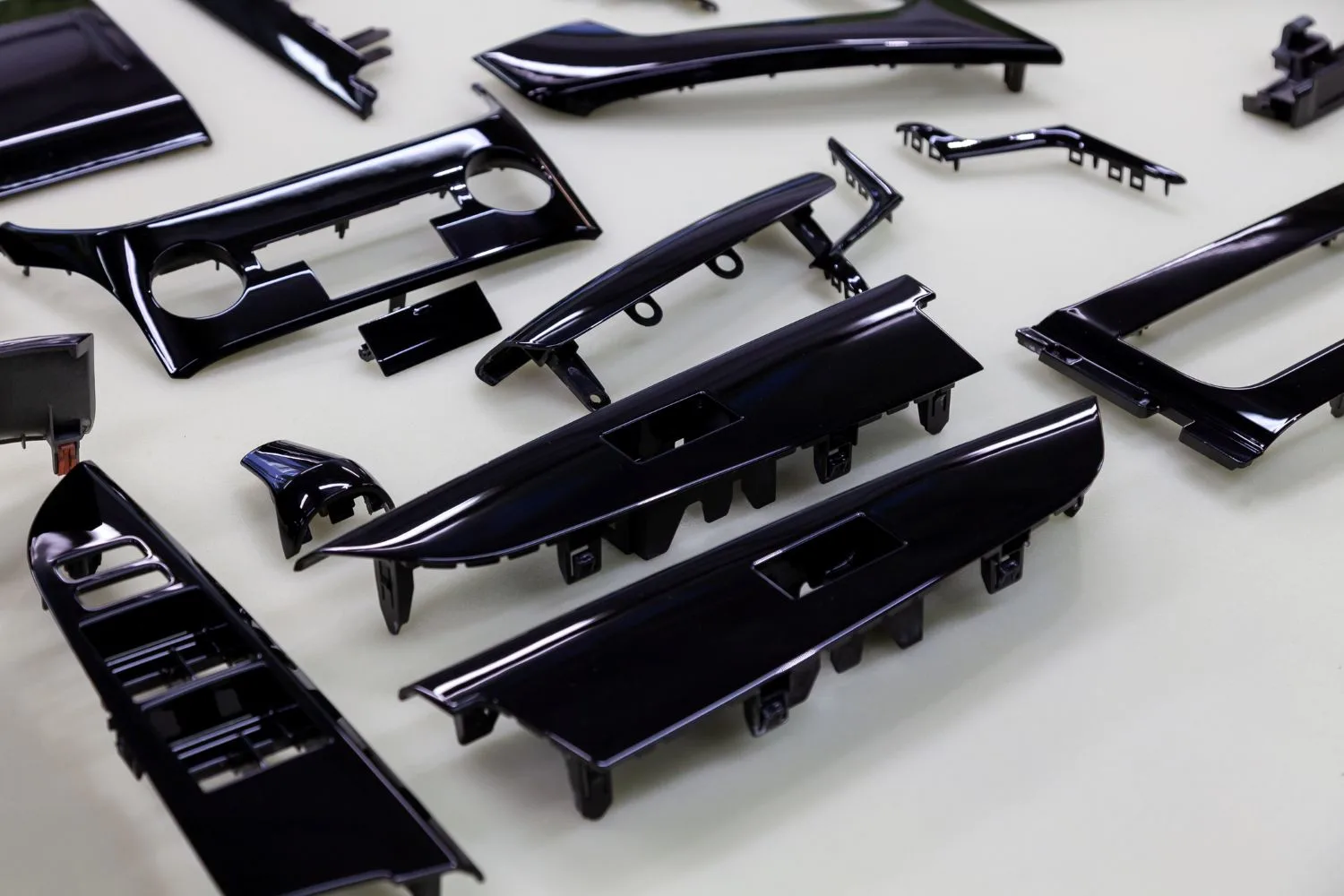
Plastic injection molding automotive parts is one of the most technically and commercially demanding sectors of the global injection molding industry. Modern vehicles contain hundreds of injection-molded plastic components — from interior trim and dashboard substrates to under-hood structural brackets, fluid system components, and exterior body elements — each of which must meet exacting dimensional tolerances, material performance requirements, and quality system standards defined by a supply chain framework unlike any other manufacturing industry. The automotive sector has developed its own quality management standards, production approval processes, and development methodologies specifically to manage the complexity and scale of vehicle program development and the critical nature of automotive component reliability.
Suppliers entering or expanding in the automotive market must understand more than molding presses and molds. Engineers and procurement professionals must also assess a partner’s broader capabilities. This article examines the engineering requirements, quality standards, process development practices, and supply chain considerations behind automotive injection molding. It also explains what separates capable suppliers from those that underestimate the market’s demands.
Injection-molded plastics have gained ground in automotive design for decades. Weight reduction, design flexibility, corrosion resistance, and cost competitiveness drive that growth. Interior components account for the largest volume of automotive injection molding parts. Door panels, instrument panel carriers, pillar trim, overhead consoles, center consoles, glove boxes, and seat components are commonly injection-molded. These parts need consistent surface finish, color, and dimensions. They must also resist impact, UV exposure, temperature changes, and long-term aging.
Under-hood applications form a smaller but more demanding segment of automotive injection molding. Air intake manifolds, resonators, engine covers, coolant overflow reservoirs, battery housings, and fluid-system brackets face severe thermal cycles. They must perform from cold-soak conditions to sustained heat near engine sources. Manufacturers select glass-filled nylons, polyphenylene sulfide, polyetherimide, and similar resins for this work. These materials retain mechanical properties at temperature and resist automotive fluids. Exterior components include front and rear fascias, grilles, mirror housings, and body trim. Together, these applications span commodity resins and advanced engineering thermoplastics within one vehicle program.
Material selection for automotive injection molding starts with the application’s operating environment and performance needs. Polypropylene, especially glass-mineral filled grades, dominates automotive interiors. It balances stiffness, impact resistance, dimensional stability, and cost. Engineers use impact-modified grades when low-temperature impact performance matters. High-flow grades support thin-wall molding for large interior panels. They help manage fill length and pressure demands. Polypropylene also accepts paint and works with TPO overmolding for soft-touch surfaces. These qualities make it a core material in modern automotive interior design.
Engineering resins serve under-hood and structural applications where polypropylene cannot provide enough thermal or mechanical performance. Manufacturers use glass-filled nylon 6 and nylon 66 for air intake parts, cooling-system components, and structural brackets. These materials retain strength at temperature. PPS handles more aggressive chemical exposure and higher temperatures than nylon. Polycarbonate and PC/ABS blends suit interior parts that need Class A surfaces, optical clarity, or specific impact performance. Part designers, material suppliers, and injection molding manufacturers collaborate on resin selection. Automotive OEM quality systems formalize that work through the material approval process.
IATF 16949 is the automotive-specific quality management standard for the supply chain that produces automotive injection molding parts. The International Automotive Task Force, a consortium of major automotive OEMs, developed the standard. IATF 16949 builds on the ISO 9001 quality management framework. It adds requirements for defect prevention, continual improvement, supply chain management, and customer-specific requirements. Accredited third-party registrars issue certification after auditing a supplier’s quality system. Suppliers must also complete ongoing surveillance audits to keep certification.
In practice, IATF 16949 certification requires suppliers to document and operate key quality processes. These include production planning, tooling management, statistical process control, measurement system analysis, gauge calibration, non-conformance control, and corrective action. Automotive OEMs expect Tier 1 and Tier 2 suppliers to use these systems as a baseline for qualification. Suppliers without IATF 16949 certification face significant barriers to market entry. The same applies to suppliers that treat quality management as paperwork instead of an operating discipline.
Advanced Product Quality Planning (APQP) gives automotive OEMs and suppliers a structured path for developing and launching new automotive injection molding parts. APQP covers design review, failure mode analysis, tooling development, process validation, and production verification. Teams complete and document these activities before production begins. APQP identifies and resolves quality risks early. As a result, it reduces late-stage failures during program launch.
Production Part Approval Process (PPAP) formally demonstrates that a supplier can produce automotive injection molding parts at volume and meet design requirements. A PPAP submission typically includes dimensional reports, material test results, and capability studies for critical characteristics. It also includes process flow diagrams, control plans, FMEAs, and a sample warrant. The customer reviews and approves the PPAP before authorizing production shipments. Changes to tooling, materials, process parameters, or production locations require change notification. Depending on the change and customer requirements, they may also require PPAP resubmission.
Engineering drawings set dimensional requirements for automotive injection molding parts. They account for material shrinkage, tooling tolerances, and vehicle assembly-fit requirements. GD&T provides the standard framework for communicating these requirements. Parts that locate against body structures or adjacent trim need especially consistent tolerances. Suppliers must maintain those tolerances across production volumes of millions of parts. Critical characteristics commonly require process capability indices (Cpk) of 1.33 or higher. This level keeps normal process variation well within tolerance.
Class A surface requirements for directly visible plastic injection molding automotive parts define the appearance standards that interior and exterior trim components must meet. Surface finish, gloss level, color consistency, gate vestige control, weld line location, and the absence of sink marks, flow lines, and surface contamination are all governed by Class A specifications. Achieving and maintaining Class A surfaces requires high-polish tooling, carefully optimized process parameters, compatible material selection, and disciplined production practices that prevent surface degradation over the mold’s production life. Tooling maintenance — particularly the cleaning and periodic re-polishing of Class A cavity surfaces — is a critical and ongoing requirement for automotive injection molding programs producing appearance-critical components.
The automotive industry’s pursuit of vehicle weight reduction to improve fuel economy and electric vehicle range has been a persistent driver of plastic injection molding automotive parts growth. Metal-to-plastic conversion — replacing stamped steel, cast aluminum, and machined metal components with injection-molded engineering thermoplastics — has been ongoing for decades and continues to expand as material and process capabilities improve. Front-end modules, cross-car beams, door modules, and structural brackets that were previously metal are now routinely produced as injection-molded plastic assemblies that meet structural requirements at significantly lower weight and cost.
Design integration — combining multiple parts and functions into a single injection-molded component — is an additional value driver in automotive plastic injection molding. An injection-molded door panel that integrates the substrate, speaker grilles, map pocket, and switch mounting features in a single molded part replaces a stack of separately manufactured and assembled components, reducing part count, assembly labor, and inventory complexity. This integration capability, enabled by injection molding’s ability to produce complex three-dimensional geometry with multiple functional features in a single cycle, is one of the most compelling arguments for continued growth of plastic injection molding automotive parts as vehicle programs seek efficiency improvements throughout the supply chain.
Most plastic injection molding automotive parts require secondary operations before delivery to the assembly plant. Painting and coating are applied to exterior components to achieve color match and UV protection. Ultrasonic welding, vibration welding, and hot plate welding join injection-molded sub-components into finished assemblies such as instrument panels, door modules, and fluid reservoir assemblies. Pad printing and laser marking apply identification, regulatory, and appearance graphics. Assembly operations combine injection-molded plastic parts with metal inserts, wire harnesses, electronic modules, and seals to create complete modules ready for vehicle installation.
Suppliers who perform secondary operations in-house — under the same IATF 16949 quality system and traceability framework as the primary injection molding — provide automotive customers with a more integrated solution and a single point of quality accountability. The complexity of automotive assembly processes and the tight tolerances required for vehicle-level fit-up make secondary operation quality as important as primary molding quality in determining the customer’s experience with the finished vehicle. Injection molding suppliers who invest in secondary operation capabilities, quality systems, and workforce training for automotive applications add proportionally more value to automotive programs than those who limit their offering to bare molded parts.
Hi-Rel Plastics & Molding brings precision injection molding capabilities, engineering thermoplastic expertise, and quality system discipline to automotive parts programs. The company’s experience with the dimensional requirements, material performance standards, and quality documentation practices of the automotive supply chain positions it to serve Tier 1 and Tier 2 automotive customers who require reliable, well-documented plastic injection molding for vehicle components. Hi-Rel’s secondary service capabilities — including assembly, pad printing, and finishing — support more complete component solutions than a molding-only supplier can provide.
Hi-Rel’s Southern California location places it within the automotive supply chain of the Western United States, with logistics efficiency for customers supplying assembly operations throughout the region. The company’s commitment to process discipline, traceability, and continuous improvement reflects the operational culture that automotive OEMs and their Tier 1 partners expect from injection molding suppliers. Engineering and procurement teams evaluating Hi-Rel for automotive programs are welcomed to visit the facility, review quality documentation, and discuss technical requirements in detail.
Selecting a plastic injection molding supplier for automotive parts requires evaluating IATF 16949 certification, APQP and PPAP experience, material expertise, tooling capabilities, secondary service offerings, and the supplier’s understanding of automotive program development timelines and quality expectations. Beginning the supplier evaluation process early — at the design stage if possible — allows for collaborative input on design for manufacturability, material selection, and tooling strategy that improves long-term production efficiency and part quality. Suppliers who engage as technical partners during development add more value than those who enter the program only at the production quoting stage.
Hi-Rel Plastics & Molding invites automotive engineers, program managers, and procurement professionals to visit hirelplasticsm.com to discuss plastic injection molding requirements for automotive components. The Hi-Rel team is available to review drawings, discuss material options, and provide guidance on the development and qualification path for automotive injection molding programs.