Injection blow molding process two-stage manufacturing combines precision injection molding with hollow-part forming capabilities. The process begins by injection molding a parison. This thick-walled, test-tube-shaped precursor transfers to a blow mold. Pressurized air then inflates it into the final hollow part geometry. The result is exceptional. Dimensional precision emerges. Excellent surface finish follows. Accurate neck and thread dimensions become standard. Extrusion blow molding cannot consistently match these qualities.
Pharmaceutical bottles, cosmetic containers, single-use medical vials, and specialized hollow parts all require this approach. Tight dimensional tolerances matter. Consistent wall thickness proves essential. Precise neck finishes function as requirements. The injection blow molding process two-stage manufacturing method eliminates weld lines. Pinch-off seams disappear entirely. Minimal material waste occurs. This article explains how the process works. We’ll compare it to alternative approaches. Engineers and procurement teams will understand what to evaluate. Explore Hi-Rel’s injection blow molding capabilities to see precision manufacturing in action.
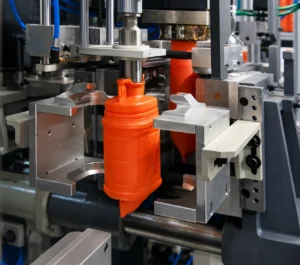
Three integrated stations power this manufacturing approach. A rotary machine typically combines all three. At station one, molten thermoplastic injects onto a core rod. The parison forms precisely. Wall thickness gets controlled. Inner diameter dimensions get defined. Length specifications remain accurate. The injection mold geometry dictates these parameters. Neck and thread features form completely at this stage. Dimensional accuracy matches injection molding standards exactly.
At station two, the warm parison remains on the core rod. It transfers into the blow mold. Pressurized air injects through the core rod. It inflates the parison against blow mold walls. The inflated part assumes the blow mold’s interior shape. Material cools against the mold surface. At station three, the finished part ejects from the core rod. The rotary machine cycles continuously. Parisons form simultaneously. Parts blow and eject at the same time. This simultaneous operation maximizes throughput efficiency remarkably.
Extrusion blow molding produces parisons by continuously extruding molten plastic tubes. A specific tube length captures in the blow mold. Inflation follows immediately. The process suits larger parts and complex shapes. Handles and undercuts become possible. Injection blow molding process two-stage manufacturing cannot accommodate these features. However, extrusion creates a pinch-off seam. This seam appears at the part’s base. The extruded tube gets sealed here. Neck and thread dimensions lack accuracy. Precision suffers because the neck forms during the blow. A dedicated injection step cannot occur.
Injection blow molding process two-stage manufacturing eliminates the pinch-off seam entirely. The parison results from injection molding, not extrusion. No sealing step creates defects. Neck and thread dimensions form in the injection mold. Accuracy matches injection tooling standards precisely. Consistency becomes exceptional. For pharmaceutical, cosmetic, and medical applications this matters enormously. Neck finish accuracy proves critical. Cap sealing depends on precision. Dosing system performance relies on dimensional consistency. This advantage is significant. The tradeoff involves geometry limitations. Smaller, simpler parts work best. Bottles with handles prove difficult. Complex shoulder profiles challenge this method. Very large volumes may prove impractical.
Injection stretch blow molding adds a mechanical stretching step. The parison transfers to the blow mold as usual. Then a stretch rod extends through the parison. Axial stretching occurs before or during air inflation. Biaxial orientation results from this innovation. Axial stretching comes from the rod. Hoop stretching comes from inflation. Polymer chains align in two directions. Material crystallinity increases significantly. Clarity improves dramatically. Strength enhances substantially. Barrier properties improve impressively. PET beverage bottles use this process. Enhanced optical clarity becomes necessary here. Improved gas barrier performance proves required.
Standard injection blow molding process two-stage manufacturing omits the stretch step. Applications not benefiting from biaxial orientation use this version. Polyethylene and polypropylene materials don’t gain significant property improvements. PET exhibits dramatic property enhancements under biaxial orientation. Material selection drives the decision. Required part properties matter. Part geometry influences the choice. Suppliers experienced in both processes guide customers effectively. Specific application needs determine the best approach.
This manufacturing method accepts multiple thermoplastic resins. Application requirements drive selection decisions. Chemical resistance matters. Clarity requirements vary. Flexibility needs differ. Regulatory compliance is essential. Processing characteristics must work.
High-density polyethylene ranks widely used. Pharmaceutical and personal care containers benefit. Low-density polyethylene offers greater flexibility. Polypropylene resists higher temperatures. Autoclave sterilization compatibility improves. ABS and polycarbonate suit rigid containers. Medical device components use these materials. Specialty resins extend capabilities further. Polysulfone, PETG, and various copolymers enable specialized applications.
Medical-grade and USP-compliant resin grades serve pharmaceutical packaging. Drug delivery systems rely on these materials. Medical device components require full compliance. Chemical compliance documentation accompanies these grades. Lot-to-lot consistency exceeds commodity resin standards. Regulatory applications demand material traceability. Resin lot to finished part tracking becomes mandatory. Quality management systems must maintain complete documentation.
Pharmaceutical packaging represents the largest market segment. Technical demands prove most rigorous. Liquid medication bottles use this process. Nasal spray containers rely on it. Ophthalmic preparation bottles benefit. Oral dosing systems require this approach. Neck dimension accuracy proves critical. Wall thickness consistency matters. Surface quality meets pharmaceutical standards. FDA guideline compliance is mandatory. USP requirements for container closure systems apply. Quality and documentation requirements multiply. Injection blow molding process two-stage manufacturing suppliers must meet every regulatory requirement.
Cosmetic and personal care packaging represents another major application. High volumes justify the process. Shampoo bottles use this method. Conditioner containers benefit. Lotion bottles rely on it. Dispensing pump compatibility matters greatly. Cap and closure reliability depends on consistency. Neck finish accuracy proves essential.
Medical device applications expand the market. Single-use sample containers require precision. Reagent bottles need dimensional accuracy. Irrigation solution containers demand cleanliness. Cleanliness and dimensional precision prove critical. Material compliance becomes non-negotiable. Consumer product applications span diverse markets. Specialty containers serve various needs. Pharmaceutical-adjacent health and wellness products benefit.
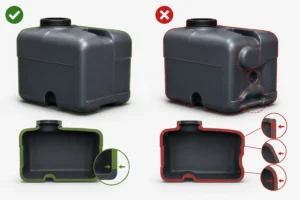
Two distinct tool sets comprise this approach. The injection mold forms the parison. The blow mold forms the final part. The injection mold must produce a parison. Wall thickness profiles need precise control. Neck geometry requires exact specification. Consistent blow performance depends on parison design. Poor parison design creates problems. Uneven wall thickness results. Inconsistent inflation occurs. Dimensional variation in the blown part follows. Blow mold quality cannot overcome parison flaws.
The blow mold defines the external finished shape. External surface contact occurs with the blow mold. Surface finish affects the finished part. Parting line location impacts appearance. Dimensional tolerances influence function. Cooling channels in both molds prove critical. Cycle time depends on cooling effectiveness. Part quality depends on thermal management. Inadequate cooling extends cycles. Part distortion risk increases. Variation becomes more likely. Experienced injection blow molding process two-stage manufacturing suppliers design integrated tooling systems. Parison, blow geometry, and cooling optimize together. Consistent production performance results.
Inspection focuses on critical dimensions. Neck thread dimensions demand attention. Container height requires verification. Capacity at fill line must be checked. Wall thickness needs measurement. Visual appearance matters. Neck dimensions prove particularly important. Closure compatibility depends on thread precision. Out-of-specification threads cause leaking. Improper sealing follows. Capacity verification ensures specified volume. Filling line compatibility matters. Product specifications require adherence. First article inspection reports document critical characteristics. Production start requires these reports. Most regulated-industry customers demand them.
Pharmaceutical and medical device applications require leak testing. Containers for liquid products need seal verification. Container-closure interface integrity must be proven. Drop testing and top-load testing may be required. Structural performance under handling needs verification. Shipping conditions demand strength proof. ISO 13485 standards apply to medical device manufacturers. FDA cGMP guidelines govern pharmaceutical producers. USP standards define container specifications. Suppliers maintaining these quality systems bring documentation infrastructure. Regulated-market inspection and testing requirements get satisfied. Compliance documentation proves availability.
Hi-Rel Plastics & Molding offers comprehensive plastic manufacturing processes. Injection blow molding process two-stage manufacturing capabilities integrate injection and blow expertise. Parison design gets optimized. Tooling optimization receives attention. Process control becomes disciplined. Customers in pharmaceutical packaging benefit. Medical device manufacturers find solutions. Cosmetic companies gain advantages. Industrial markets receive support. Dimensional precision remains standard. Surface quality stays consistent.
Hi-Rel’s quality systems support regulated customers. Non-regulated customers benefit equally. Material selection expertise guides decisions. Tooling development receives careful planning. Process qualification gets thorough validation. New injection blow molding programs receive technical input immediately. Tooling rework risks decrease. Production delays get prevented. Hi-Rel’s location in Southern California serves regional manufacturers. Efficient logistics simplify operations. On-site collaboration becomes convenient. Contact the Hi-Rel team to discuss your hollow part manufacturing needs.
This manufacturing method offers compelling advantages. Dimensional precision emerges reliably. Surface quality remains consistent. Neck finish accuracy becomes standard. Pharmaceutical packaging demands these characteristics. Medical containers require them. Other hollow part applications benefit. Small to medium-sized containers with precise necks fit perfectly. Wall thickness consistency that extrusion cannot deliver becomes achievable. Your application deserves serious evaluation. Discussing the process with experienced suppliers proves valuable. Tooling design understanding matters. Production process knowledge counts.
Hi-Rel Plastics & Molding welcomes inquiries from engineers and procurement professionals. Hollow container programs deserve expert attention. Visit the company website to submit quote requests. Connect with the Hi-Rel team directly. Discuss your injection blow molding process two-stage manufacturing requirements. They’ll guide you through every decision. Material selection receives expert advice. Design optimization gets professional input. Manufacturing strategy becomes clear.