The extrusion blow molding process hollow parts manufacturing creates hollow components efficiently. A continuous tube of molten thermoplastic gets extruded. This tube — called the parison — inflates inside a closed mold. The final part shape emerges. The process dominates hollow part manufacturing. Parts too large for injection blow molding work here. Geometrically complex components benefit greatly. High-volume production favors this method. Automotive fuel tanks use this process daily. Industrial containers rely on it. Agricultural tanks depend on it. Ductwork, toys, and consumer products get produced. Explore Hi-Rel’s extrusion blow molding capabilities to see how this manufacturing method delivers results.
The extrusion blow molding process hollow parts manufacturing combines design flexibility with material compatibility. Production efficiency justifies its widespread adoption. For engineers and procurement professionals, understanding this process matters significantly. Part design improves with knowledge. Supplier conversations become more realistic. Production programs succeed more often. This article covers the process in detail. Process variants receive attention. Material selection gets explained. Tooling design receives coverage. Quality considerations get addressed thoroughly. Contact Hi-Rel today to discuss your hollow part needs.
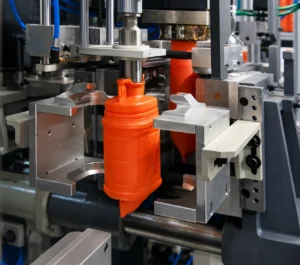
A plasticating extruder melts thermoplastic resin continuously. Molten material flows through a die. This die forms the material into a hollow tube. The parison emerges. As the parison reaches correct length, the split blow mold closes. The bottom of the parison gets trapped. The mold seals it completely. The top remains open for air injection. Pressurized air injects through a blow pin. The pin comes from the top. The plastic tube inflates against mold walls. The material conforms to internal mold geometry. Cooling occurs as the part contacts the mold. The finished hollow part ejects.
The cycle repeats continuously. The extruder produces the next parison. In continuous extrusion blow molding process hollow parts manufacturing, the extruder runs constantly. The mold shuttles or rotates. Each parison gets captured in sequence. In intermittent extrusion blow molding, the extruder accumulates melt. A rapid release occurs for each cycle. Larger parts require this approach. A continuous extruder cannot produce enough parison. The leading edge would cool excessively. Both variants are widely used. Part size drives process selection. Cycle time requirements matter. Production volume affects the choice.
Continuous extrusion blow molding dominates small to medium part production. High volumes favor this variant. The extruder runs at constant rate. Molds arrange in shuttle or wheel configurations. They cycle rapidly. Successive parisons get captured efficiently. Cycle times of a few seconds occur. Small parts achieve this. High productivity results. Consumer packaging uses this method. Automotive components get produced. Bottles and containers work well. Small industrial parts benefit.
Accumulator-head extrusion blow molding serves large parts. Fuel tanks require this approach. Large agricultural tanks need it. Automotive fluid reservoirs use it. Industrial containers benefit. The volume of material exceeds continuous extruder capacity. The accumulator head stores molten material. Rapid release occurs through the die. Large parisons form before cooling. The leading edge maintains formability.
Coextrusion produces multi-layer parisons. Multiple resin layers extrude simultaneously. Barrier properties result. UV resistance improves. Structural characteristics enhance. Single-layer construction cannot deliver these benefits. Both continuous and accumulator-head processes use coextrusion. Complex part capabilities emerge.
High-density polyethylene dominates this manufacturing segment. Chemical resistance makes it valuable. Toughness and impact resistance prove essential. Processability matters for production. Industrial containers use HDPE. Agricultural tanks rely on it. Automotive fuel tanks depend on it. Wide consumer product ranges use it. Low-density and linear low-density polyethylene offer greater flexibility. Lower stiffness becomes possible. Applications requiring flexibility benefit greatly.
Polypropylene serves applications needing temperature resistance. Polyethylene cannot match this performance. Hot-fill containers use it. Automotive fluid reservoirs depend on it. Laboratory equipment relies on it. Engineering resins extend capabilities further. ABS, polycarbonate, and polyamide work here. Various copolymers enable specialized applications. Specific mechanical properties become achievable. Thermal characteristics improve. Chemical resistance enhances. Coextruded structures combine dissimilar resins. Multiple layers provide unique properties. Single resins cannot achieve them. Automotive fuel tanks exemplify this. HDPE structural layers provide strength. EVOH barrier layers reduce fuel permeation. Regulatory compliance follows. Material selection requires careful consideration. Resin melt strength matters. Parison stability depends on it. Final part functional requirements drive decisions.
Design flexibility represents a major advantage. Injection blow molding limits geometry significantly. This process accepts handles, undercuts, and offset necks. Complex contoured shapes become possible. Non-symmetric profiles work well. Integral attachment features integrate directly. Boss formations happen during molding. Surface texture gets formed in the mold. Geometric complexity becomes manageable.
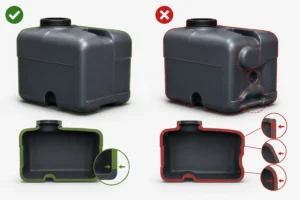
Wall thickness distribution presents the critical challenge. The inflating parison contacts mold areas unevenly. Distant areas receive less inflation. Thinner walls result. Sharp corners create problems. Deep recesses challenge designers. High-stretch areas thin dangerously. Parison programming solves this problem. Wall thickness varies over parison length. More material goes where stretching occurs. Compensation happens during extrusion. Understanding this relationship proves fundamental. Part geometry, parison design, and wall thickness must harmonize.
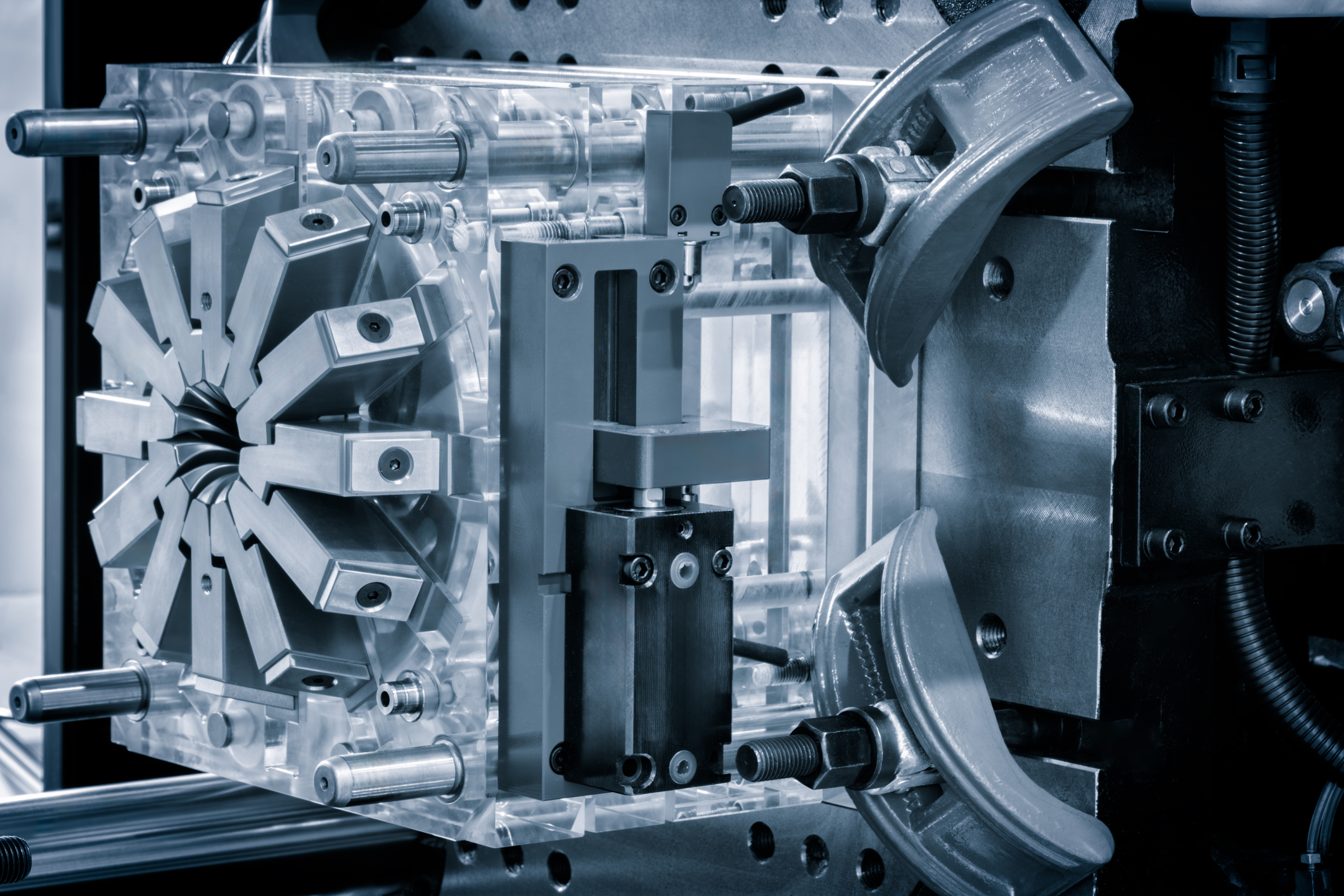
Aluminum or steel constructs these molds. Production volume drives material selection. Part size matters. Required surface finish influences choice. Aluminum molds suit medium-volume programs. Rapid heat transfer minimizes cycle time. Steel molds provide superior durability. High-volume programs use steel. Millions of cycles justify the investment. The mold must capture parisons reliably. Inflation air distributes uniformly. Efficient cooling matters. Clean part ejection happens.
Pinch-off geometry proves critical. This feature seals the parison bottom. Mold closing creates a weld zone. Finished part appearance depends on it. Weld strength matters. Material properties influence quality. Process parameters affect results. Structural applications need careful review. Adequate weld strength is essential. Tail flash gets produced. Excess plastic squeezes out below the pinch-off. Deflashing removes it. Manual or automated trimming works.
The automotive industry consumes massive quantities. Fuel tanks get produced. Windshield washer fluid reservoirs use this process. Coolant overflow tanks benefit. Brake fluid reservoirs depend on it. Air intake ducts get made. HVAC components rely on it. Precise dimensional control proves essential. Chemical resistance to automotive fluids is mandatory. Structural performance under thermal cycling matters. Emissions regulations require compliance. Multi-layer coextrusion is standard. EVOH barrier layers reduce hydrocarbon permeation. Regulatory standards set the thresholds.
Electric vehicle transitions change traditional applications. New opportunities emerge in thermal management. Battery cooling system components need solutions. Air management systems require innovation. Extrusion blow molding process hollow parts manufacturing remains central. Engineering resins enable new possibilities. Coextruded structures adapt readily. Thermal conditions of electric powertrains present challenges. Chemical exposure in new environments matters. Complex shapes with integrated features remain possible. Dimensional precision continues. Market relevance looks strong. The process suits evolving automotive needs.
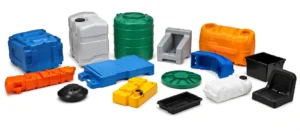
Industrial containers and chemical tanks represent major markets. Agricultural storage and distribution components use this process. Fertilizer tanks get produced. Pesticide tanks rely on it. Water treatment chemical containers use it. Industrial fluid tanks benefit. Capacities range from liters to hundreds of liters. Chemical resistance takes priority. UV stability matters greatly. Impact resistance proves essential. Regulatory compliance for chemical containment is mandatory. High-density polyethylene dominates. Specialty resins work where HDPE falls short. Chemical exposure conditions drive material selection.
Agricultural spray tanks use this process. Irrigation system components benefit. Livestock watering equipment gets produced. Design flexibility creates advantages. Material performance ensures reliability. Handles integrate directly. Fill necks get molded in. Drain ports function as designed features. Mounting features attach seamlessly. Separate component assembly disappears. Fewer sealing points follow. Total product cost decreases. Reliability improves measurably.
Quality assurance focuses on critical dimensions. Capacity verification confirms volume accuracy. Wall thickness measurement ensures consistency. Visual inspection catches defects. Structural testing validates performance. ASTM International standards provide testing protocols. FDA guidelines apply to regulated applications. SAE automotive standards govern vehicle components. Leak testing verifies seal integrity. Pressure testing confirms structural capability. Drop testing simulates handling. Impact testing validates durability. Documentation supports compliance. Material certifications accompany shipments. Resin lot traceability gets maintained. Process parameters get recorded. Statistical process control monitors production. First article inspection validates production starts. Control charts show ongoing stability.
Hi-Rel Plastics & Molding offers comprehensive capabilities. Multiple blow molding processes get supported. Wide engineering thermoplastic ranges work. Customer engagement focuses on meaningful collaboration. Part design receives technical input. Material selection gets expert guidance. Tooling design optimization happens. Process optimization continues. Quality systems support diverse applications. Regulated market documentation gets handled. Technically demanding applications receive attention. End-to-end manufacturing support distinguishes Hi-Rel. Tooling through production and secondary operations. Secondary operations complete solutions. The company’s Southern California location serves efficiently. Los Angeles and Inland Empire markets benefit. Broader Western United States markets receive service. Customer access improves. On-site collaboration becomes convenient. Practical manufacturing expertise guides decisions.
This manufacturing method suits diverse applications. Small consumer containers work. Large industrial tanks benefit. Complex automotive components get produced. Hollow parts with complex geometry fit perfectly. Handles and multi-layer barrier construction work well. Production volumes that favor continuous processes apply. Your program deserves honest evaluation. A supplier with direct process experience matters. Specific geometry gets assessed. Material requirements receive attention. Volume considerations influence recommendations.
Hi-Rel Plastics & Molding welcomes your inquiries. Engineers and procurement professionals should connect. Extrusion blow molding process hollow parts manufacturing requirements deserve expert attention. Visit the company website for quote requests. Discuss your program with the experienced team. Your hollow plastic part solutions emerge from collaboration.