The metal and plastic insert molding process combines a pre-formed component with injection-molded plastic in a single manufacturing operation. The pre-formed component is typically metal, though sometimes another plastic or ceramic part is used. Rather than molding a plastic housing and assembling a metal insert into it afterward, the insert is placed into the mold before injection. The plastic then forms around it during the molding cycle itself. For engineers designing components that need both structural metal features and molded plastic geometry, understanding what this process actually involves helps clarify when it makes sense to use it.
This article covers how the metal and plastic insert molding process works. It explains what to expect from a supplier offering these services and the design and quality considerations that come with combining two materials in one molding step. The goal is to give engineers and procurement professionals a clear picture of the process before starting a sourcing conversation. Explore Hi-Rel’s insert molding capabilities to see how this process works in practice.
What the Metal and Plastic Insert Molding Process Includes
The metal and plastic insert molding process typically spans more than the molding operation itself. A full-service supplier handles insert sourcing or customer-supplied insert management. It also manages insert placement into the mold, the molding cycle, and any post-molding inspection needed. That inspection confirms the insert is properly seated and bonded. Some suppliers also offer insert plating or surface treatment recommendations. These improve how well the plastic bonds to the metal surface.
Because the insert becomes a permanent part of the finished component, engineering support during the design phase is also typically included. This helps customers determine insert geometry, retention features, and placement tolerances. Getting these right produces a reliable bond during production. It avoids problems that are expensive to correct after tooling has already been cut.
How the Process Works
An insert molding cycle begins with the insert being placed into the mold cavity. This happens either manually by an operator or automatically by a robot or dedicated insert-loading mechanism. Once the insert is seated, the mold closes. Plastic is then injected around it, flowing into the cavity and encapsulating the portions of the insert designed to be covered.
As the plastic cools and solidifies, it mechanically locks around any retention features built into the insert. These include knurling, grooves, or undercuts. This creates a bond that resists pull-out and rotation under load. The part is then ejected as a single finished component. No two parts requiring later assembly are produced.
Materials and Insert Compatibility Considerations
Selecting compatible materials is central to reliable metal and plastic insert molding process outcomes. The plastic resin must be able to withstand the injection temperature and pressure without damaging the insert. The insert material and surface finish must also support a strong mechanical or chemical bond with the plastic as it cures. Brass, stainless steel, and aluminum inserts are common. Each has different thermal expansion characteristics that affect long-term bond integrity.
Thermal expansion mismatch between the insert and the surrounding plastic is one of the most common causes of bond failure over a part’s service life. This is particularly true in applications that see repeated temperature cycling. Suppliers experienced in this process account for this mismatch during resin selection and retention feature design. They do not treat it as an afterthought.
Tooling and Insert Placement Methods
Tooling for the metal and plastic insert molding process must accommodate the insert loading method chosen for the program. Manual insert placement works well for lower-volume programs. It also suits complex insert geometries that are difficult to automate. Automated placement using robots or vibratory feeders supports higher-volume production. It delivers more consistent cycle times and less operator-dependent variation.
Mold design must also account for how the insert is held in place during injection. A poorly secured insert can shift under injection pressure. This produces an out-of-tolerance or cosmetically flawed part. Locating pins, magnetic holding features, or interference fits within the cavity are all methods used to keep inserts positioned accurately through the molding cycle.
Design Guidelines for Insert Molded Parts
Designing a component for the metal and plastic insert molding process requires thinking about the insert and the surrounding plastic together. They should not be treated as two separate parts. Wall thickness around the insert must be sufficient to prevent sink marks or voids as the plastic cools. Adequate clearance must also be maintained between the insert and the mold surface to avoid interference during closing.
Retention features on the insert, such as knurls, flats, or through-holes, should be specified with insert molding in mind from the earliest design stages. They should not be added as an afterthought once tooling is underway. A supplier should review these details during design review. They should flag features likely to cause bonding or flow issues before the mold is cut. Contact Hi-Rel to get design review support early in your program.
Applications Across Industries
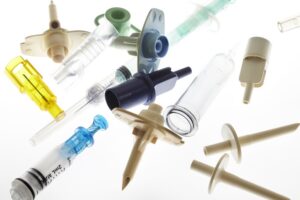
Electrical connectors and terminals are among the most common applications for the metal and plastic insert molding process. Metal contacts must be permanently and reliably bonded to a plastic housing in these cases. Medical devices use insert molding for components that combine metal structural elements with molded plastic housings or handles. These metal elements include needles or hubs.
Automotive and industrial applications rely on this approach for components requiring threaded metal inserts. These inserts will be assembled with fasteners later in the product’s life. A molded-in threaded insert holds up to repeated fastening better than threads cut directly into plastic. Consumer products use insert molding for similar reasons. It applies wherever a plastic part needs a durable metal attachment point.
Quality Control and Bond Integrity Testing
Verifying bond integrity is a core part of quality control for insert-molded components. A visually acceptable part can still have a weak or incomplete bond between the insert and the surrounding plastic. Pull testing, torque testing, and cross-sectional inspection are all methods used to confirm that retention features are performing as designed.
First article inspection for insert-molded parts should verify both the plastic dimensions and the insert’s final position within the part. Insert placement tolerances stack with molding tolerances in ways that require dedicated inspection planning. Suppliers should have documented inspection procedures specific to insert-molded components. Standard plastic-only inspection criteria are not sufficient. ISO 9001 quality systems provide the framework for documented inspection in non-regulated programs. ISO 13485 applies to medical device insert molding programs specifically.
Advantages Over Secondary Assembly
Combining metal and plastic in a single molded step reduces the assembly operations, handling, and potential failure points. This is compared to molding a plastic part and later pressing or bonding a metal component into it. The metal and plastic insert molding process eliminates a separate assembly station, the fixtures it requires, and the labor associated with a manual or semi-automated assembly process.
This consolidation also improves consistency. The bond between insert and plastic forms under controlled molding conditions. It does not depend on an operator correctly executing a secondary assembly step. For programs with meaningful production volume, the reduction in handling steps often outweighs the additional tooling complexity that insert molding requires upfront.
Why Hi-Rel Plastics Provides Reliable Insert Molding
Hi-Rel Plastics & Molding offers metal and plastic insert molding process capabilities backed by engineering support during design. Tooling is built to accommodate manual or automated insert placement. Quality inspection procedures are specific to insert-molded components. The company works across medical, electronics, and industrial applications. A durable bond between metal and plastic is essential to part performance in all of these.
Hi-Rel’s ability to combine insert molding with other secondary operations and assembly steps under one quality system gives customers a single accountable partner. This applies to components that require more than standard plastic molding alone. That integration simplifies sourcing for programs that would otherwise require coordinating multiple suppliers.
Ready to Source Insert Molding for Your Program?
The metal and plastic insert molding process offers a reliable way to combine metal and plastic into a single component. Success depends on material compatibility, retention feature design, and tooling built specifically to handle insert placement. Engaging an experienced supplier early in the design process helps avoid bond integrity issues. These are expensive to correct after tooling is complete.
Hi-Rel Plastics & Molding welcomes inquiries from engineers and procurement professionals evaluating this process for an upcoming program. Visit hirelplastics.com to share your part requirements and discuss how Hi-Rel’s capabilities can support your project.