The Injection Blow Molding Process produces hollow plastic parts through a two-stage process that starts with injection molding a preform and finishes by inflating that preform into its final shape inside a blow mold. This approach differs from extrusion blow molding, which forms a continuous tube of plastic rather than a discrete injection-molded preform, and the difference in starting point gives this process distinct advantages for certain part types.
This article looks closely at how injection blow molding works, the materials and tooling it requires, and where it fits compared to other blow molding methods. The goal is to help engineers and procurement professionals understand when this specific process is the right choice for a hollow plastic component.
What the Injection Blow Molding Process Is
The Injection Blow Molding Process is a manufacturing process that produces hollow parts, most commonly small precision containers, by first injection molding a preform around a core rod and then transferring that preform to a blow mold where compressed air inflates it into its final shape. The core rod carries the preform between stations, keeping the neck finish and any threaded features accurately formed throughout the process.
Because the preform itself is injection molded, this two-stage process produces parts with more consistent wall thickness and more precise neck geometry than extrusion-based blow molding methods. This precision is the main reason the process is selected over alternatives for applications where dimensional accuracy at the neck or opening matters most.
How the Injection Blow Molding Process Works
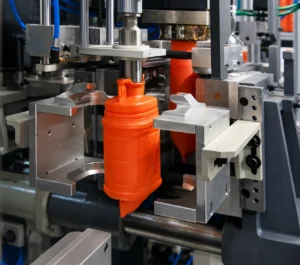
A typical Injection Blow Molding Process cycle moves through three stations built around a rotating or shuttle-type core rod system. At the first station, molten plastic is injected around the core rod to form the preform, similar to a standard injection molding shot but shaped to become the starting point for inflation rather than a finished part.
The core rod then carries the still-warm preform to the second station, where it is enclosed in a blow mold and inflated with compressed air to take the shape of the final part. At the third station, the finished part is ejected from the core rod, which then returns to the first station to begin the cycle again. This continuous, integrated cycle is what distinguishes the process from processes requiring the preform to be reheated in a separate step.
Materials Used in the Injection Blow Molding Process
Polyethylene, polypropylene, and PET are among the most common materials used in the process, selected based on the clarity, chemical resistance, and barrier properties the application requires. PET in particular is widely used for applications where transparency and a precise neck finish are both important, such as small pharmaceutical or cosmetic containers.
Material selection for the Injection Blow Molding Process must account for how the resin behaves during the brief window between preform formation and inflation, since the material needs to retain enough heat and stretch characteristics to inflate cleanly at the second station without cooling too much between steps. This timing sensitivity is one of the process considerations that sets it apart from other blow molding methods.
Precision Advantages for Neck Finish and Wall Thickness
The core rod helps control neck and opening geometry throughout the Injection Blow Molding Process. It maintains this control from the first station through ejection. This supports consistent dimensions and precise neck features. The process works well for containers with threaded closures, dispensing pumps, and other precise cap or fitment connections.
Wall thickness can also be more uniform than with extrusion blow molding. The preform forms under injection molding conditions, which gives manufacturers greater control over material distribution before inflation. For small, precision containers, this uniformity translates into more consistent performance and appearance across a production run.
Tooling and Core Rod Considerations
Tooling for the Injection Blow Molding Process includes the injection mold that forms the preform, the blow mold that shapes the final part, and the core rods that carry the part between stations, all of which must be dimensionally coordinated to work together through the full cycle. Core rod design is particularly important, since any inconsistency in the rods used across multiple cavities can introduce part-to-part variation.
Because this tooling is more complex than single-mold processes, the upfront investment is generally higher, making the process better suited to programs with production volumes that justify the multi-station setup. Suppliers experienced in injection blow molding can help evaluate whether a program’s expected volume supports this investment.
Injection Blow Molding Process Compared to Extrusion Blow Molding
Extrusion blow molding forms a continuous plastic parison. The process captures and inflates the parison between two mold halves. This approach suits larger parts and complex, asymmetric shapes. Examples include parts with handles or offset necks.
The Injection Blow Molding Process generally suits smaller, more precise containers. It offers greater control over neck accuracy and wall thickness.
The choice depends on part size, required precision, and production volume. Some parts also have size or geometry constraints that make extrusion blow molding more practical. A knowledgeable supplier should recommend the process based on the specific part. The supplier should not default to the process it already runs.
Applications Across Industries
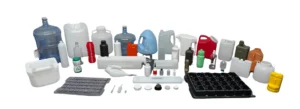
Pharmaceutical and nutraceutical packaging represents one of the largest application areas for the Injection Blow Molding Process, where precise neck finishes for child-resistant closures and dropper fitments are essential. Cosmetic and personal care containers also rely heavily on the process for small bottles requiring precise pump or spray fitment.
Food and beverage applications use injection blow molding for small single-serve containers, while medical and laboratory applications use the process for specimen containers and other small vessels requiring consistent, precise geometry. Across these industries, the common requirement is a small container where neck precision matters more than overall part volume.
Quality Control and Dimensional Consistency
Because the core rod carries the part through every station of the cycle, dimensional inspection typically focuses on neck finish accuracy, wall thickness distribution, and any variation introduced by differences between individual core rods across a multi-cavity tool. First article inspection should verify these dimensions against drawing tolerances before a program moves into full production.
Ongoing process monitoring tracks cycle time, mold temperature, and air pressure during inflation. Drift in any of these parameters can affect wall thickness. It can also cause cosmetic defects, even when overall part dimensions remain within tolerance.
Suppliers with mature programs document these parameters as part of their standard production record. The FDA’s guidance on process validation provides broader context on maintaining documented and controlled manufacturing processes for regulated applications.
Why Hi-Rel Plastics Supports Injection Blow Molding Programs
Hi-Rel Plastics & Molding evaluates the Injection Blow Molding Process alongside its other molding capabilities. This helps customers choose the right process for their container requirements. The engineering team reviews part geometry, neck finish requirements, and production volume. The team then recommends injection blow molding or another suitable process.
Hi-Rel supports multiple molding processes under one quality system. Customers can therefore compare process tradeoffs with one point of contact. The recommendation does not depend on which equipment a supplier happens to own. That objectivity is valuable during the earliest stages of a new container program.
Ready to Explore the Injection Blow Molding Process for Your Program?
The Injection Blow Molding Process offers precision for small containers with demanding neck finish and wall thickness requirements. However, it does not suit every hollow part. Evaluate the part size, geometry, and expected production volume early. This helps determine whether injection blow molding or another process will deliver the right result.
Hi-Rel Plastics & Molding welcomes inquiries from engineers and procurement professionals evaluating the Injection Blow Molding Process for an upcoming container program. Contact Hi-Rel Plastics & Molding to share your part requirements and discuss how Hi-Rel’s capabilities can support your project.