What plastics are used in medical devices? The most common include polycarbonate, polypropylene, polyethylene, PVC, ABS, PEEK, and liquid silicone rubber. Each one fits a different mix of strength, clarity, sterilization, and patient-contact needs. The right choice depends on how the device is used, cleaned, and regulated.
We have molded plastic parts in Riverside, California, since 1984. Over 40+ years, we have helped medical device teams compare resins, test samples, and move parts into production. This guide answers the questions engineers and buyers ask most about medical plastics.
Plastics are light, durable, and cost-effective at volume. Many grades are clear, sterilizable, and chemically resistant. They can also be molded into complex shapes with tight tolerances.
These traits make plastics suitable for both single-use and reusable devices. Single-use items reduce cross-contamination risk. Reusable instruments need resins that survive repeated cleaning and sterilization.
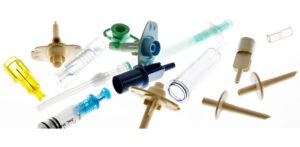
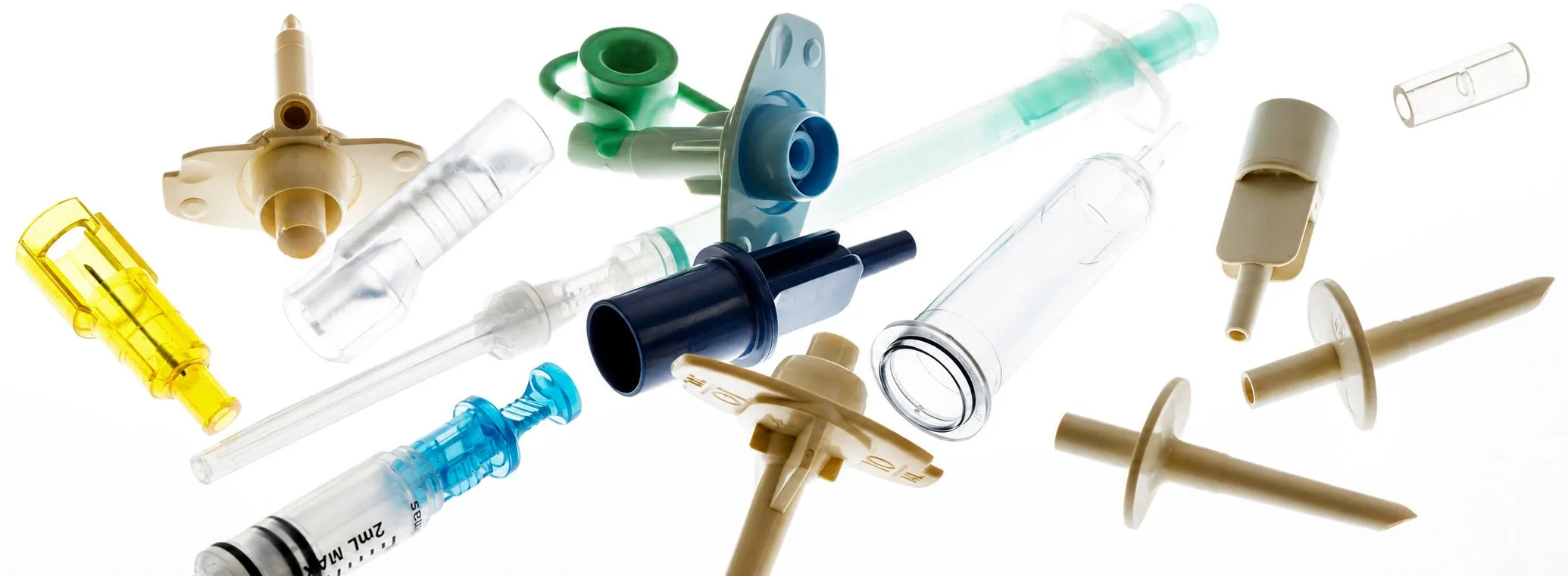
Common examples include syringes, catheters, IV components, diagnostic cartridges, inhalers, surgical instrument handles, and device housings. Implants and drug delivery systems also use specialized grades.
The resins below cover most medical molding programs. Each has clear strengths and known limitations.
Polycarbonate is clear, tough, and impact resistant. It is used for housings, connectors, luer fittings, and fluid-path components. Some grades yellow under gamma radiation, so gamma-stabilized grades are often specified.
Polypropylene is low cost and chemically resistant. It is common in syringes, containers, and closures. Standard grades can turn brittle after gamma sterilization, so radiation-stabilized grades are available.
Polyethylene appears in tubing, bottles, packaging, and closures. Ultra-high-molecular-weight polyethylene (UHMWPE) is used in joint replacement bearing surfaces. It offers strong wear resistance.
PVC is flexible and clear when plasticized. It is widely used for tubing and fluid bags. Plasticizer choice draws regulatory attention, so many programs now review alternative plasticizers or materials.
ABS is rigid, easy to mold, and takes a good surface finish. It is common in equipment housings and handheld device enclosures. It has limited resistance to some disinfectants.
PEEK is a high-performance resin with strong heat and chemical resistance. It tolerates repeated steam sterilization. Implant-grade PEEK is used in spinal and orthopedic devices.
These resins handle repeated autoclave cycles. They are common in reusable instrument handles, sterilization trays, and fluid-handling parts. They offer good clarity in amber tones.
COC and COP offer glass-like clarity and low extractables. They are used for vials, prefilled syringes, diagnostic cartridges, and microfluidic devices.
Acetal has low friction and good dimensional stability. It suits gears, clips, and mechanisms in inhalers and injection pens. It does not tolerate gamma radiation well.
TPEs and TPUs provide soft-touch grips, seals, and flexible tubing. TPU is common in catheter shafts because it balances flexibility and strength.
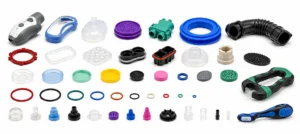
LSR is soft, heat resistant, and well characterized for biocompatibility. It is used for seals, valves, masks, and wearable components. It tolerates steam, EtO, and gamma sterilization.
The table below summarizes common uses and key considerations.
| Plastic | Common Medical Uses | Key Consideration |
| Polycarbonate | Housings, connectors, luers | Choose gamma-stable grades if radiation-sterilized |
| Polypropylene | Syringes, containers, closures | Standard grades may embrittle under gamma |
| Polyethylene / UHMWPE | Tubing, packaging, joint bearings | Wear resistance varies by grade |
| PVC | Tubing, fluid bags | Plasticizer selection under review |
| ABS | Device housings | Limited disinfectant resistance |
| PEEK | Implants, reusable parts | Higher material cost |
| PSU / PPSU | Reusable instruments, trays | Handles repeated autoclaving |
| COC / COP | Vials, diagnostics, microfluidics | Low extractables, high clarity |
| Acetal | Gears, clips, mechanisms | Poor gamma resistance |
| TPE / TPU | Grips, seals, catheter tubing | Bonding to rigid parts needs testing |
| LSR | Seals, valves, masks | Higher tooling cost |
Implants use a small, tightly controlled group of materials. Examples include implant-grade PEEK, UHMWPE, and long-term implant silicone. Many resin suppliers restrict standard grades from implant use, so supplier approval matters before design work begins.
Material selection involves trade-offs. Strength, clarity, chemical resistance, sterilization, and cost rarely line up perfectly in one resin.
Yes, for any part that contacts patients or fluid paths. Biocompatibility depends on the type and duration of body contact. The FDA’s guidance on ISO 10993-1 biological evaluation explains how manufacturers assess this risk.
Resin suppliers often provide test data on medical grades. The finished device still needs its own evaluation, because molding, colorants, and additives can affect results.
Each sterilization method affects plastics differently. Gamma and e-beam can discolor or embrittle some resins. Steam requires heat resistance. EtO is gentler but needs time to off-gas.
We recommend testing finished parts after the actual sterilization method. Resin data sheets are only a starting point.
Some resins crack when exposed to strong cleaning agents under stress. This is called environmental stress cracking. Housings and reusable devices need resins tested against the disinfectants used in real clinical settings.
Each resin shrinks differently as it cools. Semi-crystalline resins like polypropylene and acetal usually shrink more than amorphous resins like polycarbonate. This affects tolerances and tolerance stack-up in multi-part assemblies.
DFM feedback helps match the resin to the part’s tolerance needs before tooling begins.
Medical programs often qualify one specific grade. A change in grade, supplier, or production site can trigger retesting. Device teams should ask resin suppliers about change notification policies and long-term availability.
The material is only one part of the outcome. How the part is molded, handled, and documented matters just as much.
Many devices require molding in a controlled environment to limit particulates and bioburden. Cleanroom classes follow ISO 14644-1. The required class depends on the device’s risk and patient contact.
Our cleanroom medical injection molding runs in an ISO 7 (Class 10,000) cleanroom.
Medical molders typically operate under ISO 13485. This standard covers documentation, traceability, and change control. Resin lot traceability should connect each molded lot back to its material certification.
Ultrasonic welding, pad printing, and assembly all depend on the resin. Some resins weld well, while others need adhesives or mechanical joints. Planning secondary operations early helps avoid costly redesigns.
At Hi-Rel Plastics & Molding, we review resin options during DFM. We compare grades against sterilization, chemical exposure, tolerance, and cost requirements.
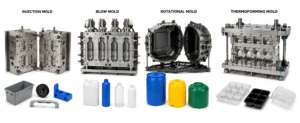
We build tooling in-house and support injection, LSR, blow, thermoforming, and rotational molding. This lets us match each part with a suitable process as well as a suitable resin. Our quality systems are certified to ISO 13485:2016, ISO 9001:2015, and AS9100 Rev D.
What plastics are used in medical devices most often?
Polycarbonate, polypropylene, polyethylene, PVC, and ABS are among the most common. PEEK, COC, polysulfone, TPU, and liquid silicone rubber are used where heat, clarity, or flexibility matter more.
Which medical plastics hold up best to gamma sterilization?
Polycarbonate, polyethylene, PEEK, and many COC grades generally tolerate gamma well. Standard polypropylene and acetal can degrade. Testing finished parts after sterilization confirms actual performance.
Does a medical plastic part always need cleanroom molding?
No. The requirement depends on device risk, patient contact, and particulate limits. Your quality team should define the cleanroom class based on the device’s risk assessment.
Can a resin grade be changed after a device is validated?
It can, but changes usually require testing and documentation under change control. Biocompatibility, sterilization, and dimensional performance may all need to be rechecked before the change is released.
How early should material selection start in a medical program?
It should start during concept design, before DFM and tooling. Early selection lets teams test biocompatibility, sterilization, and molding behavior before committing to steel.
What plastics are used in medical devices depends on contact type, sterilization, chemical exposure, and mechanical demands.
Keep these decision points in mind:
If you are comparing resins for an upcoming medical part, we are glad to review your requirements. You can reach our engineering team here, call 951-354-0258, or visit us at 7575 Jurupa Ave, Riverside, CA 92504