Liquid injection molding is a manufacturing process used to produce precision components from liquid silicone rubber and other liquid thermoset materials. Unlike conventional thermoplastic injection molding, which processes solid pellets melted into a liquid state, liquid injection molding begins with a two-component liquid system that is pumped, metered, mixed, and injected into a heated mold where it cures into a solid elastomeric part. The process produces parts with excellent flexibility, temperature resistance, biocompatibility, and sealing characteristics that are difficult or impossible to achieve with thermoplastic materials alone.
Liquid injection molding has become a critical process in medical device manufacturing, infant care products, automotive sealing systems, food and beverage equipment, and consumer electronics. The unique material properties of liquid silicone rubber — combined with the precision and repeatability of injection molding — make this process the preferred choice for applications that demand consistent performance in demanding environments. This article explains how liquid injection molding works, where it is used, and what engineering and procurement teams should understand when evaluating this process for their programs.
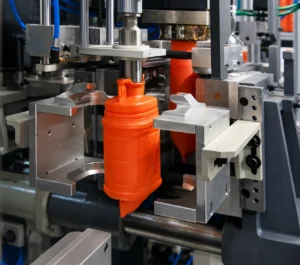
Liquid injection molding begins with a two-component liquid silicone rubber system, typically referred to as Part A and Part B. Part A contains the base silicone polymer and pigment if color is needed, while Part B contains the crosslinking agent and catalyst. The two components are stored in separate drums or containers connected to a metering system that dispenses them at a precise 1:1 ratio. The metered components pass through a static or dynamic mixer that blends them thoroughly before the combined material is injected into a closed, heated mold.
Once injected, the liquid silicone undergoes a curing reaction driven by the heat of the mold. Unlike thermoplastic molding, where parts cool and solidify in the mold, liquid injection molding parts cure — meaning the material undergoes a chemical crosslinking reaction that converts it from a liquid to a solid elastomer. Cure times depend on part geometry, material formulation, and mold temperature. After curing, the part is ejected and may undergo secondary operations such as deflashing, post-curing, or assembly. The closed-mold process and low material viscosity of liquid silicone enable production of intricate, flash-free parts with excellent dimensional consistency.
Liquid silicone rubber is distinguished by a combination of properties that thermoplastic materials cannot easily replicate. It maintains flexibility and elastic recovery across a wide temperature range, typically from minus 60 degrees Celsius to over 200 degrees Celsius. This thermal stability makes it suitable for applications exposed to extreme temperatures during use or sterilization. Liquid silicone rubber is chemically inert, resistant to UV degradation, and inherently repels water and many chemicals. These properties contribute to long service life in demanding environments.
Biocompatibility is a primary reason liquid silicone rubber is widely used in medical device applications. Medical-grade liquid silicone rubber formulations are evaluated against ISO 10993 for cytotoxicity, sensitization, and other biological endpoints. Many formulations also carry USP Class VI certification. The material is compatible with gamma irradiation, ethylene oxide, and autoclave sterilization, making it suitable for single-use and reusable medical components. Food-contact grades of liquid silicone rubber are available and certified for use in food processing, infant feeding, and beverage equipment.
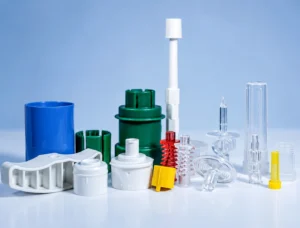
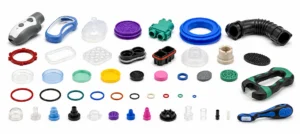
Medical device manufacturing represents the largest and most demanding application space for liquid injection molding. Components produced through this process include seals, gaskets, valves, diaphragms, tubing connectors, catheter components, respiratory masks, ear protection, implantable components, and drug delivery device parts. The combination of biocompatibility, flexibility, and sterilization compatibility makes liquid silicone rubber the material of choice for components that contact bodily fluids or tissues or that require reliable sealing over the life of the device.
Outside of medical applications, liquid injection molding is used to produce infant bottle nipples, pacifiers, and feeding accessories — products where biocompatibility and safety are paramount. Automotive applications include seals, grommets, connector boots, and gaskets for engine and electrical systems that must perform across a wide temperature range. Consumer electronics manufacturers use liquid injection molding to produce overmolded cables, waterproof seals, and flexible housing components. The process is also used in food processing equipment, lighting, and industrial sealing applications.
Liquid injection molding tooling differs from thermoplastic mold tooling in several important ways. Because liquid silicone has very low viscosity, molds for liquid injection molding must be precision-machined with extremely tight parting line tolerances to prevent flash. Even small gaps in the mold parting surface can allow the liquid material to escape, resulting in thin silicone membranes — called flash — that must be removed in post-processing. Minimizing flash through precise tooling reduces labor cost and cycle time.
Molds for liquid injection molding are heated rather than cooled, since the silicone cures under heat. Tool temperature is a critical process parameter that affects cure time, part properties, and production throughput. Molds are typically constructed from hardened steel or stainless steel to withstand the repeated thermal cycling of the curing process. Multi-cavity tooling is used for high-volume applications to maximize production output per cycle. The significant investment in precision tooling for liquid injection molding is justified by the material cost savings, consistency, and throughput advantages the process provides over alternative methods such as compression molding or transfer molding.
Liquid injection molding offers several process advantages over high-consistency rubber (HCR) compression molding and transfer molding for silicone components. The liquid material system is compatible with automated injection equipment, enabling faster cycle times, better process consistency, and lower labor costs than manual compression molding. Closed-mold injection eliminates the exposure of uncured material to the environment, reducing contamination risk in cleanroom applications. Material waste is also reduced compared to open-mold processes, since the metered injection system delivers precise shot volumes with minimal runner waste in cold-runner tooling configurations.
Cold-runner systems for liquid injection molding allow the material in the runner and gate to remain uncured between cycles, eliminating waste and reducing material costs over the life of the program. Valve-gate cold-runner systems provide the most efficient material utilization and are preferred for high-volume production of small, complex parts. The combination of automated injection, controlled curing, and efficient material delivery makes liquid injection molding one of the most cost-effective processes for high-volume silicone component production.
Many liquid injection molding applications — particularly in the medical device and pharmaceutical industries — require production in a cleanroom environment. Liquid silicone rubber’s low viscosity and tendency to attract particulates make contamination control during production particularly important. Cleanroom liquid injection molding integrates the controlled environment protocols of ISO-classified cleanrooms with the liquid injection molding process to produce parts that meet both dimensional and cleanliness requirements.
Cleanroom liquid injection molding facilities typically operate at ISO Class 7 or ISO Class 8 classification levels. Personnel gowning, HEPA-filtered air handling, and controlled material introduction protocols are implemented throughout the production environment. For components destined for sterile medical applications, cleanroom production followed by validated sterilization provides the cleanliness and sterility assurance required by FDA and international regulatory frameworks. Suppliers offering cleanroom liquid injection molding for regulated applications should maintain ISO 13485 quality systems and documented validation protocols.
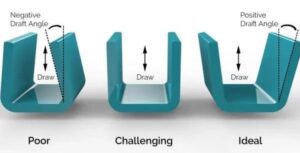
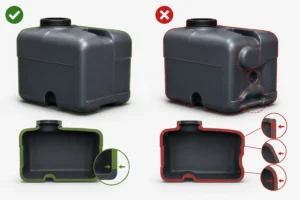
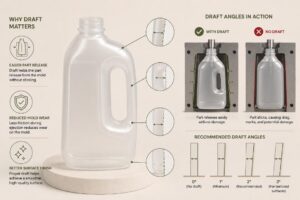
Designing parts for liquid injection molding requires attention to features that affect molding, curing, and ejection. Wall thickness uniformity promotes even curing and reduces the risk of surface defects or dimensional variation. Draft angles on vertical walls facilitate clean part ejection and reduce the stress applied to the part during mold opening. Gate location affects how the material fills the cavity and where knit lines form — in structural or sealing applications, knit lines should be positioned in non-critical areas of the part geometry.
Undercuts are generally more feasible in liquid silicone rubber parts than in rigid thermoplastic parts because the elastomeric nature of the cured material allows it to be stretched over mold features during ejection. However, extreme undercuts still require design consideration to avoid tearing or distortion during demolding. Early engagement between the component design team and the liquid injection molding supplier allows for design optimization that improves moldability, reduces tooling complexity, and enhances part consistency throughout production.
Hi-Rel Plastics & Molding’s capabilities include liquid injection molding for medical, industrial, and specialty applications requiring the unique performance characteristics of liquid silicone rubber. The company’s experience with liquid silicone materials, precision tooling, and cleanroom manufacturing environments positions it to support customers across a range of regulated and technically demanding programs. Hi-Rel’s quality systems and documentation practices align with the expectations of medical device OEMs and other regulated-industry customers who require robust traceability and process control from their liquid injection molding suppliers.
Hi-Rel’s team engages with customers during the design phase to provide input on part geometry, material selection, tooling design, and process parameters — insights that translate into better parts and more efficient production. Whether a program requires a small development build or high-volume commercial production, Hi-Rel’s liquid injection molding capabilities support the full product lifecycle from prototyping through validated production.
Liquid injection molding is a highly capable process for applications that require the performance characteristics of silicone rubber combined with the dimensional precision and repeatability of injection molding. If your program involves medical components, sealing applications, food-contact parts, or any other application where flexibility, biocompatibility, or temperature resistance is critical, liquid injection molding may be the right solution. The key is engaging with a supplier who has the process expertise, tooling capability, and quality systems to support your program from development through production.
Hi-Rel Plastics & Molding welcomes inquiries from engineers and procurement teams exploring liquid injection molding for new programs or seeking a qualified alternative supplier for existing production. Visit hirelplasticsm.com to discuss your project requirements, material needs, and timeline with the Hi-Rel team.