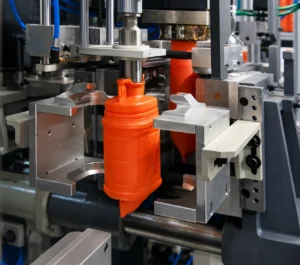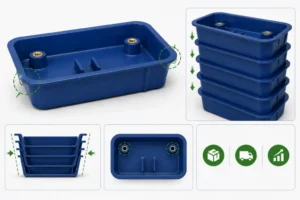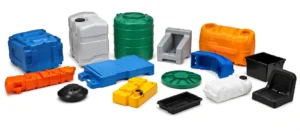
This manufacturing approach heats flat thermoplastic sheet until pliable. Film stock gets formed similarly. The material takes on three-dimensional shapes. Vacuum, pressure, or mechanical force accomplishes this. Resulting parts include trays, housings, and enclosures. Packaging and panels get produced. Functional components emerge from flat starting material. Tooling costs run lower than injection molding. Dimensional accuracy remains good. Design flexibility proves valuable. Broad thermoplastic material access is available. Packaging, medical device, and aerospace interior applications use it. Automotive and industrial equipment manufacturers rely on it. Explore Hi-Rel’s thermoforming capabilities to see this versatile manufacturing method.
Companies evaluating this process benefit from knowledge. Teams evaluate new applications carefully and optimize existing manufacturing processes for greater efficiency.Understanding how thermoforming services sheet forming process works matters. Economic advantages versus injection molding become clear. Teams address design and material considerations that affect part quality. This comprehensive overview covers process variants thoroughly. Materials get explained clearly. Tooling options receive attention. Applications across industries get addressed. Supplier evaluation criteria emerge. Contact Hi-Rel to discuss your specific needs.
Flat thermoplastic sheet starts the journey. The material clamps into a frame. Radiant or convective heaters warm it. Forming temperature varies by resin. The material becomes soft and pliable. Fully molten states don’t occur. Polystyrene forms at lower temperatures. Engineering resins like polycarbonate need higher heat. PETG requires different parameters. Each resin has an optimal forming window. Consistency requires understanding and controlling temperature. Once reaching temperature, the sheet moves over the mold. Vacuum, pressure, or combination forms the part.
Vacuum forming represents the most common variant. Softened sheet drapes over a mold. Vacuum applies between sheet and surface. Plastic pulls into contact with the mold. Pressure forming adds compressed air. Air applies to the sheet top. Vacuum pulls from below simultaneously. Greater forming pressure results. Sharper detail emerges. Tighter corners form. Better surface reproduction occurs. Twin-sheet thermoforming forms two sheets simultaneously. Sheets fuse together creating hollow parts. Structural integrity improves. Process variant selection depends on geometry. Required surface detail matters. Material selection influences choice. Production volume affects decision.
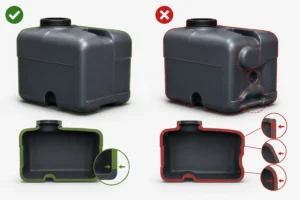
Thermoforming services sheet forming process and injection molding serve different applications. The right choice depends on several factors. Tooling cost represents the primary differentiator. Thermoforming molds cost considerably less. Injection molds cost significantly more. Thermoforming molds use aluminum, wood, or composites. Extreme injection molding pressures don’t apply. Large parts become economically attractive. Low to medium production volumes work well. Design iterations prove manageable. Injection molding excels at complex geometry. Three-dimensional features get produced. Tight tolerances stay achievable. Ribs, bosses, undercuts, and threads work. Snap-fits function reliably. Thermoforming produces sheet-formed components. Wall thickness varies based on forming. Specific wall thickness locations face limitations. Functional features may not work. Very tight tolerances challenge thermoforming. Large surface area parts suit this process. Relatively shallow draws work well. Acceptable wall thickness variation proves acceptable.
This manufacturing method supports broad thermoplastic ranges. Sheet or film stock must be available. ABS ranks among most widely thermoformed resins. Toughness distinguishes it. Good forming characteristics help. Fine surface detail achieves. Equipment housings use it. Automotive interior panels benefit. Medical device enclosures rely on it. Manufacturers produce industrial equipment covers. Polycarbonate thermoforms for impact resistance. Optical clarity becomes possible. Aircraft windows use it. Safety shields depend on it. Transparent enclosures get made. PETG serves medical and retail packaging. Clarity matters greatly. Forming ease helps. FDA compliance is achievable. Food-contact applications work well. HDPE and LDPE sheet therforms for industrial trays.
Agricultural applications benefit. Chemical-resistant components emerge. Polypropylene increasingly therforms. Food packaging applications grow. Industrial uses expand. Chemical resistance helps. Food contact compliance matters. Engineering resins including PEEK, PEI, and PEKK therform. Aerospace interior applications demand them. Light weight helps. High temperature resistance proves essential. Flammability compliance is mandatory. Material selection involves property evaluation. Mechanical performance matters. Chemical resistance proves important. Regulatory compliance is required. Sheet form availability constrains choices. Process compatibility affects selection.
Tooling proves significantly less expensive. Production timing runs faster. Comparable part sizes cost less. Simple prototype tooling gets machined quickly. Wood, medium-density fiberboard, and tooling board work. Days suffice rather than weeks. Rapid design iteration becomes possible. Early product development benefits. Production aluminum tooling serves commercial programs. Better surface finish emerges. Dimensional accuracy improves. Thermal management enhances. Hundreds of thousands of cycles prove durable.
Thermoforming molds are either male or female. Male molds form over the outside. Female molds form into the inside. Male molds define interior surfaces. Interior dimensions become critical. Female molds define exterior surfaces. Exterior dimensions matter. Appearance gets priority. Mold type choice affects dimensions. Wall thickness distribution varies. Vacuum holes enable the process. Small-diameter channels drill through surfaces. Vacuum pulls sheet into contact. Placement and diameter affect completion. Surface quality depends on design.
Medical device packaging uses thermoforming extensively. Blister packs and clamshell packaging get produced. Thin-gauge thermoforming serves this market. Thinner sheet or film stock runs. High speeds occur on continuous web. Packaging maintains product sterility. Sterilization processes get survived. Ethylene oxide sterilization works. Gamma irradiation compatibility matters. Tamper evidence gets built in. PETG, PVC, and Tyvek-lidded trays serve. Standard formats work reliably.
Beyond packaging, these services produce housings. Equipment panels get made. Procedure trays support workflows. Component carriers facilitate assembly. Sterilization workflow support proves valuable. Medical thermoforming requires quality standards. ISO 13485 quality systems apply. Material traceability becomes mandatory. Process validation is required. Suppliers must support documentation. Regulatory compliance matters. Medical device industry standards govern. Manufacturing process expertise alone doesn’t suffice. ISO 13485 standards define requirements clearly.
Thermoforming services play important roles. Aerospace interior manufacturing benefits greatly. Large panels get produced. Overhead bins get formed. Galley components emerge. Seat components get made. Pressure forming of high-performance thermoplastics applies. Light weight attracts designers. Design flexibility proves valuable. Tooling costs run lower. Aircraft interiors feature large dimensions. Production volumes remain moderate. Materials such as PEI, PEEK, and flame-retardant ABS therform. FAA flammability requirements get met. FAA regulations govern compliance strictly.
Industrial equipment manufacturers use this process. Machine covers get produced. Access panels and enclosures emerge. Protective guards protect workers. Large surface area suits thermoforming. Adequate structural integrity proves achievable. Cost-effective production becomes reality. Agricultural equipment incorporates thermoformed panels. Construction machinery uses them. Transportation vehicles feature them. Material handling systems rely on them. Large surface area dimensions work well. Cost effectiveness drives adoption. Injection molding or sheet metal costs more. Typical market volumes favor thermoforming. Material flexibility enables solutions. Tooling cost advantage matters. Design freedom benefits manufacturers.
Thermoformed parts require trimming post-forming. Excess sheet material — flash and web — extends beyond boundaries. Trimming removes it completely. CNC routers accomplish this. Die cutting works for some parts. Hand routing serves specific applications. Part complexity affects method choice. Production volume influences approach. CNC trimming provides highest accuracy. Production programs benefit most. Trimmed dimensions prove critical. Secondary operations follow trimming. Drilling, bonding, and welding happen. Painting and printing get applied. Assembly and packaging complete solutions. In-house secondary operations provide completeness. Supply chain complexity reduces. Multiple vendor management diminishes.
Surface finishing options enhance appeal. In-mold texture gets applied. Mold surface texturing accomplishes this. Post-forming painting adds finish. Printing applies graphics. Coating provides protection. Pressure formed parts achieve detail. Sharp mold-defined textures emerge. Detail levels approach injection molding. Customer-facing applications work well. Appearance matters for visibility. UV-stabilized cap layers improve results. Painted surface finishes enhance aesthetics. UV resistance improves. Chemical resistance increases. Base forming material gets enhanced.
Hi-Rel Plastics & Molding offers comprehensive capabilities. Medical, industrial, and aerospace customers get served. Commercial market applications receive attention. Formed plastic components suit thermoforming better. Injection molding doesn’t compare always. Material knowledge proves essential. Tooling capabilities span applications. Quality systems support programs. Regulatory requirements get met. Hi-Rel’s team engages during design. Material selection gets input. Tooling approach receives guidance. Trimming strategies get discussed. Secondary operations planning happens. Efficient, repeatable production emerges. Multi-process capability adds value. Thermoforming and injection molding both available. Thermoformed enclosure shells pair with injection-molded components. Internal components and brackets get integrated. Supplier management simplifies. Single manufacturing relationship spans complete product. Plastic component needs all get addressed. Southern California location serves the region. Quality-driven culture supports excellence.
This manufacturing approach offers compelling advantages. Lower tooling costs attract buyers. Large part capability proves valuable. Broad material flexibility enables solutions. Part design characteristics align with process. Large panels and enclosures suit thermoforming. Trays and packaging work well. Relatively simple geometry performs best. Acceptable wall thickness variation works. Economic advantages emerge versus injection molding. Evaluating thermoforming requires supplier expertise. Part geometry gets reviewed carefully. Material requirements receive attention. Teams analyze production volume and address quality documentation requirements. Genuine thermoforming experience matters most. Suppliers with deep knowledge help best.
Hi-Rel Plastics & Molding welcomes inquiries. Engineers and procurement professionals should connect. New program evaluation gets support. Existing program optimization happens. Visit the company website for quotes. Connect with the Hi-Rel team directly. Discuss thermoforming services sheet forming process requirements. Timeline needs get addressed. Quality documentation requirements emerge. Custom solutions fit your specific application perfectly.