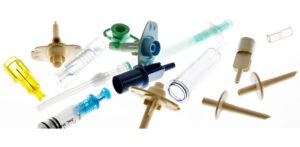
Can injection molded medical parts be sterilized? Yes, most can, but the method must match the resin and the part design. Ethylene oxide, gamma radiation, electron beam, and steam are the most common options. Each one affects plastics differently, so material choice and sterilization planning should happen together.
We have molded plastic parts in Riverside, California, since 1984. Over 40+ years, we have helped medical device teams select resins that hold up to their sterilization method. This guide answers the questions engineers and buyers ask most.
Why Do Molded Medical Parts Need Sterilization?
Many medical devices contact blood, tissue, or fluids that reach patients. Sterilization kills microorganisms that could cause infection. Without it, even a clean part can carry harmful bioburden.
Does Molding Itself Make Parts Sterile?
No. Molding temperatures are high, but parts pick up contamination during ejection, handling, and packaging. A separate, validated sterilization step is still required.
Who Usually Sterilizes Molded Parts?
In most programs, the device manufacturer or a contract sterilizer handles sterilization. The molder supplies clean, well-documented parts with controlled bioburden. That is why molding environment and packaging matter so much.
How Does Cleanroom Molding Help?
Cleanroom molding limits particles and bioburden before sterilization. Lower starting bioburden supports a more reliable sterilization process. Our cleanroom medical injection molding runs in an ISO 7 (Class 10,000) cleanroom.
What Are the Main Sterilization Methods?
Four methods cover most molded medical parts. Each one has clear strengths and known material limits.
What Is Ethylene Oxide (EtO) Sterilization?
EtO is a low-temperature gas process. It works well for heat-sensitive plastics and complex assemblies. Parts need aeration time afterward to remove gas residuals.
Packaging must let the gas in and out. Breathable materials such as medical-grade spunbonded polyolefin are common.
What Is Gamma Radiation Sterilization?
Gamma radiation penetrates deep into packaged products. It leaves no chemical residue, and parts can ship soon after processing. However, it can discolor or embrittle some resins.
What Is Electron Beam (E-Beam) Sterilization?
E-beam uses high-energy electrons instead of gamma rays. Processing is fast, often minutes rather than hours. It penetrates less deeply, so it suits lower-density products and smaller packages.
What Is Steam (Autoclave) Sterilization?
Steam uses heat and pressure, typically around 121°C to 134°C. It is common for reusable instruments in hospitals. Only heat-resistant resins survive repeated steam cycles without warping.
Are There Other Methods?
Vaporized hydrogen peroxide is a growing low-temperature option. Dry heat is used less often for plastics because of the high temperatures involved.
How Do Common Medical Plastics Handle Each Method?
Sterilization methods and material compatibility must be reviewed together. The table below gives general guidance. Actual results depend on the specific grade, dose, and number of cycles.
| Material |
EtO |
Gamma / E-Beam |
Steam |
| Polycarbonate (PC) |
Good |
Fair (gamma-stable grades preferred) |
Limited cycles |
| Polypropylene (PP) |
Good |
Fair (radiation-stabilized grades needed) |
Good at lower temperatures |
| Polyethylene (HDPE) |
Good |
Good |
Limited |
| PVC |
Good |
Fair (may discolor) |
Poor |
| ABS |
Good |
Fair |
Poor |
| Acetal (POM) |
Good |
Poor |
Fair |
| PEEK |
Good |
Good |
Good |
| PSU / PPSU |
Good |
Good |
Good |
| COC / COP |
Good |
Good |
Grade dependent |
| Liquid Silicone Rubber (LSR) |
Good |
Good |
Good |
Resin suppliers publish sterilization data for many medical grades. We use that data as a starting point, then confirm performance on finished parts.
Can Injection Molded Medical Parts Be Sterilized More Than Once?
Some can, but repeated cycles add cumulative stress. Reusable instruments must survive many steam cycles. Single-use devices may still face resterilization if a package is opened or damaged.
What Happens to Plastics After Repeated Sterilization?
Repeated gamma doses can increase brittleness. Repeated steam cycles can cause hydrolysis, warping, or crazing in some resins. Testing should match the maximum number of cycles the device will see.
Which Resins Handle Repeated Cycles Best?
PEEK, PPSU, and LSR generally handle repeated steam well. Polycarbonate may tolerate a limited number of cycles before clouding or cracking. Reusable device programs should test the worst case, not the typical case.
How Does Part Design Affect Sterilization?
Design choices made during DFM can help or hurt sterilization results. Reviewing them early avoids costly redesigns after validation.
Does Molded-In Stress Matter?
Yes. High residual stress can lead to cracking after sterilization or chemical exposure. Uniform walls, generous radii, and proper processing reduce molded-in stress.
Can Dimensions Change After Sterilization?
They can, especially after steam. Heat can relax molded-in stress and shift dimensions slightly. Tight tolerances and tolerance stack-up should be checked on sterilized parts, not just as-molded parts.
Can Injection Molded Medical Parts Be Sterilized After Assembly?
Yes, and this is common. However, EtO gas must reach every surface, so assemblies need open paths. For radiation, dense or thick areas need dose mapping to confirm even exposure.
Do Secondary Operations Affect Sterilization?
They can. Ultrasonic welds, adhesives, and printed inks must all survive the chosen method. Weld strength and print adhesion should be tested after sterilization.
Which Standards and Regulations Apply?
Sterilization is a regulated, validated process. Manufacturers must show that it works consistently.
How Does the FDA View Sterilization Methods?
The FDA recognizes several established sterilization methods for medical devices, including EtO, radiation, and steam. Device manufacturers must validate the method they choose for each product.
What Quality System Should the Molder Have?
Medical molders typically operate under ISO 13485. This standard covers process validation, traceability, contamination control, and change control. Those controls help keep bioburden consistent from lot to lot.
How Do Material Changes Affect a Validated Process?
A change in resin grade, colorant, or supplier can alter sterilization results. Changes should go through formal change control. Retesting may be needed before the change is released.
What Questions Should You Ask Your Molder?
These questions help customers plan sterilization early:
- Which sterilization method and dose will the device use?
- Does the chosen resin have sterilization data for that method?
- How will bioburden be controlled during molding and packaging?
- Will finished parts be tested after sterilization for dimensions and strength?
- Do welds, prints, and adhesives survive the chosen method?
- Who owns the molds, and how are tooling changes controlled?
How We Support Sterilizable Parts at Hi-Rel Plastics
At Hi-Rel Plastics & Molding, we review sterilization needs during DFM and material selection. We compare resin options against the method, dose, and number of cycles.
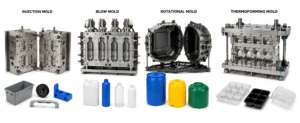
We mold medical components in an ISO 7 (Class 10,000) cleanroom. And we build tooling in-house and support injection, LSR, blow, thermoforming, and rotational molding. Our quality systems are certified to ISO 13485:2016, ISO 9001:2015, and AS9100 Rev D.
Frequently Asked Questions
Can injection molded medical parts be sterilized with gamma radiation?
Many can. Polyethylene, PEEK, PSU, and LSR generally tolerate gamma well. Standard polypropylene and acetal can degrade, so radiation-stabilized grades or another method may be needed.
Which sterilization method is gentlest on plastics?
EtO is generally gentlest because it runs at low temperatures without radiation. It requires aeration time and breathable packaging, which can affect lead times and packaging design.
Does cleanroom molding replace sterilization?
No. Cleanroom molding reduces particles and bioburden, but it does not kill microorganisms. Parts that must be sterile still require a validated sterilization process.
Should material selection happen before or after choosing a sterilization method?
Both should be decided together, early in design. The sterilization method narrows resin choices, and resin choice can rule out certain methods. Deciding together avoids costly retesting later.
Do secondary operations need sterilization testing too?
Yes. Ultrasonic welds, pad printing, and adhesives can weaken or change after sterilization. Testing finished assemblies confirms that every feature still meets its requirements.
Key Takeaways
Can injection molded medical parts be sterilized? Yes, when the resin, design, and method are chosen together and validated.
Keep these decision points in mind:
- Ask which method and dose the device will use. This decision narrows resin choices quickly.
- Ask how finished parts will be tested after sterilization. Dimensions, strength, and welds can all change.
- Ask how bioburden is controlled before sterilization. Clean molding and packaging support reliable results.
If you are planning a sterilizable medical part, we are glad to review your material and design options. You can reach our engineering team here, call 951-354-0258, or visit us at 7575 Jurupa Ave, Riverside, CA 92504.