What is ISO 13485 certification for medical device molding? It is third-party confirmation that a molder runs a quality management system built for medical devices. The system covers documentation, risk management, process validation, traceability, and corrective action. For device companies, it is usually the first filter when choosing a plastics supplier.
We have molded plastic parts in Riverside, California, since 1984. Over 40+ years, we have worked with medical device teams through audits, validations, and supplier qualifications. This guide answers the questions engineers and quality teams ask most.
ISO 13485 is an international standard for medical device quality management systems. The current edition is ISO 13485:2016. A molder becomes certified after an accredited certification body audits its system and finds it compliant.
For a molder, the standard shapes how parts are made, inspected, documented, and released. It also shapes how changes and problems are handled.
Independent certification bodies, often called registrars, perform the audits. In the United States, many are accredited by ANAB. Customers should confirm that the registrar is accredited before relying on a certificate.
Certificates typically run on a three-year cycle. Registrars perform surveillance audits during that cycle, often once a year. A full recertification audit follows at the end of the cycle.
ISO 9001 applies to any industry. ISO 13485 focuses on regulatory compliance, product safety, and documented control. It places more weight on risk management, process validation, contamination control, and traceability.
Many molders hold both. ISO 9001 supports general industrial work, while ISO 13485 supports medical programs.
The standard covers the full manufacturing lifecycle. These are the areas that matter most for molded parts.
Every key process needs written procedures and records. Work instructions, inspection plans, and process parameters must be controlled. Records must be retained and retrievable for audits and investigations.
Yes. Risk-based thinking applies across the quality system. For molding, that includes process risks, material risks, and supplier risks. Risk decisions should be documented and reviewed.
Processes whose output cannot be fully verified by inspection must be validated. Injection molding usually falls in this category. Validation often follows installation, operational, and performance qualification protocols.
Molded lots must trace back to resin lots, machine records, and inspection data. Traceability lets a manufacturer contain problems quickly if an issue appears. It also supports field actions when needed.
The standard requires controls on the work environment when cleanliness affects the product. For many medical parts, that means molding in a controlled environment. Our cleanroom medical injection molding runs in an ISO 7 (Class 10,000) cleanroom.
Changes to molds, materials, or processes go through formal change control. Nonconforming parts are identified, segregated, and reviewed. Corrective and preventive action (CAPA) addresses root causes, not just symptoms.
Quality management and supplier evaluation go hand in hand. A certificate opens the door, but evaluation confirms how the system works. The table below links key ISO 13485 areas to practical questions.
| ISO 13485 Area | What Buyers Should Verify |
| Certificate and scope | Is the certificate current? Does the scope cover molding and needed secondary operations? |
| Process validation | Can they show completed IQ/OQ/PQ protocols and reports? |
| Traceability | Can they trace a molded lot back to resin lots and process records? |
| Work environment | What cleanroom class do they operate, and how is it monitored? |
| Change control | How do they notify customers before mold, material, or process changes? |
| Purchasing controls | How do they qualify and monitor resin and service suppliers? |
| CAPA | Can they show a closed corrective action with root cause analysis? |
It cannot guarantee that every part will meet your specification. Certification shows that a compliant system exists. Daily execution, technical skill, and customer communication still decide part quality.
The scope lists the activities the certification covers. A scope covering molding may not cover assembly or packaging. Customers should confirm the scope matches every process their program needs.
ISO 13485 is a voluntary standard. In the United States, it now plays a direct role in federal medical device requirements.
The FDA’s Quality Management System Regulation in 21 CFR Part 820 incorporates ISO 13485:2016 by reference. This alignment took effect in February 2026. It brings U.S. requirements closer to international practice.
Device manufacturers remain responsible for their finished devices. They extend quality requirements to suppliers through purchasing controls and quality agreements.
The FDA process validation guidance describes a lifecycle approach. It covers process design, process qualification, and ongoing verification. Molders apply these principles when they define process windows and run capability studies.
Cleanroom classes follow ISO 14644-1. ISO 13485 requires environmental controls, while ISO 14644-1 defines how cleanrooms are classified. The two standards work together for medical molding.
A quality system works best on a sound technical foundation. These capabilities directly affect validated processes.
Yes. In-house tooling shortens the loop between toolmakers and process engineers. Mold changes stay under direct control, which simplifies change control and documentation.
Medical resins involve trade-offs between strength, chemical resistance, and sterilization compatibility. A certified molder should source medical-grade resins with lot certifications. Resin changes should trigger documented review.
Tight tolerances narrow the process window. Tolerance stack-up across assembled parts can create hidden risk. Early DFM feedback helps set realistic tolerances before validation begins.
Yes. Assembly, pad printing, and ultrasonic welding should fall under the same quality system. Fewer handoffs mean fewer documentation gaps and lower total cost.
At Hi-Rel Plastics & Molding, our quality system is certified to ISO 13485:2016. We also hold ISO 9001:2015 and AS9100 Rev D certifications. We mold medical components in an ISO 7 (Class 10,000) cleanroom.
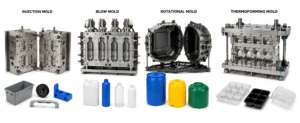
And we build tooling in-house and support injection, LSR, blow, thermoforming, and rotational molding. Assembly, pad printing, and ultrasonic welding run under the same quality system.
What is ISO 13485 certification for medical device molding, and who issues it?
It confirms a molder’s quality system meets medical device requirements. Accredited third-party certification bodies issue it after auditing documentation, validation, traceability, and corrective action processes.
Is ISO 13485 required for every medical plastics supplier?
It is not always legally required for component suppliers. Most device manufacturers still expect it, because it simplifies supplier qualification and supports their own regulatory obligations.
How often is an ISO 13485 certified molder audited?
Registrars typically perform surveillance audits about once a year. A full recertification audit occurs every three years. Customers may also perform their own supplier audits.
Does ISO 13485 certification cover cleanroom molding?
It requires environmental controls when cleanliness affects the product. The cleanroom itself is classified under ISO 14644-1. Customers should confirm both the certificate scope and cleanroom class.
Who owns the tooling under an ISO 13485 supplier agreement?
Ownership depends on the contract, not the standard. Customers usually own tooling they paid for. Agreements should confirm ownership, maintenance, storage, and change control for the molds.
What is ISO 13485 certification for medical device molding? It is proof that a molder operates a medical-focused quality system, verified by an accredited registrar.
Keep these decision points in mind:
If you are qualifying a medical molding supplier, we are glad to walk through our quality system with your team. You can reach our engineering team here, call 951-354-0258, or visit us at 7575 Jurupa Ave, Riverside, CA 92504.